• HOME
  • NEWS
  • EXPLORE
    • CAREER
      • Companies
      • Jobs
    • EVENTS
    • iGEM
      • News
      • Team
    • PHOTOS
    • VIDEO
    • WIKI
  • BLOG
  • COMMUNITY
    • FACEBOOK
    • INSTAGRAM
    • TWITTER
Monday, May 11, 2026
BIOENGINEER.ORG
No Result
View All Result
  • Login
  • HOME
  • NEWS
  • EXPLORE
    • CAREER
      • Companies
      • Jobs
        • Lecturer
        • PhD Studentship
        • Postdoc
        • Research Assistant
    • EVENTS
    • iGEM
      • News
      • Team
    • PHOTOS
    • VIDEO
    • WIKI
  • BLOG
  • COMMUNITY
    • FACEBOOK
    • INSTAGRAM
    • TWITTER
  • HOME
  • NEWS
  • EXPLORE
    • CAREER
      • Companies
      • Jobs
        • Lecturer
        • PhD Studentship
        • Postdoc
        • Research Assistant
    • EVENTS
    • iGEM
      • News
      • Team
    • PHOTOS
    • VIDEO
    • WIKI
  • BLOG
  • COMMUNITY
    • FACEBOOK
    • INSTAGRAM
    • TWITTER
No Result
View All Result
Bioengineer.org
No Result
View All Result
Home NEWS Science News Health

Differences in human and non-human primate saliva may be caused by diet

Bioengineer by Bioengineer
October 31, 2019
in Health
Reading Time: 2 mins read
0
IMAGE
Share on FacebookShare on TwitterShare on LinkedinShare on RedditShare on Telegram

IMAGE

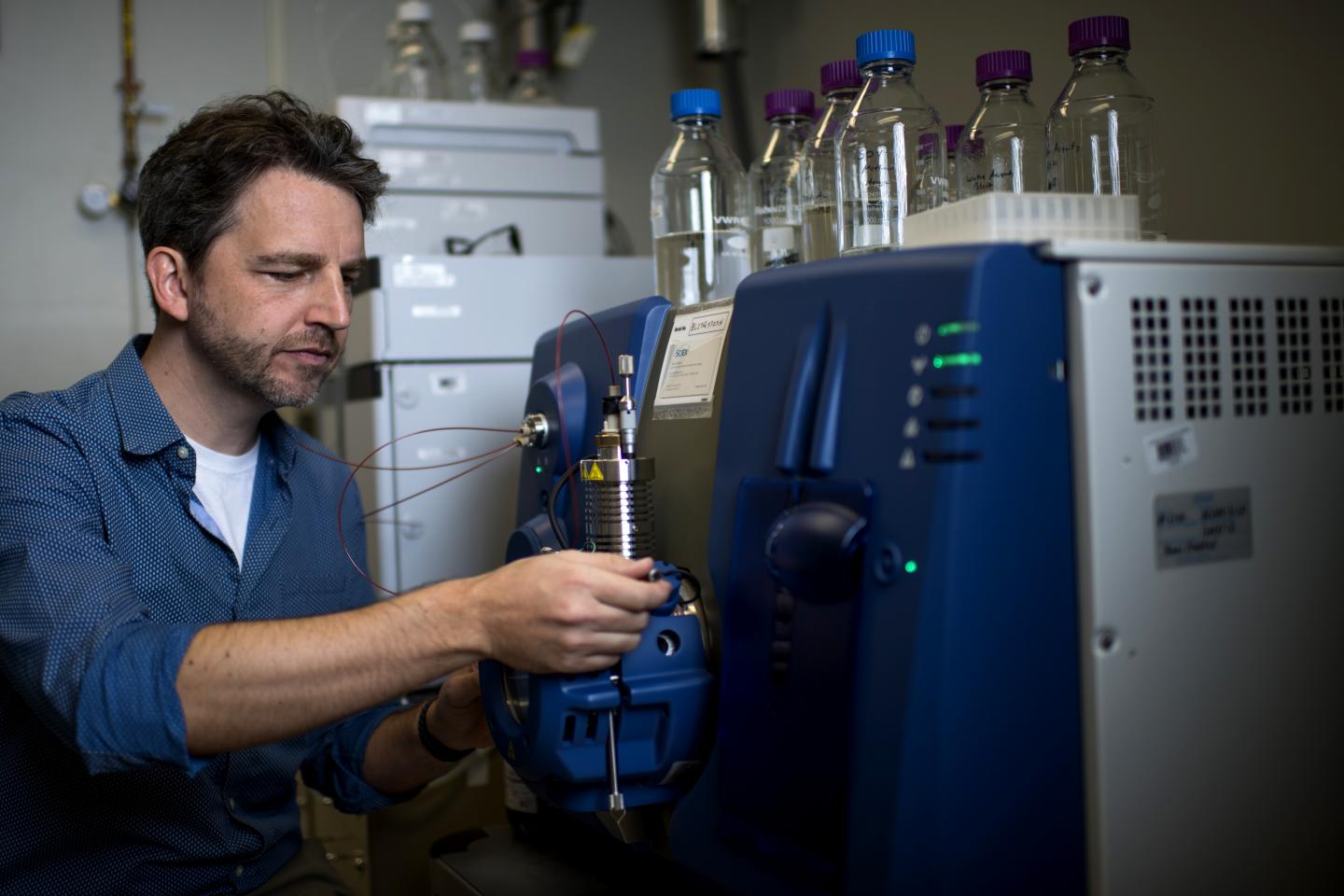
Credit: Photo by Matt Modoono/Forsyth Institute


The study, published recently in Molecular Biology and Evolution, describes the discovery that human saliva is much more watery than the saliva of chimpanzees and gorillas. And upon closer examination of the proteins within saliva, researchers found radically different protein profiles in human saliva compared with non-human primates. They believe the differences are a result of our varied diets, since human saliva is much more effective at breaking down starch and fat.

Dr. Markus Hardt, Assistant Member of the Staff at Forsyth and co-author of the study, is an expert in mass spectrometry and salivary diagnostics. His team helped analyze the protein samples from humans, chimpanzees and gorillas for the study.

“For this study, we were interested in how human evolution impacts saliva and how food sources may have influenced human development, and whether that’s reflected in saliva as well,” Hardt said.

Saliva as a window into disease

Hardt is interested in saliva composition because it may serve as a noninvasive diagnostic fluid for certain oral and systemic diseases. He contributes to the Human Salivary Proteome Wiki, a database of more than 1,000 unique human saliva proteins open to the public and research community.

In other research, Hardt is developing a new sampling technique involving a paper strip that collects tiny amounts of saliva from specific salivary glands in the mouth. This method would be ideal for people with Sjogren’s syndrome, an autoimmune disease that causes dry mouth and dry eyes in more than 4 million Americans. Very little is known about how Sjogren’s syndrome impacts individual glands because there hasn’t been a way to take such focused samples.

“This new method could give a window into looking at the individual glands,” Hardt said.

###

Media Contact
Alexandra Nicodemo
[email protected]
480-251-3144

Original Source

https://www.forsyth.org/blog/differences-human-and-non-human-primate-saliva-may-be-caused-diet

Related Journal Article

http://dx.doi.org/10.1093/molbev/msz223

Tags: Dentistry/Periodontal DiseaseMedicine/Health
Share13Tweet8Share2ShareShareShare2

Related Posts

New Post-Hoc Analysis Explores Daily Oral Orforglipron Use in Adults Over 65 with Obesity, Regardless of Diabetes Status

May 11, 2026

Evaluating Digoxin Use in Patients with Symptomatic Rheumatic Heart Disease

May 10, 2026

Evaluating the Effectiveness and Safety of Digitalis Glycosides in Treating Heart Failure

May 10, 2026

Urdu Fall Risk Questionnaire Adapted for Elderly

May 10, 2026
Please login to join discussion

POPULAR NEWS

  • Research Indicates Potential Connection Between Prenatal Medication Exposure and Elevated Autism Risk

    840 shares
    Share 336 Tweet 210
  • New Study Reveals Plants Can Detect the Sound of Rain

    727 shares
    Share 290 Tweet 181
  • Salmonella Haem Blocks Macrophages, Boosts Infection

    61 shares
    Share 24 Tweet 15
  • Breastmilk Balances E. coli and Beneficial Bacteria in Infant Gut Microbiomes

    57 shares
    Share 23 Tweet 14

About

We bring you the latest biotechnology news from best research centers and universities around the world. Check our website.

Follow us

Recent News

New Post-Hoc Analysis Explores Daily Oral Orforglipron Use in Adults Over 65 with Obesity, Regardless of Diabetes Status

Evaluating Digoxin Use in Patients with Symptomatic Rheumatic Heart Disease

Evaluating the Effectiveness and Safety of Digitalis Glycosides in Treating Heart Failure

Subscribe to Blog via Email

Enter your email address to subscribe to this blog and receive notifications of new posts by email.

Join 82 other subscribers
  • Contact Us

Bioengineer.org © Copyright 2023 All Rights Reserved.

Welcome Back!

Login to your account below

Forgotten Password?

Retrieve your password

Please enter your username or email address to reset your password.

Log In
No Result
View All Result
  • Homepages
    • Home Page 1
    • Home Page 2
  • News
  • National
  • Business
  • Health
  • Lifestyle
  • Science

Bioengineer.org © Copyright 2023 All Rights Reserved.