


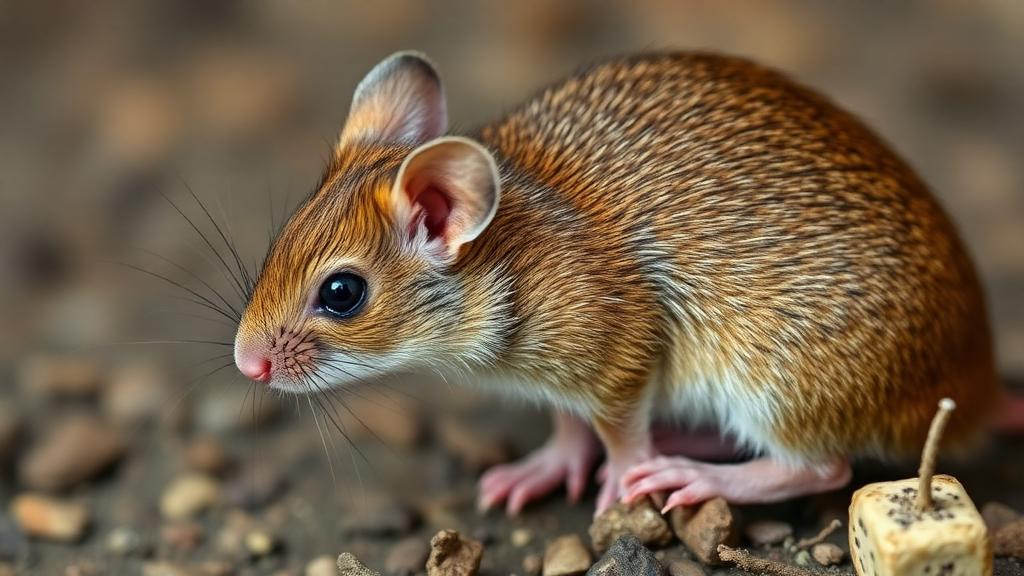
When wild house mice are moved into confined, island-like enclosures with unfamiliar foods, their bodies and life histories respond within a generation, but their behaviour barely budges. That is the central finding of a new open-access study published in BMC Ecology and Evolution, in which researchers tracked four generations of wild house mice (Mus musculus domesticus) through a controlled colonisation experiment designed to test predictions of the so-called Island Syndrome. The results suggest that the earliest steps of an invasion are dominated by phenotypic plasticity and shifts in energy allocation rather than by directional evolutionary change.
The Island Syndrome describes a suite of predictable differences between island populations and their mainland counterparts, including larger body size in small animals, increased risk-taking in the absence of predators, and altered reproductive effort. Most evidence for the syndrome comes from populations where it is already fully established, often long after the colonisation event. What has remained poorly understood is how animals respond in the very first generations after arriving in an isolated, novel habitat, a window that may be decisive for whether an invasion succeeds at all.
To fill that gap, the team derived experimental island populations from an established semi-natural population of wild house mice descended from animals collected in the Cologne/Bonn region of Germany. A total of 210 founding mice were used. Of these, 45 mice were kept in their original enclosure with no dietary change or relocation and served as the mainland control group. The remaining 165 mice, all young adults aged five to seven weeks with no prior reproductive experience, were divided into three groups of 20 females and 20 males each and transferred to new semi-natural enclosures of 19.6 square metres, each assigned a different diet regime.
The three experimental diets, labelled Hard, Soft and Veggie, were built from grain mixtures differing in texture and composition but deliberately matched in caloric content to the control pellet diet, which contained 3227 kilocalories of metabolisable energy per kilogram. The Hard diet combined broken peas, wheat, crushed barley, oats and black sunflower seeds with dry cat food; the Soft diet used the flaked equivalents of the same grains supplemented with black soldier fly larvae; and the Veggie diet added a vegetable mixture including carrot flakes, potato cubes and beetroot. Consumption measurements confirmed that mice ate similar amounts across diets, meaning any differences that emerged could be attributed to composition rather than energy intake.
Across generations F0 to F3, the researchers measured stress-coping and risk-taking behaviour in an Open Field test, skeletal size from X-ray images of cervical, lumbar and caudal vertebrae, sperm count and testis mass, age at first reproduction, growth rates from monthly body mass records, and survival using Cox proportional hazards models. The behavioural results were strikingly flat. Distance covered, time spent in the centre of the arena, and the roughly 0.4 degree Celsius rise in eye-region temperature after testing, a proxy for acute stress, showed no significant divergence from the control population in any treatment or generation, with only two isolated exceptions: reduced mobility in Veggie-diet F0 mice and less centre time in Soft-diet F3 mice.
Morphology told a different story. The F1 generation of mice in all three island treatments grew longer vertebrae than both the control mice and the other generations within their own treatment, indicating a burst of structural growth one generation after relocation. Vertebral number itself did not differ meaningfully between groups, and the authors caution that one apparent exception in Veggie F0 mice cannot reasonably be interpreted as a dietary response, since vertebral number is fixed during development.
Life-history traits shifted most dramatically in the founder generation. Mice that experienced relocation, the F0 animals, had significantly lower body mass than controls, yet males in this generation produced significantly more sperm and, on Hard and Soft diets, had heavier testes relative to body weight than any later generation. The authors interpret this as an immediate physiological response in which relocated mice shifted energy allocation away from growth and toward reproduction, consistent with life-history theory predicting increased reproductive effort under changed or risky conditions. Notably, F0 mice showed no survival cost of this investment, which the researchers attribute to the ad libitum food supply relaxing the energetic trade-offs that usually constrain such strategies.
The F1 generation then flipped the pattern. These mice invested in enhanced structural growth and, across all treatments, females tended to reproduce later than control females, a delay also seen in Soft and Veggie F2 females. The authors attribute this to carry-over effects from the stressed parental generation, in which offspring phenotypes reflect the environments their parents experienced rather than their own. By F2 and F3, no consistent direction of change remained, and the researchers conclude that the earlier shifts were plastic responses to relocation stress rather than the beginnings of adaptation or the outcome of selection.
Survival added a sobering note. Relative to the control population, survival did not differ in the F0, F1 or F2 generations, but all F3 mice showed significantly reduced survival. Under the Veggie diet, survival declined earlier, with F1 and F2 mice already showing significantly reduced survival compared with the F0 generation. Veggie-diet mice displayed more pronounced differences than Hard or Soft diet mice across several traits, which the authors say is unlikely to be explained by energy intake given the matched caloric content and similar consumption rates, and more likely reflects diet composition itself.
The study’s limitations matter for how far these conclusions travel. Each dietary regime was represented by a single enclosure, and the enclosures replicated only selected aspects of island colonisation: isolation, confinement and novel diets, but not predation, interspecific competition or parasitism, all of which could strengthen selection on real islands. The authors also note that their design cannot distinguish between developmental plasticity, parental effects and phenotypic flexibility. Their overall conclusion is that differences in diet composition alone are insufficient to trigger the morphological and physiological traits of the Island Syndrome within three generations, and that longer time frames, or additional environmental pressures such as differences in diet quality, are probably required. What the experiment does capture is the earliest phase of colonisation, in which the founder generation prioritises reproduction, the next generation grows but delays reproduction, and behaviour waits.
Subject of Research: Early behavioural, morphological and life-history responses of wild house mice to colonisation of restricted semi-natural enclosures with different diets
Article Title: Behavioural, morphological and life-history adjustments in the early steps of colonising restricted semi-natural environments in wild house mice
Article References: Gorshkova, E., Winkler, D. E., Guenther, A., & Böhmer, C. (2026). Behavioural, morphological and life-history adjustments in the early steps of colonising restricted semi-natural environments in wild house mice. BMC Ecology and Evolution, 26(1), Article 83. https://doi.org/10.1186/s12862-026-02590-0
Image Credits: AI Generated
DOI: 10.1186/s12862-026-02590-0
Keywords: house mice, Island Syndrome, invasion biology, phenotypic plasticity, life history, diet composition, semi-natural enclosures, vertebral morphology, sperm count, survival, colonisation, carry-over effects
News Source: Daisy Hatcher. (October 29, 2026). Diet Shifts Reshape Wild Mice Bodies Fast, but Behaviour Stays Stubborn. Scienmag.



