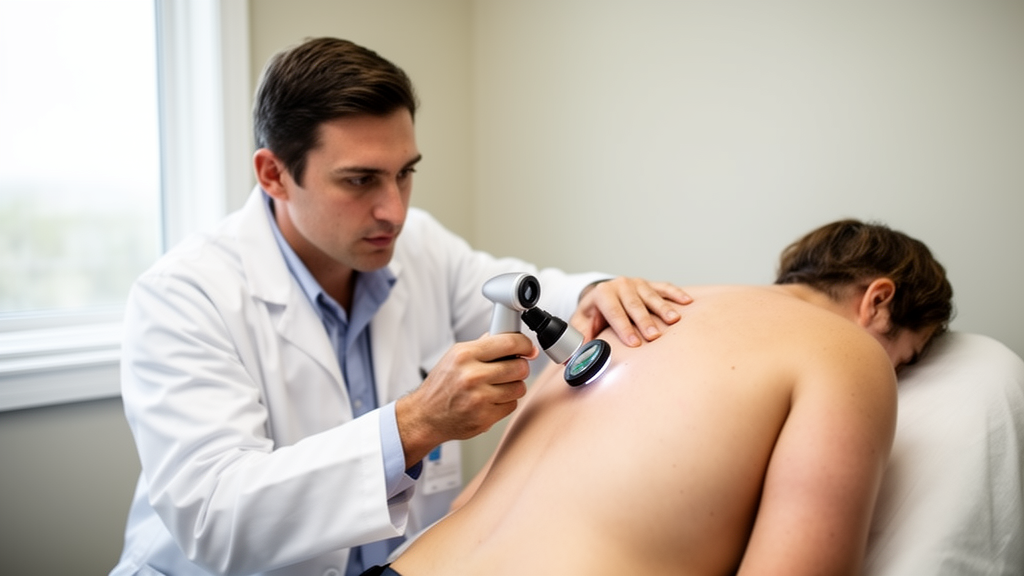
Training primary care practitioners in dermoscopy appears to improve their ability to detect skin cancers, according to a systematic review of reviews published in BMC Primary Care. The analysis, registered in PROSPERO (CRD42023396276), synthesised existing systematic and scoping reviews on dermoscopy training for primary care practitioners and found consistent reports of improved diagnostic accuracy and practitioner confidence, particularly when training was delivered through live, interactive, and multi-modal approaches.
The research team, led by April Murphy with colleagues including Nikki McCaffrey, searched the Cochrane Library, CINAHL, EMBASE, and MEDLINE from database inception, with searches conducted in August 2023 and updated in September 2025. They screened 622 records and included eight reviews meeting their criteria: four systematic reviews and four scoping reviews, all peer-reviewed and available in English.
Across the included reviews, estimates of diagnostic performance after dermoscopy training ranged from 70 to 95 percent sensitivity and 65 to 90 percent specificity. The reviews also consistently reported gains in practitioner confidence. However, the authors caution that these figures come from a review-level evidence base of limited quality: 88 percent of the included reviews were rated very low or low quality using the Critical Appraisal Tool for Health Promotion and Prevention Reviews, and pairwise Corrected Covered Area analysis revealed substantial overlap among the primary studies the reviews drew upon.
Methodological limitations extended beyond quality ratings. Outcome measures across the underlying studies were heterogeneous, follow-up periods were typically short, and standardised assessment frameworks were lacking. The available evidence suggests that refresher training materials are needed for longer-term skill retention, but the authors note that this recommendation rests on a small proportion of studies and limited evidence.
Importantly, the review found insufficient evidence to determine the optimal type and frequency of training, and evidence relating to cost-effectiveness was very limited. This means that while the direction of the effect is consistent, practical questions about how training should be designed, delivered, and funded in primary care remain unanswered.
The background to the review reflects a genuine clinical need. Training primary care practitioners in dermoscopy may improve the early detection of skin cancers, but evidence on the effectiveness and sustainability of different training approaches had remained inconsistent.
The authors conclude that dermoscopy training appears to improve confidence and diagnostic performance among primary care practitioners, but that uncertainty remains regarding how training should be delivered and maintained to achieve sustained improvements in practice. Confidence in these findings is limited by the low quality of the reviews, overlap within the review-level evidence base, and heterogeneous outcomes and follow-up duration.
To address these gaps, the review calls for future research to establish standardised outcome measures and longer-term evaluation frameworks, including economic assessment, to support implementation and inform policy and funding decisions in primary care. Until such evidence accumulates, the review offers a measured summary: dermoscopy training shows promise as a tool for improving skin cancer detection in primary care, but the evidence base supporting it is thin, and the details of effective, sustainable training programmes remain to be established.
The article was published on 28 October 2026 as an open access paper in BMC Primary Care, and the publisher notes that the version shared early is subject to further edits and will be replaced by the final Version of Record.
Subject of Research: Effectiveness of dermoscopy training for primary care practitioners in detecting skin cancers
Article Title: A systematic review of reviews of the effectiveness of training primary care practitioners in dermoscopy to detect skin cancers
Article References: Murphy, A., Livingstone, A., Bucholc, J., Collins, L., Jones, S., Cowdery, S., Rawlin, M., Upjohn, E., & McCaffrey, N. (2026). A systematic review of reviews of the effectiveness of training primary care practitioners in dermoscopy to detect skin cancers. BMC Primary Care. https://doi.org/10.1186/s12875-026-03604-y
Image Credits: AI Generated
DOI: 10.1186/s12875-026-03604-y
Keywords: dermoscopy, skin cancer, primary care, diagnostic accuracy, systematic review, medical training, evidence synthesis, PROSPERO, continuing education, diagnostic confidence, systematic, review
News Source: Ophelia Keating. (October 28, 2026). Dermoscopy Training Helps Primary Care Doctors Spot Skin Cancers, Review Finds. Scienmag.