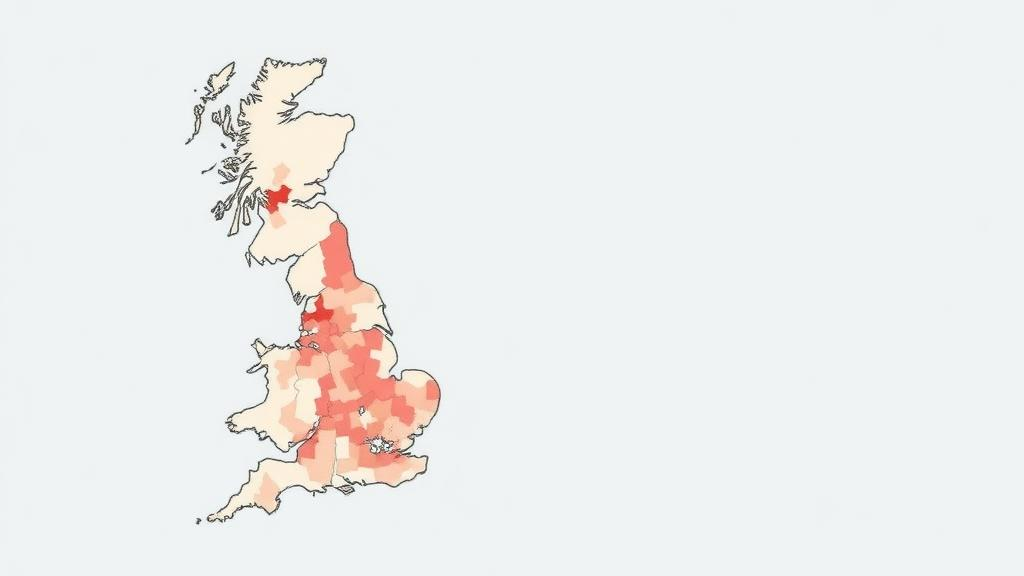
A national study of 12.7 million patients registered with 1,406 general practices in England found higher recorded prevalence of most chronic conditions in the most deprived areas, although the pattern varied substantially by condition, age and sex. The analysis, published in BMC Public Health, assessed 209 conditions using primary care records linked to hospital records. It also found that combining primary and secondary care data generally produced larger absolute prevalence gaps than using primary care records alone. These are population-level differences by area-level deprivation, not estimates of what deprivation caused individual illnesses.
Researchers analysed Clinical Practice Research Datalink Aurum primary care records linked with Hospital Episode Statistics for patients registered on 1 April 2018. Diagnoses recorded over the preceding 12 years in primary and secondary care were used to estimate prevalence for each condition. Estimates were calculated by area-level deprivation quintile, age group and sex. The investigators then compared the most and least deprived quintiles using absolute prevalence gaps and relative prevalence ratios, and compared estimates based on primary care alone with those based on linked primary and secondary care records.
Socioeconomic inequalities in prevalence were widespread but not uniform across the 209 conditions. Most conditions had higher estimated prevalence in the most deprived quintile, including obesity, hypertension, depression, anxiety disorders, and alcohol or substance misuse. The proportion of conditions showing higher prevalence in more deprived quintiles was highest among patients aged 40–59 years, followed by those aged 60–79 years. A smaller number of conditions showed the opposite pattern: raised total cholesterol was more prevalent in less deprived groups among patients aged 60 years and over, while all cancers combined also had higher prevalence in less deprived groups. Individual cancer conditions displayed heterogeneous patterns, so the combined cancer estimate did not represent every cancer in the same way.
Care setting was associated with the scale of the measured differences. Linked primary and secondary care records generally yielded larger absolute prevalence gaps than primary care records alone. Including secondary care data also increased the proportion of conditions with higher prevalence in the most deprived quintile in every age–sex group. The findings therefore show that estimates based on linked records differed from those based on primary care alone, without establishing the mechanism behind that difference. As a descriptive analysis of diagnoses recorded in routine care, the study measured differences in recorded prevalence across deprivation groups rather than directly measuring every participant’s underlying health status. Its scope was England, 209 chronic conditions, and 12.7 million patients in primary care linked to hospital data; the supplied findings do not provide estimates of prevalence changes over time or establish causal effects.
The work is described by the authors as the first national systematic assessment of prevalence by area-level deprivation across 209 chronic conditions recorded in primary or secondary care in England. By examining conditions individually, the study documents both widespread inequalities and notable exceptions. The authors said the condition-specific descriptive estimates could support more tailored analyses accounting for socioeconomic differences in disease burden and case mix, as well as targeted prevention, public health planning, routine monitoring of inequalities, resource allocation and evaluations of interventions. Those proposed uses follow from the study’s broad descriptive scope rather than evidence that any particular intervention reduced a prevalence gap.
Subject of Research: National linked-record analysis of chronic-condition prevalence by area-level deprivation in England
Article Title: Prevalence of 209 chronic conditions by area-level deprivation in England
Article References: Wang, S., & Anselmi, L. (2026). Prevalence of 209 chronic conditions by area-level deprivation in England. BMC Public Health. https://doi.org/10.1186/s12889-026-29718-7
Image Credits: AI Generated
DOI: 10.1186/s12889-026-29718-7
Keywords: health inequalities, chronic diseases, area-level deprivation, England, primary care, secondary care, linked health data, disease prevalence, socioeconomic disparities, public health, Prevalence, chronic
News Source: Phoebe Ingram. (October 20, 2026). Deprivation-linked prevalence of 209 conditions varied across 12.7 million English patients. Scienmag.