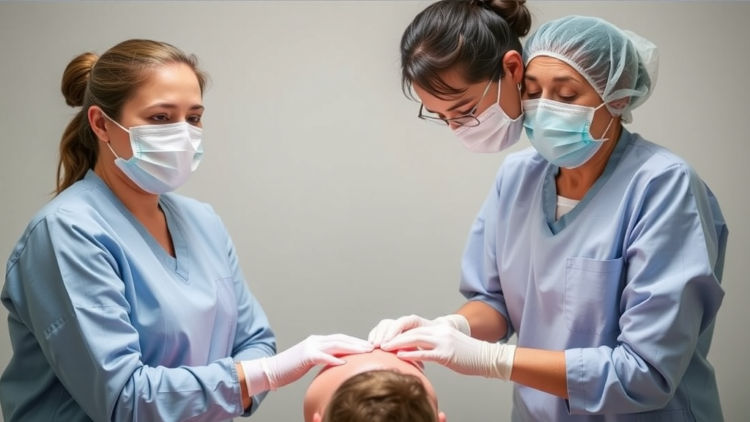
A cardiac arrest can strike anyone, anywhere, including the sterile calm of a dental chair. When it does, the first minutes are everything: survival rates from out-of-hospital cardiac arrest hover near a sobering 10 percent, and every minute without cardiopulmonary resuscitation reduces the chances of survival by an estimated 7 to 10 percent. Yet a new study from Isfahan, Iran, published in the Journal of Emergency and Disaster Medicine, suggests that the dental professionals best positioned to intervene in those first critical moments are often dangerously underprepared. The research, led by emergency medicine physicians at Isfahan University of Medical Sciences, assessed the knowledge and attitudes of dentists, dental assistants, and office secretaries toward CPR, and the results point to an uncomfortable gap between the responsibility dental teams carry and the training they actually receive.
The rationale for studying resuscitation readiness in dental settings is more compelling than it might first appear. Cardiovascular disease remains the leading cause of death in Iran, accounting for nearly half of all fatalities, with ischemic heart disease alone responsible for roughly a quarter of deaths. Although medical emergencies in dental clinics are uncommon, they do occur, sometimes among patients, sometimes among dentists and staff, and sometimes among accompanying companions. Previous research has quantified the risk: in the United States, the annual incidence of cardiac arrest in medical and dental practices has been estimated to range between 0.008 and 1 per 133 practitioners, while the United Kingdom reports an incidence of 0.002 per dentist per year. In Germany, 57 percent of dentists report encountering at least three medical emergencies annually. These figures, while modest, underscore a simple truth: dental offices are healthcare environments, and emergencies can and do happen there.
What distinguishes the new study from earlier surveys is its scope. Most prior investigations focused exclusively on dentists, overlooking the assistants and office secretaries who might be the first to recognize a collapse, call for help, or begin chest compressions. Because all members of a dental team are healthcare providers who should be capable of performing basic life support, the researchers designed a cross-sectional survey covering the entire team. Between October 2021 and April 2022, they sampled clinics and offices across Isfahan, the largest city in central Iran, using stratified simple random sampling that divided practices by type, public versus private, and by geographic district, then selected clinics at random within each stratum to minimize selection bias.
The instrument itself was built for rigor. A 27-item structured questionnaire was developed by emergency medicine faculty, each with more than a decade of experience running CPR workshops, and aligned with the American Heart Association’s 2020 guidelines. It covered three domains: demographic information, nine items of theoretical and practical CPR knowledge, and fourteen items on attitude and experience, including prior exposure to cardiac arrest, workshop participation, and willingness to pursue future training. A pilot study of 20 dentists, excluded from the main analysis, confirmed clarity and reliability, with Cronbach’s alpha values of 0.82 for the knowledge domain and 0.79 for the attitude domain, both within the accepted range for psychometric consistency. Ethical approval came from Isfahan University of Medical Sciences, and written informed consent was obtained from every participant.
The findings were stark. Of 201 valid responses, including 101 dentists representing an 81 percent response rate among those approached, the median CPR knowledge score was just 3 out of a possible 9, with a mean of 2.61 and a standard deviation of 1.75, and the distribution of scores was positively skewed, clustering heavily at the low end. Participants had a mean age of 31.75 years, and 62.2 percent were female. Only five participants, 2.5 percent of the entire sample, had ever encountered a cardiac arrest in dental practice, and just eleven individuals, 5.5 percent, reported having personally performed CPR. Perhaps most striking, only 12.9 percent had attended a CPR workshop in the previous two years, and a mere 13.4 percent considered themselves competent to perform resuscitation at all.
Buried within the data was a counterintuitive and potentially important pattern: knowledge declined with age and experience. The analysis revealed a significant negative correlation between dentists’ age and CPR knowledge scores (r = −0.184, P = 0.009) and between years of professional experience and knowledge (r = −0.231, P = 0.020). This mirrors a finding from Kuwait, where younger dentists and those with fewer than ten years of experience outperformed their senior colleagues, but it contradicts studies from India and among oral and maxillofacial surgeons in which experienced practitioners knew more. The authors propose a plausible explanation: most participants in the current study had not received recent refresher training, so whatever knowledge older dentists once acquired has simply eroded. They also caution that recency of formal education may confound the relationship, since younger graduates may have been trained under more current guidelines, and they recommend that future studies control for graduation year and timing of the last CPR course.
The strongest positive signal in the data came from training itself. Dentists who had participated in CPR workshops within the past two years scored significantly higher on the knowledge assessment than those who had not (P = 0.007), a result consistent with findings from Iran and Kuwait, and one that aligns with the well-documented kinetics of skill decay: theoretical knowledge declines markedly within about 12 months, and practical competence deteriorates substantially after 18 months without reinforcement. Encouragingly, the appetite for remediation is already there. A striking 84.1 percent of respondents said they wanted to attend future CPR workshops, and among dentists specifically the figure exceeded 88 percent. Gender, meanwhile, made no measurable difference in knowledge scores (P = 0.124).
The study’s limitations are acknowledged candidly by its authors. Competence was measured only through a self-administered questionnaire, capturing theoretical knowledge rather than hands-on skill, and no simulation-based practical testing was performed. The cross-sectional design, the single-city setting, and the sample of 201 participants restrict causal inference and generalizability, and self-reported data are always vulnerable to recall and social desirability bias. Non-response was analyzed as a potential source of bias and appeared minimal, with no significant differences between respondents and the 19 percent who declined, most commonly citing lack of time or lack of interest. Still, the convergence of these findings with an international literature spanning Brazil, India, Turkey, Kuwait, and earlier Iranian surveys, which found, for example, that only 37 percent of Iranian dentists in a 2007 study possessed adequate CPR knowledge, strengthens the conclusion that preparedness deficits in dentistry are systemic rather than local.
The implications reach beyond clinical performance into patient safety and law. Previous reports have documented deaths from cardiopulmonary arrest occurring in dental settings, and inadequate resuscitation capability carries potential legal consequences for practitioners, alongside the more intangible costs of insecurity among dental teams and eroded patient trust. The authors argue that a single CPR course, however well taught, is not enough, and they call for mandatory, periodic CPR training woven into both undergraduate dental curricula and continuing professional education, explicitly extending the requirement beyond dentists to assistants and office staff. Given the strong expressed willingness of the workforce to train, they note, structured recurrent programs are not only medically necessary but entirely feasible. In a field where minutes decide survival, the study’s central message is hard to ignore: readiness must be renewed, not assumed, and the whole dental team, not just the person holding the drill, must be ready to act.
Subject of Research: Knowledge and attitudes toward cardiopulmonary resuscitation among dental teams in Isfahan, Iran
Article Title: Life-saving skills in dentistry: knowledge and attitude toward cardiopulmonary resuscitation among dental teams
Article References: Heydari, F., Nasr Isfahani, M., Masoumi, B., Esmailian, M., Khosravi, H., & Nasr-Esfahani, M. (2026). Life-saving skills in dentistry: knowledge and attitude toward cardiopulmonary resuscitation among dental teams. Journal of Emergency and Disaster Medicine, 2(1), Article 15. https://doi.org/10.1007/s44467-026-00018-9
Image Credits: AI Generated
DOI: 10.1007/s44467-026-00018-9
Keywords: cardiopulmonary resuscitation, CPR, basic life support, dentistry, dental teams, cardiac arrest, emergency preparedness, medical emergencies, dental education, Iran, American Heart Association guidelines, continuing professional development
Cite Scienmag News
APA MLA Chicago
Ophelia Keating. (September 12, 2026). Dental Teams Fall Short on Life-Saving CPR Skills, New Study Warns. Scienmag. https://scienmag.com/dental-teams-fall-short-on-life-saving-cpr-skills-new-study-warns/
Ophelia Keating. “Dental Teams Fall Short on Life-Saving CPR Skills, New Study Warns.” Scienmag, 12 September 2026, https://scienmag.com/dental-teams-fall-short-on-life-saving-cpr-skills-new-study-warns/. Accessed 12 September 2026.
Ophelia Keating. “Dental Teams Fall Short on Life-Saving CPR Skills, New Study Warns.” Scienmag. September 12, 2026. https://scienmag.com/dental-teams-fall-short-on-life-saving-cpr-skills-new-study-warns/
Copy citation Download RIS
Tags: American Heart Association guidelinesbasic life supportcardiac arrestcardiopulmonary resuscitationcardiovascular emergencies in dental settingscontinuing professional developmentCPRCPR training for dental professionalsdental educationdental emergency preparednessdental team emergency response attitudesdental teamsdentistryemergency preparednessemergency response education for dental staffemergency response skills in dentistrygaps in CPR knowledge among dental teamshealthcare provider emergency trainingimpact of emergency preparedness on patient safetyIranlife-saving protocols in dental officesmanagement of cardiac arrest in dental clinicsmedical emergenciesout-of-hospital cardiac arrest survival rates