Patients seeking treatment for serious gum disease at a South African tertiary oral health centre carried a substantial and partly hidden burden of abnormal blood sugar, according to a prospective cross-sectional study conducted at the University of Pretoria Oral Health Centre. Among 73 adults diagnosed with periodontitis, 13 already knew they had diabetes, but six more participants without any previous diagnosis recorded HbA1c values at or above 6.5 percent, the diabetic range used for study screening purposes. A further 25 participants without a known diabetes diagnosis had HbA1c values between 5.7 and 6.4 percent, consistent with prediabetes. Taken together, 19 of the 73 participants, or 26.0 percent, had either established diabetes or a diabetic-range screening result, while 25 of 73, or 34.2 percent, fell into the prediabetic range.
The study, published in Frontiers in Oral Health, recruited participants sequentially from the periodontics clinic until the target sample of 73 was reached. Each participant underwent a comprehensive periodontal examination and laboratory venous HbA1c testing. Previously diagnosed diabetes was recorded from the medical history, and among participants without such a history, a single HbA1c value of 6.5 percent or higher was treated as a diabetic-range result for screening purposes only. The researchers emphasised that such a result was not regarded as a definitive clinical diagnosis of diabetes without appropriate clinical confirmation, and participants with abnormal findings were informed of their results and referred for further care where needed.
The cohort was characterised by advanced periodontal disease. Generalised periodontitis was present in 69 participants, or 94.5 percent, with 46 participants, or 63.0 percent, classified as Stage 4 disease and 56, or 76.7 percent, as Grade C under the 2017 World Workshop classification framework. No participant was classified as Stage 1 or Stage 2, and only one participant was Grade A. Participants had a mean age of 50.7 years with a standard deviation of 15.2, and 47 of the 73 participants, or 64.4 percent, were female. The median age was 53 years, with a range from 20 to 75 years.
Across the full cohort, the median HbA1c was 5.7 percent, with an interquartile range of 5.4 to 6.1 percent and an overall range from 4.9 to 10.6 percent. Among the 60 participants without a previous diabetes diagnosis, the six with diabetic-range values represented 10.0 percent, with an exact 95 percent confidence interval of 3.8 to 20.5 percent, while the 25 with prediabetic-range values represented 41.7 percent, with a confidence interval of 29.1 to 55.1 percent. The remaining 29 participants in this group, or 48.3 percent, had HbA1c values below 5.7 percent. The wide confidence intervals reflect the small sample size and mean that the precise prevalence estimates carry considerable uncertainty.
The study also examined whether blood sugar levels differed according to the severity of periodontal disease. Stage 3 participants had a median HbA1c of 5.7 percent with an interquartile range of 5.3 to 6.0 percent and a range of 5.0 to 7.8 percent, whereas Stage 4 participants had the same median of 5.7 percent but a wider interquartile range of 5.4 to 6.2 percent and a range extending from 4.9 to 10.6 percent. Stage 4 participants therefore showed a wider spread of HbA1c values and a higher upper quartile, suggesting greater variability and the presence of higher values in the most advanced disease group. However, the difference in HbA1c distributions between stages was not statistically significant, with a Kruskal-Wallis test yielding a P value of 0.423.
An exploratory multivariable logistic regression modelled hyperglycaemia, defined as diabetes or prediabetes, against age, sex and Stage 4 periodontitis. Forty-two participants had hyperglycaemia and 31 had neither condition. Increasing age was independently associated with dysglycaemia, with an odds ratio of 1.08 per one-year increase, a 95 percent confidence interval of 1.04 to 1.13, and a P value below 0.001. Female sex was not significantly associated with hyperglycaemia, with an odds ratio of 0.80, and neither was Stage 4 periodontitis, which showed an odds ratio of 1.98 with a wide confidence interval of 0.61 to 6.37 that crossed the null value. The researchers stressed that this model was hypothesis-generating rather than confirmatory, given the small sample and observational design, and that it should not be used to infer causality.
The biological backdrop for the work is the well-established bidirectional relationship between diabetes and periodontitis. Persistent hyperglycaemia promotes the formation of advanced glycation end-products, alters neutrophil function and amplifies pro-inflammatory mediators, changes that can favour connective-tissue destruction and bone resorption within periodontal tissues. Conversely, periodontal inflammation can contribute to a systemic inflammatory milieu that may adversely influence insulin sensitivity and glycaemic control. The contemporary periodontal classification incorporates diabetes as a modifier of disease grading, because poorly controlled diabetes can accelerate periodontal destruction and worsen treatment response, making periodontal clinics a setting where metabolic risk may reasonably be considered.
The choice of HbA1c as the screening measure is relevant to dental practice because the test does not require fasting and provides an estimate of longer-term glycaemic exposure. The authors note that HbA1c should not be treated as infallible, since certain haematological conditions and altered red-cell turnover can influence results, and diagnostic confirmation may be required depending on the clinical context. The study used laboratory venous HbA1c testing throughout. Participants with a documented diabetes diagnosis who had an HbA1c result obtained within three months of the periodontal examination were permitted to use that result rather than undergo repeat sampling, a pragmatic choice that introduces some temporal variation in the laboratory measurements.
The study has several limitations that shape how the findings should be read. The sample was small and drawn from a single tertiary institution, so the prevalence estimates cannot be generalised to the South African population or to all dental patients. The cohort was enriched for advanced periodontitis, limiting comparison across the full spectrum of disease severity, and the cross-sectional design prevents any conclusions about temporality or causality. Smoking status was self-reported and smokers were excluded altogether, which may introduce selection bias. Crucially, the study included no periodontally healthy comparison group, so it cannot establish whether the observed distribution of HbA1c values differs from that of people without periodontitis. The exploratory regression was also limited by the sample size and requires validation in a larger cohort.
Despite these constraints, the authors argue that the findings support consideration of targeted glycaemic risk assessment and appropriate referral within periodontal care pathways, rather than universal laboratory testing of every dental patient. A pragmatic pathway could begin with a brief diabetes-risk assessment or review of known diabetes status, followed by HbA1c testing or referral according to local policy, with abnormal results communicated to the patient and referred for medical confirmation and management. Identification of prediabetes, in particular, offers an opportunity for risk communication before overt diabetes develops. The researchers call for larger multicentre studies that include patients across the full spectrum of periodontal severity, incorporate periodontally healthy comparison groups, prespecify clinically informed models with established diabetes-risk variables, and evaluate the cost-effectiveness and feasibility of screening and referral within South African oral healthcare services.
Subject of Research: Prevalence of diabetes and prediabetes among patients with periodontitis attending a South African tertiary oral health centre
Article Title: Glycaemic status and periodontitis severity Among patients attending a South African tertiary oral health centre: a prospective cross-sectional study
Article References: Mukucha, L., Manenzhe, S., Khammissa, R. A. G., & Shangase, S. L. (2026). Glycaemic status and periodontitis severity Among patients attending a South African tertiary oral health centre: a prospective cross-sectional study. Frontiers in Oral Health, 7, Article 1974683. https://doi.org/10.3389/froh.2026.1974683
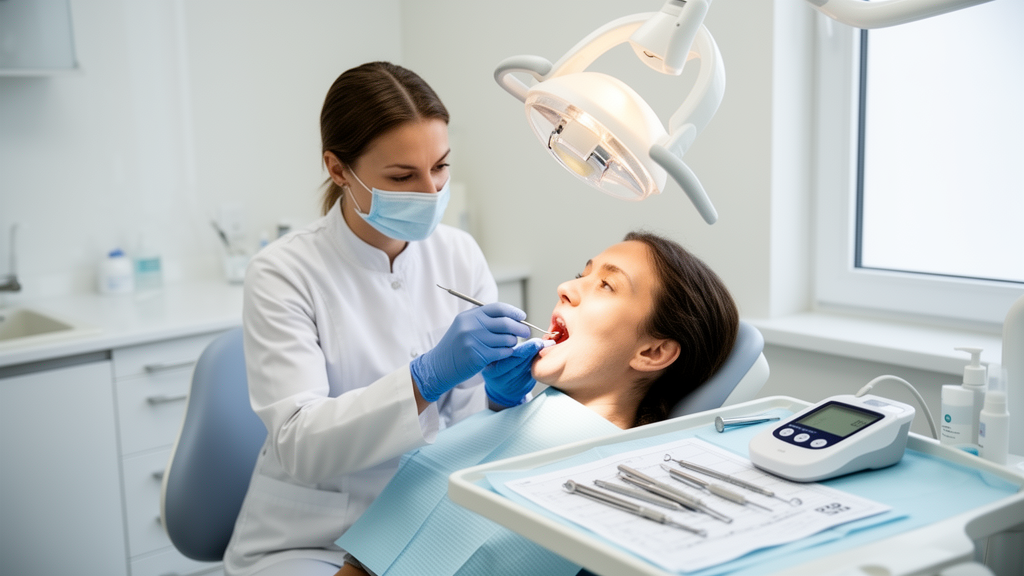
Image Credits: AI Generated
DOI: 10.3389/froh.2026.1974683
Keywords: periodontitis, diabetes, prediabetes, HbA1c, glycaemic screening, oral health, South Africa, tertiary care, cross-sectional study, dysglycaemia, dental clinics, metabolic risk
News Source: Ophelia Keating. (October 29, 2026). Dental gum clinics may uncover hidden diabetes risk, South African study finds. Scienmag.