• HOME
  • NEWS
  • EXPLORE
    • CAREER
      • Companies
      • Jobs
    • EVENTS
    • iGEM
      • News
      • Team
    • PHOTOS
    • VIDEO
    • WIKI
  • BLOG
  • COMMUNITY
    • FACEBOOK
    • INSTAGRAM
    • TWITTER
Wednesday, November 18, 2026
BIOENGINEER.ORG
No Result
View All Result
  • Login
  • HOME
  • NEWS
  • EXPLORE
    • CAREER
      • Companies
      • Jobs
        • Lecturer
        • PhD Studentship
        • Postdoc
        • Research Assistant
    • EVENTS
    • iGEM
      • News
      • Team
    • PHOTOS
    • VIDEO
    • WIKI
  • BLOG
  • COMMUNITY
    • FACEBOOK
    • INSTAGRAM
    • TWITTER
No Result
View All Result
Bioengineer.org
No Result
View All Result
Home NEWS Science News Health

Denmark maps seven years of Vibrio and Shewanella infections to build a surveillance baseline

by
October 29, 2026
in Health
Reading Time: 2 mins read
0
Denmark maps seven years of Vibrio and Shewanella infections to build a surveillance baseline

Denmark maps seven years of Vibrio and Shewanella infections to build a surveillance baseline

Share on FacebookShare on TwitterShare on LinkedinShare on RedditShare on Telegram

A nationwide Danish study has charted laboratory-confirmed Vibrio and Shewanella infections across 2019–2025, identifying 1,181 infection episodes and establishing a standardised baseline for national surveillance. The registry-linked analysis, published in BMC Infectious Diseases, drew on the Danish Microbiology Database (MiBa) linked to demographic, geographical, hospitalisation and mortality registries, and found that Vibrio vulnificus stood out as the species most frequently associated with invasive or deep-tissue specimens and with hospital admission.

The researchers constructed infection episodes using a six-month algorithm applied separately by species, selecting one representative specimen category per episode according to a predefined hierarchy. Of the 1,181 episodes, 680 were Vibrio and 501 were Shewanella. Episodes clustered in the summer months of June through September, a pattern that was particularly pronounced for certain species: 31 of 32 V. vulnificus episodes (97%) fell in this window, as did 184 of 217 V. parahaemolyticus episodes (85%), 234 of 298 S. algae episodes (79%) and 171 of 241 V. alginolyticus episodes (71%).

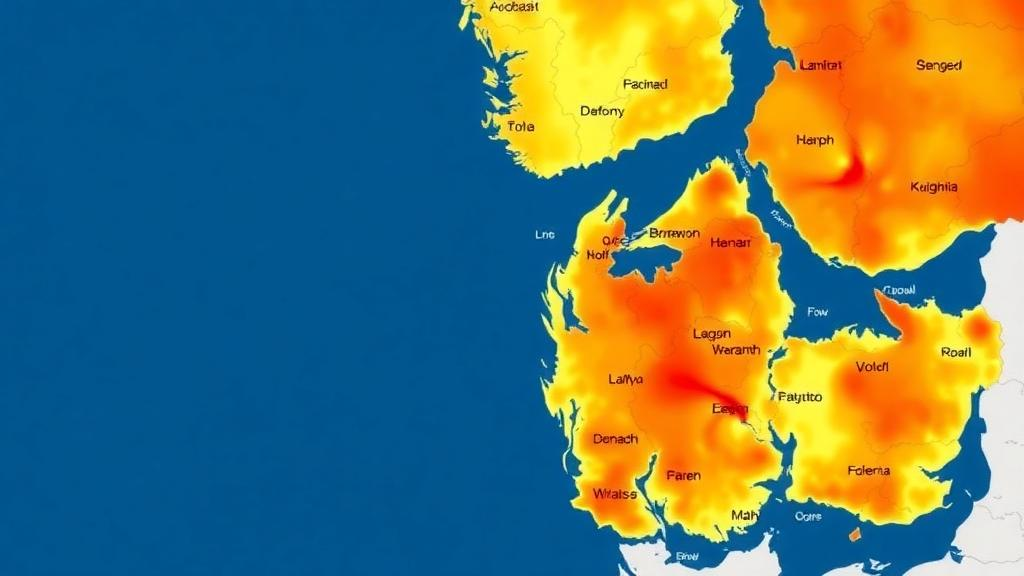
Wound or soft-tissue specimens were the most common specimen category, accounting for 564 of 1,181 episodes (48%). Severity varied markedly by species. V. vulnificus had the highest proportion of blood, invasive or deep-tissue specimens (18 of 32; 56%) and the highest proportion of hospitalisation (22 of 32; 69%). Across all episodes, 183 (15%) involved hospitalisation and 13 (1%) were followed by death within 30 days. Cumulative incidence was highest in several coastal and island municipalities, consistent with the infections’ association with marine environments.

Both genera are described in the study as climate-sensitive marine bacterial infections of growing public health relevance in northern Europe, particularly in areas with brackish or low-salinity waters. Previous nationwide Danish data had described infection patterns only through 2018, and registry-linked severity outcomes together with a standardised episode-based baseline for routine surveillance had not previously been reported. The new analysis fills that gap by combining microbiological detection with hospitalisation and mortality data, providing severity indicators beyond infection patterns alone.

The authors conclude that Shewanella accounted for a substantial proportion of episodes, supporting its inclusion alongside Vibrio in routine surveillance, and that the standardised episode-based approach provides a national baseline for MiBa-based surveillance to be implemented from 2026. They note the findings may also inform surveillance of marine bacterial infections in other northern European coastal settings. As an observational registry study of laboratory-confirmed infections, the work describes reported patterns over the study period rather than testing interventions, and the severity measures are limited to hospitalisation and all-cause mortality within 30 days.

Subject of Research: Epidemiology of laboratory-confirmed Vibrio and Shewanella infections in Denmark, 2019–2025

Article Title: Nationwide epidemiology of laboratory-confirmed Vibrio and Shewanella infections in Denmark, 2019–2025

Article References: Faksova, K., Ronayne, A., Nauta, M., & Ethelberg, S. (2026). Nationwide epidemiology of laboratory-confirmed Vibrio and Shewanella infections in Denmark, 2019–2025. BMC Infectious Diseases. https://doi.org/10.1186/s12879-026-14706-4

Image Credits: AI Generated

DOI: 10.1186/s12879-026-14706-4

Keywords: Vibrio, Shewanella, Denmark, surveillance, Vibrio vulnificus, hospitalisation, marine bacteria, climate-sensitive infections, registry study, MiBa, wound infections, seasonality

News Source: Kristina Jarvis. (October 29, 2026). Denmark maps seven years of Vibrio and Shewanella infections to build a surveillance baseline. Scienmag.


Tags: climate-sensitive infectionsDenmarkhospitalisationmarine bacteriaMiBaregistry studyseasonalityShewanellasurveillanceVibrioVibrio vulnificuswound infections
Share12Tweet7Share2ShareShareShare1

Related Posts

Depressive Symptoms Associated With Shorter Depression-Free Life Expectancy in Older Adults With Arthritis

Depressive Symptoms Associated With Shorter Depression-Free Life Expectancy in Older Adults With Arthritis

November 18, 2026
Study Outlines Survivor and Stakeholder Priorities for Integrated Cancer Lifestyle Care

Study Outlines Survivor and Stakeholder Priorities for Integrated Cancer Lifestyle Care

November 18, 2026

Extracted Human Teeth Yield Higher Scores Than Resin in Endodontic Training

November 18, 2026

Half of Patients Scheduled for Ventral Hernia Repair Exhibit Lifestyle Risks

November 18, 2026

POPULAR NEWS

  • Over Forty Percent of Northeast Ethiopian Neonates Experience Early Cord Clamping

    Over Forty Percent of Northeast Ethiopian Neonates Experience Early Cord Clamping

    29 shares
    Share 12 Tweet 7
  • Biomimetic Hydroxyapatite Coating Restores Elastic Modulus in Recycled Aggregate Concrete

    29 shares
    Share 12 Tweet 7
  • Early Shoulder Mobilization Accelerates Initial Motion but Yields Equivalent Annual Outcomes

    29 shares
    Share 12 Tweet 7
  • SGLT2 Inhibitor Use Associated With Lower Proteinuria Rates During Bevacizumab Therapy

    29 shares
    Share 12 Tweet 7

About

We bring you the latest biotechnology news from best research centers and universities around the world. Check our website.

Follow us

Recent News

Admittance Reconstruction Method Enhances Power Flow Stability in PV-Integrated Grids

Depressive Symptoms Associated With Shorter Depression-Free Life Expectancy in Older Adults With Arthritis

Study Outlines Survivor and Stakeholder Priorities for Integrated Cancer Lifestyle Care

Subscribe to Blog via Email

Enter your email address to subscribe to this blog and receive notifications of new posts by email.

Join 88 other subscribers
  • Contact Us

Bioengineer.org © Copyright 2023 All Rights Reserved.

Welcome Back!

Login to your account below

Forgotten Password?

Retrieve your password

Please enter your username or email address to reset your password.

Log In
No Result
View All Result
  • Homepages
    • Home Page 1
    • Home Page 2
  • News
  • National
  • Business
  • Health
  • Lifestyle
  • Science

Bioengineer.org © Copyright 2023 All Rights Reserved.