


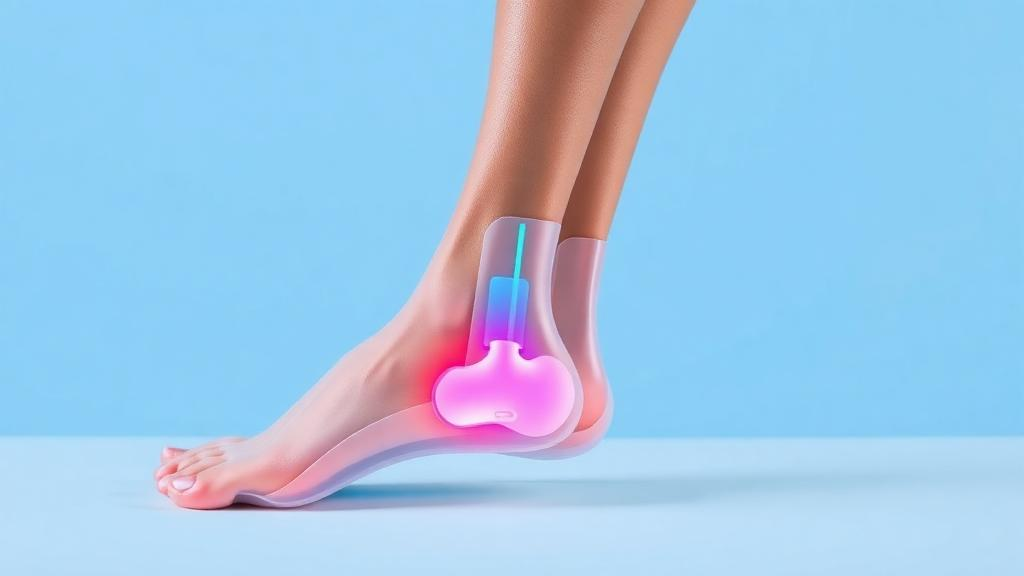
Engineers and clinicians in Japan have shown that a motorized insole designed to nudge the heel into a healthier position at the exact moment of foot strike can be used safely in patients with medial knee osteoarthritis. The study, published in BMC Biomedical Engineering, was explicitly designed as a feasibility trial rather than a test of effectiveness, and its authors are careful to stress that no conclusions about clinical benefit can yet be drawn. Even so, the work addresses practical challenges that the researchers note have hindered existing assistive robots, including bulk, reliance on external power sources, and physical constraints caused by limited joint mobility and muscle atrophy.
Knee osteoarthritis is one of the most common musculoskeletal disorders of aging and a leading cause of impaired lower-limb function. In Japan, an estimated ten million people live with symptomatic knee osteoarthritis, and nearly thirty million are potential patients when radiological diagnoses are counted. As the disease progresses, joint deformity, pain during movement, and restricted range of motion limit standing and stepping activities, eroding mobility and quality of life.
Researchers have long tried to modify these loading patterns from the ground up. Lateral wedge insoles, which tilt the heel outward, have been shown to shift the center of pressure laterally, alter ankle and knee kinematics, and reduce loading on the medial compartment of the knee. Previous work has demonstrated that increasing wedge thickness shifts the load-bearing line laterally and reduces medial knee loading, and that even small changes in wedge angle can produce meaningful biomechanical changes throughout the limb. But a static wedge applies the same correction on every step, while lower-limb kinematics vary from stride to stride. A fixed insole cannot continuously provide optimal alignment at the critical instant of heel contact, when malalignment matters most.
The device described in the new study takes a different approach. It is a compact, 22-millimeter-thick assembly worn inside the shoe, controlled by an Arduino Nano microcontroller and equipped with a six-axis inertial sensor and a stepping motor, with the entire structure produced on a 3D printer. The sensor detects excessive ankle inversion as the heel approaches the ground, and the motor tilts the heel section laterally in the frontal plane, guiding the ankle toward a neutral or slightly everted position. The biomechanical rationale is that excessive inversion at heel contact causes the ground reaction force vector to pass medially relative to the knee joint center, increasing the knee adduction moment and contributing to the varus thrust commonly seen in medial knee osteoarthritis. Correcting the ankle dynamically at heel contact is intended to shift the center of pressure laterally and reduce transient lateral displacement of the shank, while avoiding the overcorrection and discomfort that constant static wedges can cause.
To test whether such an intervention could actually be delivered in a clinical research setting, the team enrolled six ambulatory patients with medial knee osteoarthritis, all diagnosed by a board-certified orthopedic surgeon using clinical examination and weight-bearing radiographs. Radiographic severity ranged across Kellgren–Lawrence grades II and III, with four patients at grade II and two at grade III. The cohort included two men and four women with a mean age of 67.8 years, a mean body mass index of 25.5, and a mean visual analog scale knee pain score of 49.2 millimeters. The mean femoro-tibial angle of 187.5 degrees indicated mild varus alignment, and a mean foot posture index of minus 3.0 indicated a slightly supinated foot posture. All participants gave fully informed written consent, and the protocol was approved by the ethics committee of Gifu University School of Medicine.
The experimental task was deliberately conservative. Rather than continuous walking, participants performed on-the-spot stepping, a choice made to ensure safety and to accommodate the wired prototype. The assist device was attached to the right foot while a dummy device of identical shape and weight was fitted to the left. The right foot was tested under two conditions: Active, with motor control enabled, and Inactive, with the motor disabled. Footwear was standardized across participants to control for confounding effects, with all subjects wearing the same model of shoe individually sized for fit. A physician manually activated the device’s switch roughly 500 milliseconds before heel contact during each stepping motion, after sufficient practice, because the prototype relied on manual rather than automated triggering.
Every predefined feasibility outcome was met. All six participants completed the protocol, a 100 percent recruitment and retention result, and no adverse events, device-related safety concerns, or discomfort requiring termination were observed. The assist mechanism was activated in at least one stepping trial in five of the six participants, and across the full dataset it fired in 39 of 90 stepping trials, or 43 percent. Motion capture data were successfully acquired and analyzed for all 90 trials, with no datasets excluded due to marker loss, hardware malfunction, or processing errors. These results satisfied all the stop/go progression criteria the team had defined in advance, supporting progression to a larger, definitive study.
The study also tested whether a motion-capture-based measure of lateral knee thrust could be reliably collected. Using a VICON three-dimensional motion analysis system sampling at 100 hertz, the researchers tracked reflective markers placed on anatomical landmarks including the pelvis, thigh, knee, ankle, heel, and forefoot. Lateral knee thrust was defined as the maximum distance between the lateral knee epicondyle and lateral malleolus markers during the stance phase, with pelvic rotation calculated from the bilateral anterior superior iliac spine markers and used to correct for rotational displacement between the knee and ankle. This kinematic measure is related to the varus thrust phenomenon described in patients with medial knee osteoarthritis, but in this study it was used purely descriptively.
The descriptive measurements revealed substantial variability. Participant-level lateral knee thrust averaged 64.3 plus or minus 24.1 millimeters under the Active condition and 66.1 plus or minus 25.0 millimeters under the Inactive condition, with overlapping ranges of roughly 28 to 110 millimeters across individuals. Because the study was small and not powered to detect effects, no inferential statistical comparisons were performed, and the authors state plainly that these variations should be interpreted only as information about measurement dispersion, not as evidence of an intervention effect. They note that statements about confirming ankle posture at heel contact or reducing knee loading are beyond the scope of this feasibility study and are not supported by the data.
The practical significance of the work lies in what it enables next. The authors argue that the observed variability in both assist activation and kinematic outcomes suggests the control strategy may need refinement, including automated, sensor-driven triggering of assistance to ensure consistent device engagement during gait-related tasks. The feasibility findings provide concrete input for protocol design, outcome selection, and sample size planning in future adequately powered studies, where the effectiveness of dynamic ankle alignment correction during gait can be rigorously evaluated. For a field in which many assistive robots struggle with bulk, power demands, and the physical constraints of limited joint mobility and muscle atrophy, a compact in-shoe mechanism that intervenes only at the decisive moment of heel contact represents a promising, if still unproven, direction. The next step will be definitive trials that can actually measure whether dynamically correcting the ankle changes the loads that drive medial knee osteoarthritis.
Subject of Research: A feasibility study of a motorized insole device that corrects ankle alignment at heel contact during stepping in patients with medial knee osteoarthritis
Article Title: Feasibility study of an insole-type active assist device for ankle alignment correction during stepping in patients with knee osteoarthritis
Article References: Itami, T., Hirota, R., Iwase, M., Oi, Y., Ebisu, K., & Aoki, T. (2026). Feasibility study of an insole-type active assist device for ankle alignment correction during stepping in patients with knee osteoarthritis. BMC Biomedical Engineering, 8(1), Article 1. https://doi.org/10.1186/s42490-026-00104-z
Image Credits: AI Generated
DOI: 10.1186/s42490-026-00104-z
Keywords: knee osteoarthritis, wearable device, insole, ankle alignment, motion capture, gait biomechanics, lateral knee thrust, feasibility study, rehabilitation technology, assistive device, heel contact, biomechanics
News Source: Denise Maddox. (October 30, 2026). Insole Device That Corrects Ankle Alignment at Heel Contact Passes Feasibility Test in Knee Osteoarthritis Patients. Scienmag.



