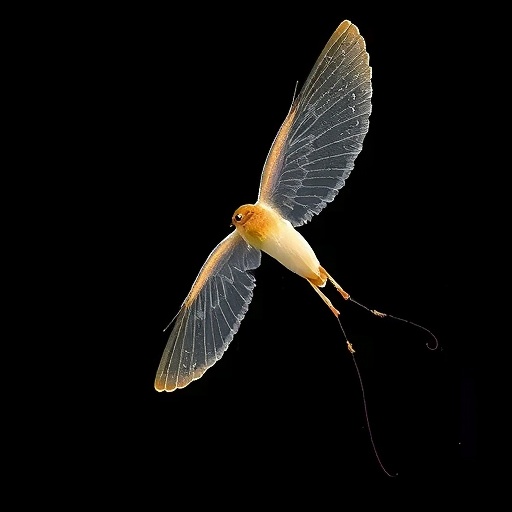
Dragonflies and Damselflies: The Epic Migratory Journeys of Nature’s Aerial Predators
Dragonflies and damselflies, members of the order Odonata, have long captivated naturalists and casual observers alike with their iridescent wings, striking body colors, and acrobatic flight. Beyond their aesthetic appeal, these insects are formidable aerial predators equipped with powerful mandibles and highly specialized compound eyes that grant them exceptional vision. However, recent scientific revelations highlight an extraordinary facet of their biology that has gone largely unnoticed: their capacity for long-distance migration. Much like migratory birds, many dragonfly species undertake journeys spanning continents and oceans, navigating daunting geographical barriers with precision and endurance that defy their small size.
For decades, scattered field observations and isolated research papers hinted at the migratory behavior of several Odonata species, but the extent and complexity of these movements remained obscure. This veil has recently been lifted by a comprehensive meta-analysis conducted by a team of international researchers led by Johanna Hedlund at Lund University. The study meticulously synthesized data from nearly 400 scientific reports, revealing a global pattern of migratory behavior in dragonflies. Their analysis identified 100 species with well-documented migratory routes and another 85 species suspected of migration based on indirect evidence, unveiling a rich and intricate global migration network previously invisible to science.
The scale of dragonfly migration challenges conventional perceptions of these insects as local inhabitants restricted to ponds and wetlands during their brief adult life stages. According to Hedlund, some species traverse thousands of kilometers across continents and even open oceans, undertaking journeys that rival, and in some cases exceed, those of many well-known migratory birds. One of the most astonishing aspects of their migration is the ability to overcome enormous ecological barriers such as the Indian Ocean, the Alps, and expansive arid regions—a feat that requires exceptional physiological adaptations and navigational skills.
The evolutionary drivers behind this migratory behavior appear multifaceted. Migration likely evolved as a survival strategy allowing dragonflies to escape inhospitable conditions such as freezing temperatures, droughts, or environments with limited reproductive potential. Unlike many insects that complete their life cycles within a single generation, most migratory dragonflies execute their epic round-trip journeys over multiple generations. Yet, intriguingly, some species practice a complete migratory circuit within the lifespan of a single individual—a phenomenon rarely documented in insects and one that opens new avenues for behavioral ecology research. These single-generation round trips often involve altitudinal movements, where dragonflies migrate from lowland hatching sites to cooler montane habitats in summer before returning in autumn.
The identification and tracking of these migratory patterns have profound implications for our understanding of insect ecology and biodiversity conservation. Dragonflies, with their conspicuous appearance and relative ease of identification, serve as valuable bioindicators and surrogate taxa for studying the broader, less visible mass migration of insects worldwide. This mass movement includes pollinators such as hoverflies, which play significant roles in ecosystem services, as well as agricultural pests and vectors of disease. By elucidating the migration routes of dragonflies, scientists can infer critical habitats and migratory corridors that warrant protection to preserve the ecological functions of these insect communities.
Moreover, dragonflies are sensitive to environmental changes, particularly water quality and habitat integrity, making them early warning indicators of ecosystem health. Their distribution and migratory success can reflect alterations in climate patterns, land use, and pollution levels. Monitoring shifts in dragonfly migration can thus provide valuable datasets for assessing the impacts of global climate change on terrestrial and freshwater ecosystems. In this light, dragonflies assume a dual role as both migrators and sentinels of environmental change, bridging ecological research, conservation biology, and climate science.
Among the most striking examples of dragonfly migration are species such as Sympetrum frequens, known in Japan as “Akiakane.” This species exemplifies altitudinal migration, ascending from valley habitats to cooler mountain areas during summer and subsequently traversing back to the valleys come autumn. Another prodigious traveler is the globe skimmer (Pantala flavescens), reputed to undertake transoceanic migrations spanning India, the Maldives, and eastern Africa. These journeys cover several thousand kilometers, often performed over open water—a remarkable achievement that necessitates exceptional energy reserves and navigation capabilities.
Closer to Europe, migratory Odonata species are also well documented. Sweden, for instance, hosts migrant hawkers (Aeshna mixta) and the four-spotted chaser (Libellula quadrimaculata), species that carry out seasonal movements across the region. Recently, the vagrant emperor (Anax ephippiger), native to Africa and the Middle East, has been observed expanding its range northward into Europe, including Sweden. This range expansion may signal ongoing climatic shifts influencing species distributions and migration dynamics across continents.
The mechanistic underpinnings of dragonfly migration remain an active area of research. Flight physiology studies indicate that dragonflies exhibit remarkable endurance capabilities supported by their powerful thoracic musculature and efficient wing mechanics, enabling sustained flight. Their navigation is hypothesized to involve a combination of visual cues, polarized light detection, the Earth’s magnetic field, and potentially celestial cues, similar to other migratory insects and birds. The multi-generational nature of migration in many species also raises compelling questions about inherited behavior versus environmental triggers in orienting migratory flight paths.
From an evolutionary biology perspective, the convergence of migratory behavior in multiple dragonfly lineages suggests that migration has evolved independently several times as an adaptive response to environmental challenges. This phenomenon exemplifies the dynamic interactions between physiological constraints, ecological pressures, and climatic variability shaping the life histories of animals over millions of years. Migration confers ecological advantages by enabling organisms to exploit temporally and spatially fluctuating resources, avoid adverse conditions, and enhance reproductive success.
The global review led by Hedlund et al. significantly advances our comprehension of insect migration, highlighting the intricate and previously underappreciated mobility of dragonflies. Such knowledge underscores the importance of expanding research efforts beyond charismatic vertebrates to include vital insect groups that sustain ecosystem functioning. Furthermore, understanding dragonfly migration can inform strategies to mitigate the decline of insect populations worldwide, which face threats from habitat loss, pollution, climate change, and pesticide use.
In conclusion, the secretive migratory journeys of dragonflies and damselflies open a new frontier in ecological research and conservation science. Their incredible flights remind us that even the smallest and most overlooked creatures in the natural world undertake epic voyages that shape ecological interactions on a planetary scale. As we deepen our understanding of these aerial predators, dragonflies emerge not only as marvels of evolutionary adaptation but also as crucial sentinels guiding humanity’s efforts to steward the health of the Earth’s ecosystems amid unprecedented environmental change.
Subject of Research: Migration patterns and evolutionary ecology of dragonflies (Odonata)
Article Title: Flight of the dragons: a global review of migration in Odonata
Web References: http://dx.doi.org/10.1002/brv.70170
Keywords: animal migration, Odonata, dragonfly migration, insect ecology, evolutionary biology, bioindicators, climate change, long-distance migration, altitudinal migration, Pantala flavescens, Sympetrum frequens, Aeshna mixta
Tags: compound eyes in dragonfliesdamselfly migratory behaviordragonfly long-distance migrationdragonfly navigation abilitiesdragonfly species migratory routesendurance in migratory insectsinsect migration patternsJohanna Hedlund migration researchmeta-analysis of insect migrationmigratory behavior in Odonatamigratory insect species global studyOdonata aerial predators