• HOME
  • NEWS
  • EXPLORE
    • CAREER
      • Companies
      • Jobs
    • EVENTS
    • iGEM
      • News
      • Team
    • PHOTOS
    • VIDEO
    • WIKI
  • BLOG
  • COMMUNITY
    • FACEBOOK
    • INSTAGRAM
    • TWITTER
Thursday, August 27, 2026
BIOENGINEER.ORG
No Result
View All Result
  • Login
  • HOME
  • NEWS
  • EXPLORE
    • CAREER
      • Companies
      • Jobs
        • Lecturer
        • PhD Studentship
        • Postdoc
        • Research Assistant
    • EVENTS
    • iGEM
      • News
      • Team
    • PHOTOS
    • VIDEO
    • WIKI
  • BLOG
  • COMMUNITY
    • FACEBOOK
    • INSTAGRAM
    • TWITTER
  • HOME
  • NEWS
  • EXPLORE
    • CAREER
      • Companies
      • Jobs
        • Lecturer
        • PhD Studentship
        • Postdoc
        • Research Assistant
    • EVENTS
    • iGEM
      • News
      • Team
    • PHOTOS
    • VIDEO
    • WIKI
  • BLOG
  • COMMUNITY
    • FACEBOOK
    • INSTAGRAM
    • TWITTER
No Result
View All Result
Bioengineer.org
No Result
View All Result
Home NEWS Science News Chemistry

Deep-sea study of the Earth’s crust receives $1.65 million NSERC-CREATE grant

Bioengineer by Bioengineer
June 2, 2020
in Chemistry
Reading Time: 2 mins read
0
IMAGE
Share on FacebookShare on TwitterShare on LinkedinShare on RedditShare on Telegram

IMAGE

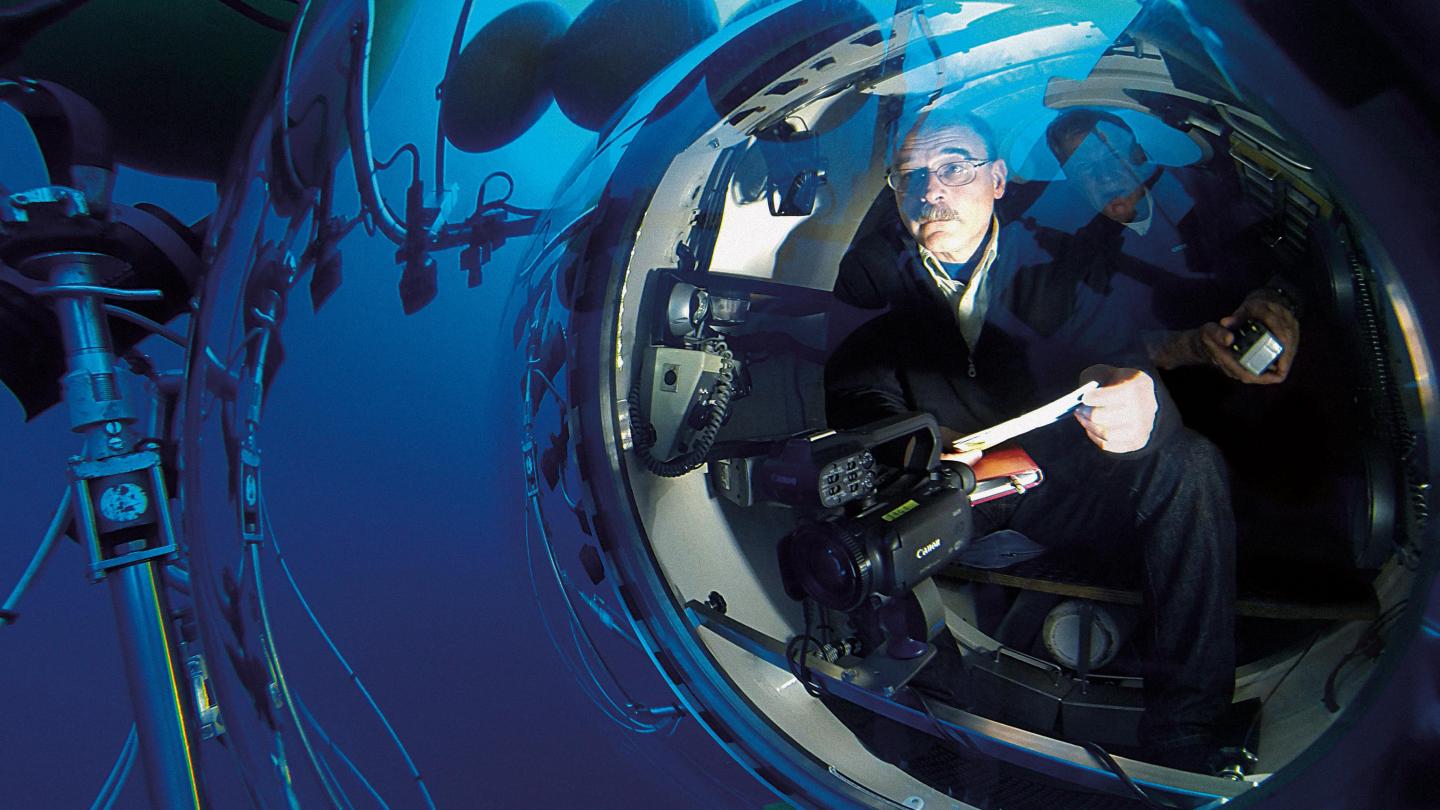
Credit: GEOMAR

To address the challenges of a dwindling global supply of energy and mineral resources, Professor Mark Hannington of the University of Ottawa’s Department of Earth and Environmental Sciences has set his sights on the bottom of the ocean.

Hannington and his team have just received a $1.65-million Collaborative Research and Training Experience (CREATE) grant from the Natural Sciences and Engineering Research Council of Canada (NSERC) to train dozens of graduate students and postdoctoral fellows from Canada and Germany over the next six years. The students will take part in expeditions at sea and on land around the world and benefit from the expertise of leading researchers in geodynamics and georesources, while receiving hands-on training in the application of marine technology.

Along with an international team of land-based geologists and marine scientists, Hannington is looking for clues about the origins of the Earth’s crust and the resources it contains by probing plate tectonics in the deep-sea environment. A better understanding of the Earth’s crust as it currently forms in the oceans may lead to the discovery of resources on land.

“The University of Ottawa applauds Professor Hannington’s leadership in coordinating an international research and training collaboration of such magnitude,” said Sylvain Charbonneau, vice-president, research. “Thanks to the CREATE program, this exceptional immersive training initiative will help develop the highly skilled geoscientists of tomorrow, who will be vital to maintaining Canada’s prominence in the natural resources sector.”

###

Learn more about the NSERC CREATE program.

Media Contact
Justine Boutet
[email protected]

Original Source

http://research.uottawa.ca/news/deep-sea-study-earths-crust-receives-165-million-nserc-create-grant

Tags: Earth ScienceEnergy SourcesGeology/SoilGeophysics/GravityOceanographyPlate Tectonics
Share12Tweet8Share2ShareShareShare2

Related Posts

Review examines how metal nanoparticles move through subsurface environments

Review examines how metal nanoparticles move through subsurface environments

August 26, 2026
Cu/Zn Ratio Tunes CuZnAl Catalysts for Selective 1,4-Butanediol Conversion to γ-Butyrolactone

Cu/Zn Ratio Tunes CuZnAl Catalysts for Selective 1,4-Butanediol Conversion to γ-Butyrolactone

August 26, 2026

Optimizing Ca2FeNbO6 Boosts Polarization and Energy Density in Ferroelectric Polymer Composites

August 26, 2026

Scripps Research’s Jeffery Kelly Elected to European Academy of Engineering

August 26, 2026
Please login to join discussion

POPULAR NEWS

  • JAK2V617F Gold Nanoparticles Suppress IRF7 and TLR9 Activation

    29 shares
    Share 12 Tweet 7
  • Metabolomic and transcriptomic analyses uncover monoterpenoid indole alkaloid biosynthesis in Neolamarckia cadamba

    29 shares
    Share 12 Tweet 7
  • New patches detect volatile metabolites linked to Burkholderia cepacia

    29 shares
    Share 12 Tweet 7
  • Nitrates and Cytokinins Coordinate Nitrogen Efficiency, Plant Growth, Stress Tolerance, and Yield

    29 shares
    Share 12 Tweet 7

About

We bring you the latest biotechnology news from best research centers and universities around the world. Check our website.

Follow us

Recent News

JAK2V617F Gold Nanoparticles Suppress IRF7 and TLR9 Activation

Metabolomic and transcriptomic analyses uncover monoterpenoid indole alkaloid biosynthesis in Neolamarckia cadamba

New patches detect volatile metabolites linked to Burkholderia cepacia

Subscribe to Blog via Email

Enter your email address to subscribe to this blog and receive notifications of new posts by email.

Join 85 other subscribers
  • Contact Us

Bioengineer.org © Copyright 2023 All Rights Reserved.

Welcome Back!

Login to your account below

Forgotten Password?

Retrieve your password

Please enter your username or email address to reset your password.

Log In
No Result
View All Result
  • Homepages
    • Home Page 1
    • Home Page 2
  • News
  • National
  • Business
  • Health
  • Lifestyle
  • Science

Bioengineer.org © Copyright 2023 All Rights Reserved.