• HOME
  • NEWS
  • EXPLORE
    • CAREER
      • Companies
      • Jobs
    • EVENTS
    • iGEM
      • News
      • Team
    • PHOTOS
    • VIDEO
    • WIKI
  • BLOG
  • COMMUNITY
    • FACEBOOK
    • INSTAGRAM
    • TWITTER
Thursday, November 19, 2026
BIOENGINEER.ORG
No Result
View All Result
  • Login
  • HOME
  • NEWS
  • EXPLORE
    • CAREER
      • Companies
      • Jobs
        • Lecturer
        • PhD Studentship
        • Postdoc
        • Research Assistant
    • EVENTS
    • iGEM
      • News
      • Team
    • PHOTOS
    • VIDEO
    • WIKI
  • BLOG
  • COMMUNITY
    • FACEBOOK
    • INSTAGRAM
    • TWITTER
  • HOME
  • NEWS
  • EXPLORE
    • CAREER
      • Companies
      • Jobs
        • Lecturer
        • PhD Studentship
        • Postdoc
        • Research Assistant
    • EVENTS
    • iGEM
      • News
      • Team
    • PHOTOS
    • VIDEO
    • WIKI
  • BLOG
  • COMMUNITY
    • FACEBOOK
    • INSTAGRAM
    • TWITTER
No Result
View All Result
Bioengineer.org
No Result
View All Result
Home NEWS Science News Technology

Deep Reinforcement Learning Method Achieves 92.8 Percent Success on Unseen Tasks

by
November 14, 2026
in Technology
Reading Time: 2 mins read
0
Deep Reinforcement Learning Method Achieves 92.8 Percent Success on Unseen Tasks

Deep Reinforcement Learning Method Achieves 92.8 Percent Success on Unseen Tasks

Share on FacebookShare on TwitterShare on LinkedinShare on RedditShare on Telegram

A deep reinforcement learning framework driven by state-action collaboration and task distribution training achieved a 92.8% success rate and an average reward of 0.858 across unseen test tasks in high-dimensional decision-making environments, according to a study published in Discover Applied Sciences.

In large-scale high-dimensional decision-making scenarios, artificial intelligence systems face significant hurdles maintaining reliable policy outputs under expanding state spaces, intensive combinations of actions, and shifting task distributions. To enhance model generalization, the researchers introduced an approach specifically structured around state-action collaboration and task distribution training.

The research team evaluated the method across three distinct operational domains: industrial scheduling, resource allocation, and continuous control. The experimental framework comprised 18 groups of training tasks and 12 groups of unseen test tasks, with state dimensions spanning 128, 256, and 512 dimensions, and action scales reaching up to ten thousand levels.

On the 12 unseen test tasks, the system narrowed the generalization gap down to 11.6% while restricting the constraint violation rate to 3.4%. In addition to the 92.8% success rate and 0.858 average reward, the model maintained an inference delay of 24.1 milliseconds during testing.

Ablation experiments detailed the individual contributions of each architectural mechanism. Removing state-action collaboration resulted in a 5.6 percentage point decline in task success rate, while removing task distribution training caused the generalization gap to expand by 7.1 percentage points, demonstrating their combined role in improving transfer generalization stability.

Subject of Research: Generalization performance of deep reinforcement learning in high-dimensional decision-making

Article Title: Generalization performance improvement of artificial intelligence deep reinforcement learning algorithms for large-scale high-dimensional decision making

Article References: Zhang, H. (2026). Generalization performance improvement of artificial intelligence deep reinforcement learning algorithms for large-scale high-dimensional decision making. Discover Applied Sciences. https://doi.org/10.1007/s42452-026-09894-2

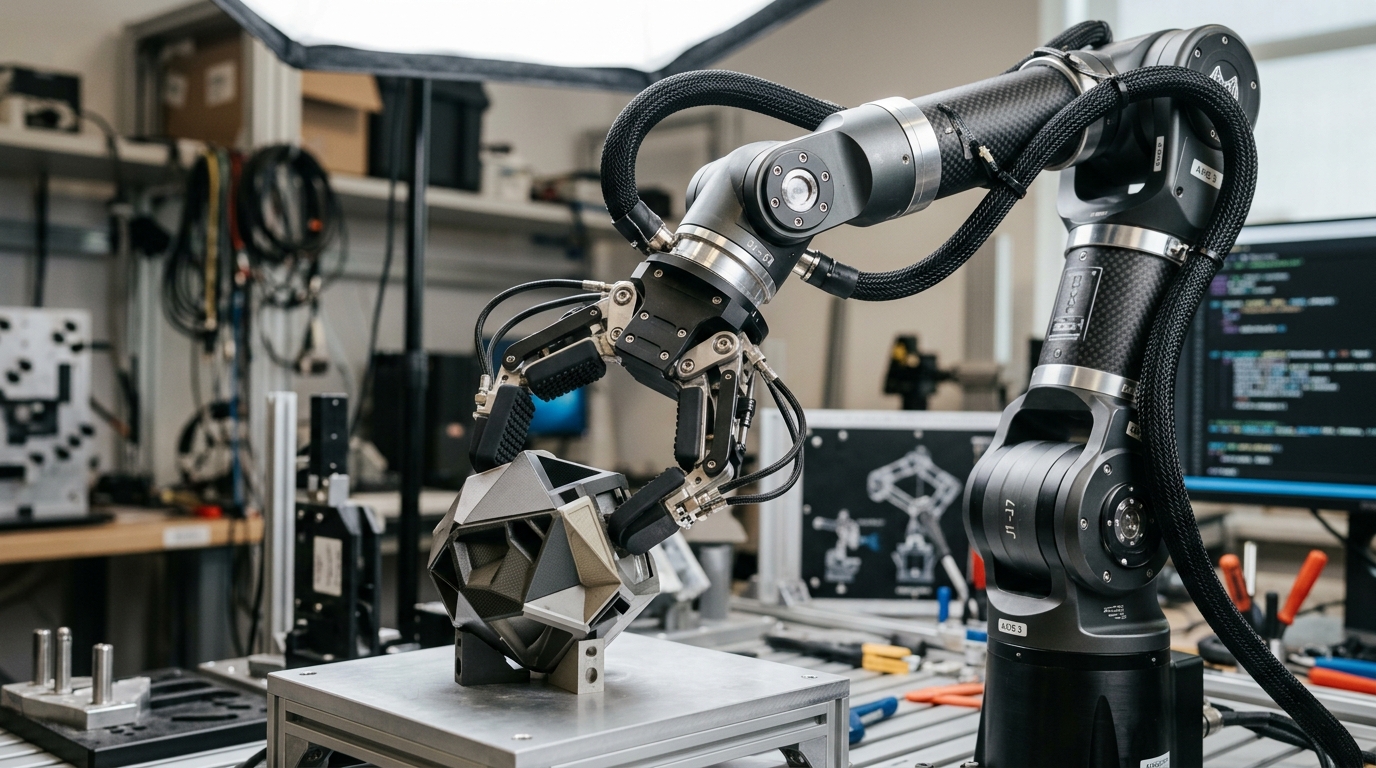
Image Credits: AI Generated

DOI: 10.1007/s42452-026-09894-2

Keywords: deep reinforcement learning, state-action collaboration, task distribution training, generalization performance, high-dimensional decision-making, transfer generalization stability, industrial scheduling, resource allocation, continuous control, generalization gap, constraint violation rate, inference delay, unseen test tasks, action scale, state dimension, ablation experiments, policy output, average reward

News Source: Denise Maddox. (November 14, 2026). Deep Reinforcement Learning Method Achieves 92.8 Percent Success on Unseen Tasks. Scienmag.


Tags: ablation experimentsaction scaleaverage rewardconstraint violation ratecontinuous controlDeep Reinforcement Learninggeneralization gapgeneralization performancehigh-dimensional decision-makingindustrial schedulinginference delaypolicy outputresource allocationstate dimensionstate-action collaborationtask distribution trainingtransfer generalization stabilityunseen test tasks
Share12Tweet7Share2ShareShareShare1

Related Posts

Federated Learning Framework Diagnoses Diabetes Accurately While Protecting Patient Privacy

Federated Learning Framework Diagnoses Diabetes Accurately While Protecting Patient Privacy

November 19, 2026
Adaptive Chassis Control Reduces Intelligent Vehicle Side Slip Angle in Cornering Simulations

Adaptive Chassis Control Reduces Intelligent Vehicle Side Slip Angle in Cornering Simulations

November 19, 2026

Probabilistic Gaussian Mixture Modeling Maps Distinct Psychological Profiles in Competitive Athletes

November 19, 2026

Mathematicians Establish Existence and Error Bounds for Noncyclic Generalized Contraction Mappings

November 19, 2026

POPULAR NEWS

  • Cyanoacrylate Adhesives Speed Extraoral Skin Closure but Certainty Remains Low

    Cyanoacrylate Adhesives Speed Extraoral Skin Closure but Certainty Remains Low

    29 shares
    Share 12 Tweet 7
  • Mid-size Unmanned Ground Vehicles Face Severe Mobility and Scalability Constraints

    29 shares
    Share 12 Tweet 7
  • Computational Framework Matches Biodegradable Implant Resorption Rates to Bone Healing Timelines

    29 shares
    Share 12 Tweet 7
  • Robotic Exoskeleton Gait Training Earns High Satisfaction Despite Wearability and Cost Challenges

    29 shares
    Share 12 Tweet 7

About

We bring you the latest biotechnology news from best research centers and universities around the world. Check our website.

Follow us

Recent News

Gray Bats Strengthen Social Repulsion When Navigating Obstacles in Group Flight

Federated Learning Framework Diagnoses Diabetes Accurately While Protecting Patient Privacy

Mitochondrial-ER Contact Loss Linked to Sarcopenia and Anabolic Resistance, Review Finds

Subscribe to Blog via Email

Enter your email address to subscribe to this blog and receive notifications of new posts by email.

Join 89 other subscribers
  • Contact Us

Bioengineer.org © Copyright 2023 All Rights Reserved.

Welcome Back!

Login to your account below

Forgotten Password?

Retrieve your password

Please enter your username or email address to reset your password.

Log In
No Result
View All Result
  • Homepages
    • Home Page 1
    • Home Page 2
  • News
  • National
  • Business
  • Health
  • Lifestyle
  • Science

Bioengineer.org © Copyright 2023 All Rights Reserved.