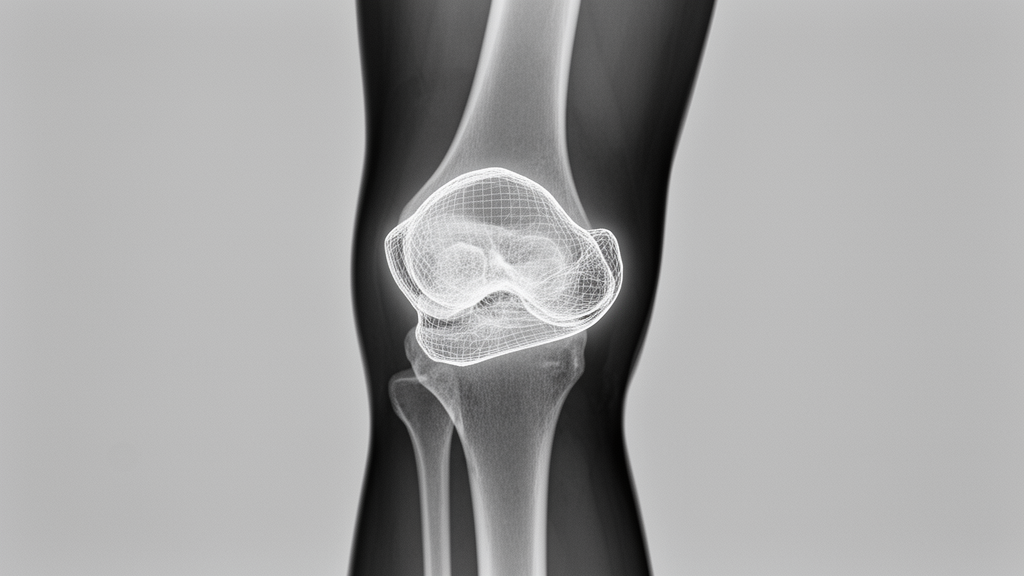
A deep learning framework designated ADC-YOLO improved the automatic localization and boundary delineation of bone tumors on radiographic images, according to research published in Frontiers in Oncology. Automated detection and segmentation of bone lesions on standard X-rays have traditionally posed substantial computational challenges because tumor appearance, image contrast, and anatomical backgrounds vary widely across patient populations and clinical settings.
To address these diagnostic challenges, investigators developed ADC-YOLO by integrating three dedicated structural enhancements into the YOLOv8m baseline architecture. The design incorporates an AOD-Net-derived learnable enhancement block intended to manage contrast and image clarity, a dynamic upsampling module known as DySample, and a Convolutional Block Attention Module that provides joint channel and spatial attention mechanisms during feature processing.
The research team evaluated the model using the public BTXRD dataset, which comprised a total of 3,746 radiographs. For experimental training and evaluation, radiographic images from sources 1 and 3 were partitioned into an internal training cohort of 2,557 images and a validation cohort of 640 images. To assess model generalizability across distinct imaging origins, radiographs from source 2 were entirely reserved as an independent source-held-out test set containing 549 images.
Model performance was evaluated against four existing architectures: Mask R-CNN, baseline YOLOv8m, YOLOv9c, and ASF-YOLO. Investigators measured standard object detection and instance segmentation metrics across bounding boxes and segmented masks, including precision, recall, mean average precision at an intersection-over-union threshold of 0.50 (mAP50), and mean average precision across thresholds ranging from 0.50 to 0.95 (mAP50:95).
Within the 640-image validation cohort, ADC-YOLO recorded a bounding-box mAP50 of 0.772 and an mAP50:95 of 0.482. For instance segmentation masks on the same validation data, the framework reached an mAP50 of 0.797 and an mAP50:95 of 0.490, demonstrating competitive feature localization on images originating from the same imaging environments as the primary training data.
On the 549-image source-held-out test cohort, the unified framework achieved higher overall accuracy metrics, registering a bounding-box mAP50 of 0.849 and an mAP50:95 of 0.551. In parallel, instance segmentation evaluations on the held-out test data yielded a mask mAP50 of 0.869 and a mask mAP50:95 of 0.545, establishing that the architecture maintained lesion localization capabilities when applied to unseen external acquisition sources.
When compared directly against the baseline YOLOv8m architecture on the source-held-out test set, ADC-YOLO produced marked quantitative improvements across all primary endpoints. Bounding-box detection metrics increased by 6.6 percentage points for mAP50 and 6.3 percentage points for mAP50:95. For instance segmentation boundaries, the framework demonstrated gains over YOLOv8m of 6.7 percentage points in mask mAP50 and 4.9 percentage points in mask mAP50:95.
Ablation assessments revealed that although the individual effects of the enhancement block, dynamic upsampling, and attention components varied depending on the specific detection or segmentation task, the complete three-module configuration achieved the highest values across all reported mAP evaluations. The authors concluded that the integrated framework achieved the strongest overall performance among the evaluated models, indicating its potential for automated bone tumor detection and delineation on radiographs.
Subject of Research: Deep learning framework for bone tumor detection and segmentation on radiographs
Article Title: ADC-YOLO: a dehazing-derived enhancement, dynamic upsampling, and attention framework for bone tumor detection and segmentation on radiographs
Article References: Yao, S., Song, Y., & Wei, S. (2026). ADC-YOLO: a dehazing-derived enhancement, dynamic upsampling, and attention framework for bone tumor detection and segmentation on radiographs. Frontiers in Oncology, 16, Article 1963477. https://doi.org/10.3389/fonc.2026.1963477
Image Credits: AI Generated
DOI: 10.3389/fonc.2026.1963477
Keywords: bone tumor, deep learning, radiography, ADC-YOLO, instance segmentation, object detection, YOLOv8m, medical imaging, computer-aided diagnosis, AOD-Net, DySample, CBAM, BTXRD dataset, Frontiers in Oncology, lesion localization, image segmentation, X-ray analysis
News Source: Nathaniel Bowman. (November 21, 2026). Deep Learning Model Improves Bone Tumor Localization and Segmentation on Radiographs. Scienmag.