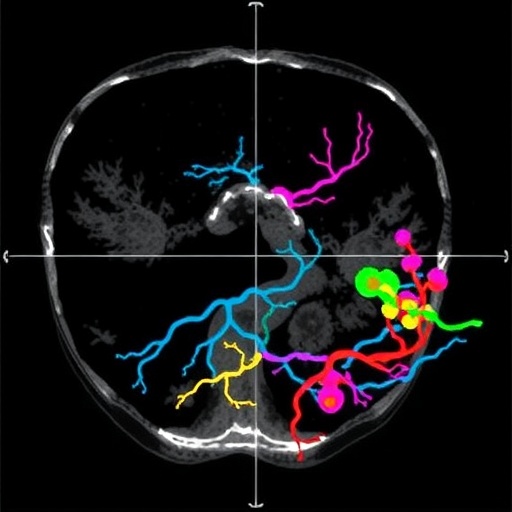
In a groundbreaking fusion of medical imaging and artificial intelligence, researchers have unveiled a novel method for predicting microvascular invasion (MVI) in hepatocellular carcinoma (HCC) using contrast-enhanced ultrasound (CEUS) combined with deep learning techniques. This innovative approach promises to revolutionize preoperative diagnostics for liver cancer patients, potentially improving prognosis and guiding therapeutic strategies.
Microvascular invasion, the presence of tumor cells within the small blood vessels surrounding a carcinoma, is a critical factor in assessing the aggressiveness and likely recurrence of HCC. Traditionally, MVI can only be definitively identified through histopathological examination after surgical resection, limiting its utility in pre-surgical decision-making. Early and accurate prediction of MVI remains a formidable challenge, pivotal in tailoring personalized treatment plans and improving overall survival rates.
The team, led by Pang, Ru, and Liu, leveraged the dynamic imaging capabilities of CEUS—a non-invasive ultrasound technique enhanced through contrast agents that illuminate blood flow and microcirculation within tumors. Unlike conventional MRI or CT scans, CEUS offers real-time visualization of vascular patterns at the microvascular level, capturing subtle perfusion dynamics crucial for identifying MVI markers.
To analyze these complex imaging datasets, the researchers integrated deep learning algorithms, deploying convolutional neural networks (CNNs) trained on extensive CEUS image repositories annotated with confirmed MVI status. The model autonomously deciphered intricate patterns and temporal changes in contrast enhancement that correlate with microvascular infiltration, achieving predictive accuracy that surpasses existing imaging modalities.
This AI-driven diagnostic tool was validated through multicenter clinical trials involving HCC patients scheduled for surgery. The deep learning framework exhibited robust performance in stratifying patients by MVI risk, pinpointing those who might benefit from more aggressive treatments or closer postoperative surveillance. Notably, this method eliminates the need for invasive biopsies, reducing patient risk and healthcare costs.
Beyond its clinical implications, this advancement demonstrates the transformative potential of marrying sophisticated imaging techniques with AI to overcome diagnostic bottlenecks in oncology. The approach could be adapted and expanded to detect vascular invasion in other cancer types, heralding a new era of precision diagnostics.
While this breakthrough is promising, the authors emphasize the necessity for further refinement and larger-scale studies to ensure model generalizability across diverse populations and ultrasound equipment. Future research aims to integrate additional clinical and molecular data to enhance predictive accuracy and clinical decision support.
In essence, this pioneering study underscores a paradigm shift in liver cancer management, empowering clinicians with powerful predictive insights derived from non-invasive imaging and artificial intelligence. It marks a critical step toward personalized oncology, where treatment regimens are informed by precise, preoperative risk assessments, ultimately improving patient outcomes on a global scale.
Subject of Research:
Prediction of microvascular invasion in hepatocellular carcinoma using advanced imaging and AI
Article Title:
Prediction of microvascular invasion in hepatocellular carcinoma using contrast-enhanced ultrasound and deep learning
Article References:
Pang, C., Ru, J., Liu, Y. et al. Prediction of microvascular invasion in hepatocellular carcinoma using contrast-enhanced ultrasound and deep learning. Nat Commun (2026). https://doi.org/10.1038/s41467-026-74985-y
Image Credits: AI Generated
Tags: AI-based preoperative liver cancer assessmentcontrast-enhanced ultrasound imagingconvolutional neural networks for tumor analysisdeep learning in medical diagnosticshepatocellular carcinoma imagingliver cancermedical imaging and artificial intelligence integrationmicrovascular invasion detection techniquesmicrovascular invasion predictionnon-invasive liver cancer prognosispersonalized treatment planning in liver cancerreal-time vascular pattern visualization