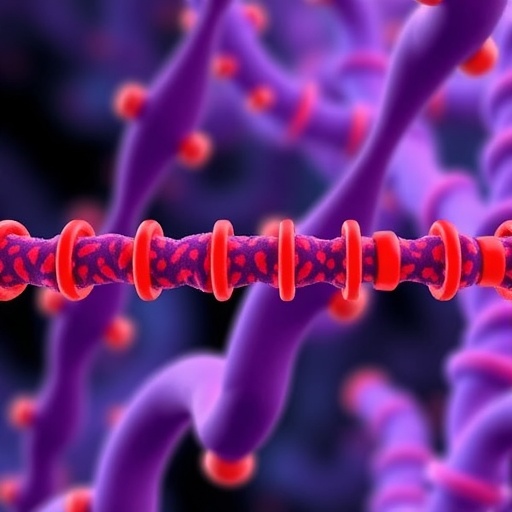
Cancer researchers are turning a deceptively simple piece of DNA into a molecular “decoy” that could disrupt the genetic commands driving tumors. The strategy, reviewed in a new article in Medical Oncology, uses short synthetic nucleic-acid sequences designed to imitate the DNA sites recognized by cancer-promoting transcription factors. By binding these regulatory proteins before they reach the genome, decoy oligonucleotides may interrupt tumor growth, invasion, inflammation and metabolic rewiring without directly editing the cell’s DNA. The review by Maryam Mahjoubin-Tehran, Samaneh Rezaei, Prashant Kesharwani and Amirhossein Sahebkar surveys the technology’s molecular logic, experimental progress and formidable delivery challenges. Rather than presenting a single new drug or clinical trial, the article maps a rapidly developing therapeutic field whose ambition is to control cancer at the point where abnormal signals are converted into gene expression.
Transcription factors are proteins that act as molecular interpreters of cellular signals. When activated, they move into the nucleus and recognize short DNA motifs, often called response elements, positioned near genes. Their binding can recruit coactivators, chromatin-remodeling machinery and RNA polymerase, initiating transcription—the copying of genetic information into messenger RNA. Cancer frequently exploits this system. Proteins such as STAT3, NF-κB and Ets-1 can become persistently active as a result of mutations, inflammatory signals or abnormal growth-factor pathways. Once chronically engaged, they can switch on networks that promote cell division, suppress programmed cell death, stimulate blood-vessel formation, facilitate invasion and alter how tumor cells use glucose and other nutrients. These proteins are therefore attractive targets, but their broad interactions and lack of conventional drug-binding pockets have made them difficult to inhibit with standard small molecules.
A decoy oligonucleotide is intended to create an artificial sink for one of these transcription factors. Researchers synthesize a short, usually double-stranded DNA fragment containing the same or a closely related recognition sequence found in a target gene’s promoter or enhancer. After entering a cell and reaching the nucleus, the decoy can bind the transcription factor through the same base-specific and structural interactions used at genomic DNA. The protein is then diverted away from its natural binding sites. In principle, this blocks transcription across many genes controlled by that factor at once, producing an effect at the network level rather than suppressing only one downstream protein. The approach acts before transcription begins, which distinguishes it from antisense molecules that degrade messenger RNA or prevent its translation, and from genome-editing systems that permanently alter DNA sequences.
STAT3 is one of the most extensively explored targets. The protein is normally activated when cytokines or growth factors stimulate cell-surface receptors, triggering Janus kinases that phosphorylate STAT3. Phosphorylated STAT3 molecules pair with one another, enter the nucleus and bind specific DNA elements. In many tumors, this pathway remains active, helping cells proliferate and resist apoptosis while also shaping an immunosuppressive microenvironment. A STAT3 decoy is designed to capture the activated protein and reduce its access to genomic response elements. The review notes that this concept has progressed beyond cell culture and animal experiments, including a first-in-human study of a STAT3 decoy in head and neck tumors. Other work has examined cyclic STAT3 decoys, whose closed structures are intended to resist degradation and retain activity after administration. These studies provide important translational evidence, but they do not yet establish decoy oligonucleotides as routine cancer treatments.
NF-κB offers a second route into the biology of tumors. This family of transcription factors sits at the intersection of inflammation, immune signaling and cellular survival. In response to stress or inflammatory stimuli, inhibitory proteins are degraded, allowing NF-κB complexes to enter the nucleus and activate genes involved in cytokine production, proliferation and resistance to cell death. Persistent NF-κB activity can reinforce the inflammatory conditions that support tumor progression and treatment resistance. Decoy sequences containing NF-κB-binding motifs can potentially intercept the factor and dampen this transcriptional program. Some studies have combined the strategy with targeted delivery systems, including formulations aimed at tumor-associated macrophages. These immune cells can adopt states that either restrain or support cancer, depending on signals in the tumor microenvironment. Redirecting NF-κB activity in such cells could therefore influence both the malignant cells and the surrounding biological ecosystem.
Ets-1 illustrates how decoys might attack the physical expansion of a tumor. This transcription factor regulates genes associated with extracellular-matrix remodeling, invasion and angiogenesis, the growth of new blood vessels into oxygen-starved tissue. By supplying an Ets-1-binding sequence, researchers aim to sequester the protein and reduce transcription of genes that help cancer cells breach tissue boundaries or recruit vascular support. The review also discusses decoys directed at other regulatory proteins and approaches that can affect more than one oncogenic pathway. In some experimental systems, a single decoy oligodeoxynucleotide has been designed to target multiple oncoproteins, raising the possibility of coordinated pathway suppression. Such breadth could be valuable because tumors often compensate when one signal is blocked. It also creates a central safety question: the same transcription factors that promote cancer can perform essential functions in healthy cells, so excessive or prolonged inhibition may produce unintended effects.
The most stubborn obstacle is not necessarily identifying a useful DNA sequence, but delivering it intact to the right cells. Unmodified oligonucleotides are vulnerable to nucleases, enzymes that cleave nucleic acids in blood and tissues. Their negative charge also limits passive passage across cell membranes, while renal filtration and uptake by non-target tissues can reduce the amount that reaches a tumor. Even after internalization, many molecules become trapped in endosomes—membrane-bound compartments that may eventually recycle their contents or send them for degradation instead of releasing them into the cytoplasm or nucleus. Chemical modifications, including changes to the sugar-phosphate backbone and the use of locked nucleic-acid building blocks, can improve nuclease resistance and binding affinity. Circular “dumbbell” architectures offer another possible advantage by removing vulnerable free ends. Yet every structural modification must be evaluated for effects on pharmacokinetics, immune recognition, toxicity, manufacturing and the ability to release the active molecule inside cells.
Local administration may bypass some of these barriers. Accessible cancers or disease sites in the skin, lungs and eyes can potentially be treated by direct injection, inhalation or other site-specific methods, increasing local exposure while limiting systemic distribution. This model is attractive when the tumor is confined or reachable, but it is poorly suited to metastatic disease, in which malignant cells may be scattered across multiple organs. Systemic treatment requires a delivery vehicle capable of surviving circulation, avoiding rapid clearance, recognizing tumors or their microenvironment and crossing cellular barriers. The review highlights liposomes, polymeric nanoparticles, dendrimers, biomaterials and other nanocarriers as ways to package and protect decoys. Surface ligands may be added to bind receptors enriched on tumor cells, while formulations can be engineered to respond to acidity, enzymes or other conditions characteristic of tumor tissue. Such systems can improve stability and selectivity, but they introduce their own variables, including particle biodistribution, accumulation in the liver and spleen, inflammatory reactions and batch-to-batch manufacturing complexity.
The biological effects of decoys may extend beyond direct suppression of cancer-cell transcription. STAT3 and NF-κB are deeply intertwined with immune-cell behavior, cytokine networks and the tumor microenvironment. A decoy that changes transcription in macrophages, for example, could alter whether these cells support tumor growth or contribute to antitumor immunity. This creates opportunities for combination therapy: decoys might be paired with chemotherapy, radiation, targeted inhibitors or immune checkpoint treatments to weaken resistance mechanisms while another therapy kills tumor cells. At the same time, immune stimulation must be carefully controlled. Certain DNA motifs, particularly unmethylated CpG sequences, can be recognized by Toll-like receptor 9 and activate innate immune responses. That response may be useful in some cancer settings, but it can also cause inflammation or systemic toxicity unrelated to the intended transcription-factor blockade. Sequence design, chemical composition, dose and carrier choice will therefore determine whether a molecule behaves primarily as a gene-regulatory decoy, an immune stimulant or both.
The field’s next phase will depend on converting promising molecular mechanisms into reproducible clinical evidence. Animal models have shown antitumor activity for decoys aimed at STAT3, NF-κB, Ets-1 and other factors, while early human experience suggests that at least some candidates can be administered without obvious severe toxicity. But efficacy in patients will require more than demonstrating that a molecule binds its target in a test tube. Researchers must measure how much active decoy reaches tumors, which cell types take it up, how long it persists, whether it changes the predicted transcriptional program and whether tumors evolve around the blockade. Manufacturing is another practical constraint: therapeutic oligonucleotides may require chemically demanding synthesis, purification and quality control, particularly when complex structures or extensive modifications are used. The review presents decoy technology as a promising next-generation approach to gene regulation, not a finished replacement for existing cancer therapies. Its most compelling promise is precision at the level of oncogenic control circuits; its decisive test will be whether delivery systems can make that precision durable, selective and safe in people.
Subject of Research: Decoy oligonucleotide technology for cancer therapy
Subject of Research: Cancer
Article Title: Decoy oligonucleotide technology in cancer therapy: molecular mechanisms, challenges, and translational potential
Article References: Mahjoubin-Tehran, M., Rezaei, S., Kesharwani, P., & Sahebkar, A. (2026). Decoy oligonucleotide technology in cancer therapy: molecular mechanisms, challenges, and translational potential. Medical Oncology, 43(8), Article 205. https://doi.org/10.1007/s12032-026-03308-4
Image Credits: AI Generated
DOI: 10.1007/s12032-026-03308-4
Keywords: decoy oligonucleotides, transcription factors, cancer therapeutics, gene regulation, drug delivery systems, STAT3, NF-κB, targeted therapy
Cite this news
APA MLA Chicago
SCIENMAG. (August 27, 2026). Decoy Oligonucleotides in Cancer Therapy: Mechanisms, Challenges, and Clinical Potential. https://scienmag.com/decoy-oligonucleotides-in-cancer-therapy-mechanisms-challenges-and-clinical-potential/
SCIENMAG. “Decoy Oligonucleotides in Cancer Therapy: Mechanisms, Challenges, and Clinical Potential.” Scienmag, 27 August 2026, https://scienmag.com/decoy-oligonucleotides-in-cancer-therapy-mechanisms-challenges-and-clinical-potential/. Accessed 27 August 2026.
SCIENMAG. “Decoy Oligonucleotides in Cancer Therapy: Mechanisms, Challenges, and Clinical Potential.” Scienmag. August 27, 2026. https://scienmag.com/decoy-oligonucleotides-in-cancer-therapy-mechanisms-challenges-and-clinical-potential/
Copy citation Download RIS
Tags: advances in molecular cancer therapeuticscancer invasion and metastasis controlchallenges in nucleic acid deliveryclinical potential of decoy oligonucleotidesDecoy oligonucleotides for cancer therapydesign of short synthetic nucleic acid sequencesdisruption of oncogenic signaling pathwaysgene expression disruption in cancergene expression regulation in cancerinflammation modulation in oncologymetabolic rewiring in tumor cellsmolecular mechanisms of decoy DNAmolecular mechanisms of DNA decoysnon-genetic cancer treatment strategiesovercoming delivery barriers in nucleic acid therapysynthetic nucleic acid therapeuticstargeting STAT3 and NF-κB in cancertargeting tumor growth with DNA decoystranscription factor inhibition in cancertranscription factor inhibition in tumorstumor invasion and metastasis inhibition