• HOME
  • NEWS
  • EXPLORE
    • CAREER
      • Companies
      • Jobs
    • EVENTS
    • iGEM
      • News
      • Team
    • PHOTOS
    • VIDEO
    • WIKI
  • BLOG
  • COMMUNITY
    • FACEBOOK
    • INSTAGRAM
    • TWITTER
Monday, May 11, 2026
BIOENGINEER.ORG
No Result
View All Result
  • Login
  • HOME
  • NEWS
  • EXPLORE
    • CAREER
      • Companies
      • Jobs
        • Lecturer
        • PhD Studentship
        • Postdoc
        • Research Assistant
    • EVENTS
    • iGEM
      • News
      • Team
    • PHOTOS
    • VIDEO
    • WIKI
  • BLOG
  • COMMUNITY
    • FACEBOOK
    • INSTAGRAM
    • TWITTER
  • HOME
  • NEWS
  • EXPLORE
    • CAREER
      • Companies
      • Jobs
        • Lecturer
        • PhD Studentship
        • Postdoc
        • Research Assistant
    • EVENTS
    • iGEM
      • News
      • Team
    • PHOTOS
    • VIDEO
    • WIKI
  • BLOG
  • COMMUNITY
    • FACEBOOK
    • INSTAGRAM
    • TWITTER
No Result
View All Result
Bioengineer.org
No Result
View All Result
Home NEWS Science News

Danish researchers invent a new way to compress data

Bioengineer by Bioengineer
August 25, 2020
in Science News
Reading Time: 3 mins read
0
IMAGE
Share on FacebookShare on TwitterShare on LinkedinShare on RedditShare on Telegram

A new project will make it possible to read data directly from compressed IoT data. The project is being headed by researchers from Aarhus University and it is a collaboration with, among others, MIT and Boston University.
IMAGE

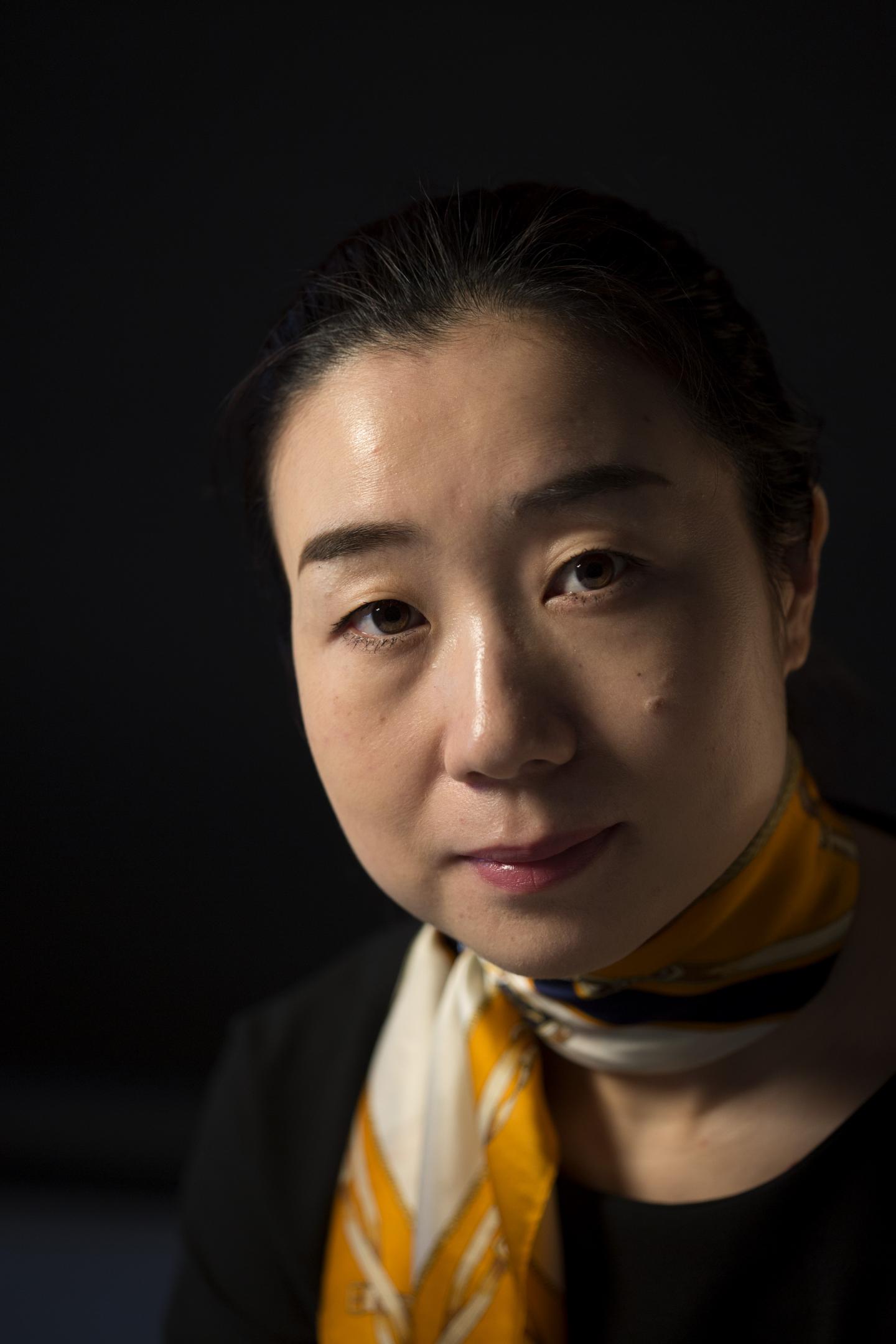
Credit: Lars Kruse, AU Foto

A new project, supported by Independent Research Fund Denmark, will make it possible to read data directly from compressed IoT data. The project is being headed by researchers from Aarhus University and it is a collaboration with, among others, MIT and Boston University.

The Network Computing, Communications and Storage research group at Aarhus University has developed a completely new way to compress data. The new technique provides possibility to analyse data directly on compressed files, and it may have a major impact on the so-called “data tsunami” from massive amounts of Internet of Things (IoT) devices.

With a grant of almost DKK 3 million (EUR 0.4 mill.), the method will now be further developed, and it will form the framework for an end-to-end solution to help scale-down the exponentially increasing volumes of data from IoT devices.

“Today, if you need just 1 Byte of data from a 100 MB compressed file, you usually have to decompress a significant part of the whole file to access to the data. Our technology enables random access to the compressed data. It means that you can access 1 Byte data at the cost of only decompressing less than 100 Bytes, which is several orders of magnitude lower compared to the state-of-the-art technologies. This could have a huge impact on data accessibility, data processing speed and the cloud storage infrastructure,” says Associate Professor Qi Zhang from Aarhus University.

Qi Zhang is heading the project, which is being carried out in collaboration with the Department of Computer Science at Aarhus University and experts from the Massachusetts Institute of Technology (MIT), Boston University, Terma and Energinet.

The compression technique makes it feasible to compress IoT data (typically data in time series) in real time before the data is sent to the cloud. After this, the typical data analytics could be carried out directly on the compressed data. There is no need to decompress all the data or large amounts of it in order to carry out an analysis.

This could potentially alleviate the ever-increasing pressure on the communication and data storage infrastructure. The research group believes that the project’s results will serve as a foundation for the development of sustainable IoT solutions, and that it could have a profound impact on digitalisation:

“Today, IoT data is constantly being streamed to the cloud, and as consequence of the massive amounts of IoT devices deployed globally an exponential data growth is expected. Conventionally, to allow fast frequent data retrieval and analysis, it is preferable to store the data in an uncompressed form. The drawback here is the use of more storage space. If you keep the data in compressed form; however, it takes time to decompress the data first before you can access and analyse it. Our project outcome has the potential not only to reduce data storage space but also to accelerate data analysis,” says Qi Zhang.

###

The project is called Analytics Straight on Compressed IoT Data (Light-IoT), and has been granted funding of DKK 2.9 million from Independent Research Fund Denmark.

Media Contact
Associate Professor Qi Zhang
[email protected]

Original Source

https://ingenioer.au.dk/en/current/news/view/artikel/danish-researchers-invent-a-new-way-to-compress-data/

Tags: Computer ScienceGrants/FundingInternetResearch/DevelopmentSoftware EngineeringTechnology/Engineering/Computer Science
Share12Tweet8Share2ShareShareShare2

Related Posts

New Post-Hoc Analysis Explores Daily Oral Orforglipron Use in Adults Over 65 with Obesity, Regardless of Diabetes Status

May 11, 2026

Evaluating Digoxin Use in Patients with Symptomatic Rheumatic Heart Disease

May 10, 2026

Evaluating the Effectiveness and Safety of Digitalis Glycosides in Treating Heart Failure

May 10, 2026

Urdu Fall Risk Questionnaire Adapted for Elderly

May 10, 2026
Please login to join discussion

POPULAR NEWS

  • Research Indicates Potential Connection Between Prenatal Medication Exposure and Elevated Autism Risk

    840 shares
    Share 336 Tweet 210
  • New Study Reveals Plants Can Detect the Sound of Rain

    727 shares
    Share 290 Tweet 181
  • Salmonella Haem Blocks Macrophages, Boosts Infection

    61 shares
    Share 24 Tweet 15
  • Breastmilk Balances E. coli and Beneficial Bacteria in Infant Gut Microbiomes

    57 shares
    Share 23 Tweet 14

About

We bring you the latest biotechnology news from best research centers and universities around the world. Check our website.

Follow us

Recent News

New Post-Hoc Analysis Explores Daily Oral Orforglipron Use in Adults Over 65 with Obesity, Regardless of Diabetes Status

Evaluating Digoxin Use in Patients with Symptomatic Rheumatic Heart Disease

Evaluating the Effectiveness and Safety of Digitalis Glycosides in Treating Heart Failure

Subscribe to Blog via Email

Enter your email address to subscribe to this blog and receive notifications of new posts by email.

Join 82 other subscribers
  • Contact Us

Bioengineer.org © Copyright 2023 All Rights Reserved.

Welcome Back!

Login to your account below

Forgotten Password?

Retrieve your password

Please enter your username or email address to reset your password.

Log In
No Result
View All Result
  • Homepages
    • Home Page 1
    • Home Page 2
  • News
  • National
  • Business
  • Health
  • Lifestyle
  • Science

Bioengineer.org © Copyright 2023 All Rights Reserved.