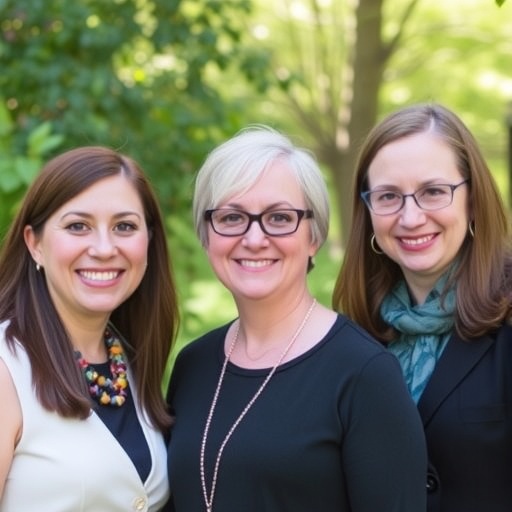
In a groundbreaking move to accelerate the integration of computational methodologies into cancer research, the Damon Runyon Cancer Research Foundation has announced the recipients of its prestigious Quantitative Biology Fellowships for 2026. These awards, designed to foster inter-disciplinary collaboration between computational scientists and cancer biologists, provide vital independent funding to postdoctoral researchers pushing the boundaries of cancer biology through advanced computational tools. This program, now in its seventh year, seeks to harness the transformative power of machine learning, spatial transcriptomics, and network modeling to unlock answers to some of the most persistent and complex challenges in oncology.
The impetus behind these fellowships lies in the rapidly expanding availability of large-scale biological datasets and the increasing necessity for sophisticated computational frameworks to interpret them. Yung S. Lie, PhD, President and CEO of the Damon Runyon Cancer Research Foundation, emphasizes the crucial role of computational expertise in precision medicine, where modeling and data integration are vital for dissecting tumor heterogeneity and treatment responses. The selected fellows epitomize this interdisciplinary approach, bridging “dry” lab quantitative sciences with “wet” lab biological insights to pioneer novel avenues in cancer understanding and intervention.
Among the fellowship recipients is Dr. Minsoo Kim, who focuses on the enigmatic presence of aneuploid cells—cells with abnormal chromosome numbers—in ostensibly healthy breast tissue. Challenging long-held assumptions that normal cells uniformly maintain chromosomal integrity, Dr. Kim’s research investigates these rare aneuploid populations as potential early harbingers of breast cancer. By developing a heterogeneous graph neural network (GNN), his work will jointly model single-cell copy number variations and gene expression data, representing genes, cells, and chromosome segments as distinct nodes. This nuanced modeling approach aims to disentangle gene expression changes driven by chromosomal gains or losses from other transcriptional variations.
Crucially, Dr. Kim intends to extend this computational framework into spatial transcriptomics, which retains the spatial context of gene expression within tissue architecture. This enhancement is designed to illuminate how the microenvironment influences aneuploid cell behavior and interactions, potentially revealing biomarkers for early detection and mechanisms of cancer risk stratification. By applying these analyses to longitudinal breast tissue samples from patients monitored over years, where some subsequently developed cancer, the project aspires to not only refine predictive diagnostics but also offer clinicians tools for earlier, more targeted intervention strategies.
Dr. Sahana Kuthyar’s research addresses a pressing clinical challenge: the elevated risk of severe lung infections in cancer patients undergoing immunosuppressive therapies like chemotherapy and radiation. These treatments, while efficacious against tumors, impair myeloid immune components critical for combating bacterial pathogens, leaving patients vulnerable to conditions such as pneumonia. Moreover, the common clinical practice of providing supplemental oxygen further complicates this risk by altering the pulmonary environment to favor aggressive bacterial proliferation. Dr. Kuthyar’s investigation bridges human and murine models to unravel this complex interplay.
Her computational strategy leverages hierarchical network modeling to integrate gene expression profiles with metabolomic data, applying multi-omics factor analysis for a holistic view of microbial and host immune dynamics under hyperoxic conditions. By cross-validating predictive models between human patients and mouse models, the study aims to iteratively refine understanding of how bacterial adaptation and immune suppression converge to create critical infection vulnerabilities. The insights garnered here may pave the way for predictive diagnostics and novel therapeutic approaches to mitigate life-threatening infections in immunocompromised cancer populations.
Matthew Leventhal, PhD, embarks on a pioneering inquiry into sex chromosome biology within cancer, focusing on the differential roles of active and inactive X chromosomes in females—a subject deeply intertwined with oncogenic potential. Given that females carry two X chromosomes with one subjected to early developmental silencing, mutations impacting the active X chromosome may have outsized consequences on cellular function and tumor progression. Dr. Leventhal’s work centers on developing computational tools capable of resolving the haplotype-specific copy number of chromosomes from bulk whole-genome sequencing data, correcting phasing errors that have historically obscured distinctions between active and inactive X chromosome alterations.
Integrating DNA sequencing with RNA-seq expression data, this methodology will allow for the first pan-cancer analysis of X chromosome dynamics across more than 8,500 tumors spanning 31 cancer types. The goal is to identify recurrent copy number alterations preferentially affecting either the active or inactive X, potentially uncovering novel oncogenic drivers or vulnerabilities previously masked due to analytical limitations. Additionally, determining whether such chromosomal alterations exist in precancerous cells could have transformative implications for early detection and intervention strategies tailored to sex chromosome biology.
The innovations promised by these fellows are testament to the evolving landscape of cancer research, where computational advancements are indispensable to dissecting biological complexity. The utilization of graph neural networks, multi-omics integration, and sophisticated haplotype phasing models exemplifies the next frontier of oncological inquiry, promising heightened precision in diagnosis, prognosis, and treatment. Beyond their individual research agendas, these scientists exemplify the Damon Runyon Foundation’s vision of cultivating interdisciplinary talent equipped to unravel cancer’s multifaceted biology.
Since 1946, the Damon Runyon Cancer Research Foundation has championed early-career investigators, recognizing that the initial years of scientific pursuit are critical for unleashing transformative discoveries. Over $491 million invested and nearly 4,100 funded scientists reflect an enduring commitment to nurturing high-risk, high-reward research. The foundation’s outstanding track record, highlighted by thirteen Nobel laureates among its alumni, underscores its impact on the global cancer research community.
These current fellowships reinforce the need to blur conventional boundaries between computational and biological sciences, reinforcing a paradigm where machine learning algorithms and spatial data are indispensable complements to experimental biology. As the biological sciences grapple with data of unprecedented scale and complexity, the fusion of quantitative expertise and biological insight will catalyze breakthroughs in understanding cancer’s origins, progression, and treatment resistance.
The relevance of this fellow-supported research extends to personalized and precision medicine, where patient-specific molecular data can guide tailored therapeutic regimens. Detecting early aneuploid cell populations, predicting infection risks in susceptible patients, and elucidating sex chromosome influences represent concrete ways in which computational biology is reshaping cancer care. Through these fellowships, the Damon Runyon Foundation equips young scientists with not only resources but also mentorship from leaders in computational and biological cancer research, creating a fertile environment for interdisciplinary innovation.
As these fellows progress, their work is poised to impact fundamental understanding and clinical strategies alike. Whether refining early detection algorithms for breast cancer, unearthing microbial-immune crosstalk in cancer-associated pneumonia, or decoding X chromosome alterations across cancers, these efforts embody a new wave of cancer research empowered by computational sophistication. The field awaits the ripple effects of their discoveries as they translate complex biological data into actionable knowledge with the potential to save lives.
In sum, the 2026 Damon Runyon Quantitative Biology Fellows symbolize a convergence of technology and biology at a pivotal moment in cancer research. Their ambitious projects harness state-of-the-art computational methodologies to tackle profound questions about cancer initiation, progression, and patient vulnerability. Supported by visionary funding and mentorship, these scholars exemplify the future of biomedical research, where multidisciplinary collaboration and quantitative prowess unlock mysteries once deemed impenetrable.
Subject of Research: Computational approaches to cancer biology focusing on early detection, infection risk in immunocompromised patients, and sex chromosome genomics in cancer.
Article Title: Unlocking Cancer’s Complexities: How Computational Pioneers are Shaping the Future of Oncology
News Publication Date: 2026
Web References: http://damonrunyon.org/
Keywords: cancer research, computational biology, machine learning, graph neural networks, spatial transcriptomics, multi-omics analysis, cancer immunology, X chromosome, aneuploidy, precision medicine, early cancer detection, network modeling
Tags: cancer network modelingcomputational cancer researchDamon Runyon Cancer Research Foundationintegration of computational and biological sciencesinterdisciplinary cancer biologylarge-scale biological data analysismachine learning in oncologypostdoctoral cancer research fundingprecision medicine in cancerQuantitative Biology Fellowships 2026spatial transcriptomics applicationstumor heterogeneity modeling