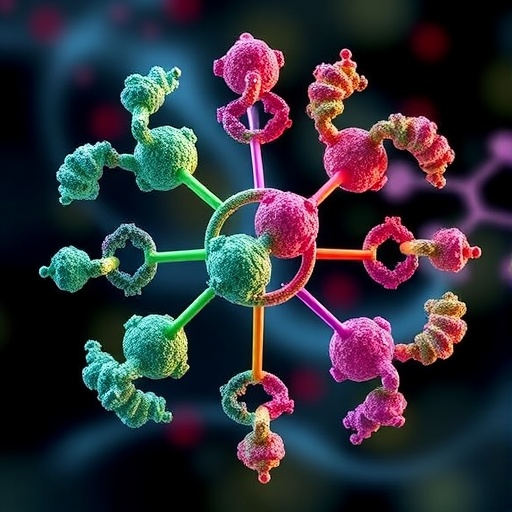
In the evolving landscape of sustainable chemistry, the quest for efficient, cost-effective, and environmentally benign methods to synthesize chiral molecules remains a formidable challenge. A groundbreaking advancement in this domain emerges from the fields of enzymology and biocatalysis, where cytochrome P450 enzymes have long stood as versatile biological catalysts renowned for their ability to oxidize carbon-hydrogen bonds with unparalleled specificity and mild reaction conditions. Recently, a pioneering study led by Prof. Shengying Li at the State Key Laboratory of Microbial Technology, Shandong University, unveils an innovative, green biocatalytic platform harnessing the power of CYP152 peroxygenases — a subclass of cytochrome P450 enzymes — to facilitate the direct and enantioselective α-hydroxylation of aromatic carboxylic acids into valuable (R)-mandelic acid derivatives.
Traditional monooxygenase cytochrome P450s, although extraordinary in substrate versatility and oxidation capacity, have been hampered by their reliance on expensive nicotinamide cofactors such as NAD(P)H and the inefficient electron transfer mediated via redox partner proteins. These limitations not only inflate the cost but also complicate the operational stability and scalability of such enzymatic systems for industrial applications. Contrastingly, CYP152 family enzymes, designated as P450 peroxygenases, circumvent these barriers by utilizing hydrogen peroxide (H₂O₂) directly as an oxidant. This unique catalytic mechanism renders them exceptionally attractive for green chemistry since H₂O₂ is cheap, readily available, and its reduction byproduct is merely water, thereby aligning the enzymatic process with sustainable and atom-economical principles.
Prof. Li’s research group has meticulously dissected and expanded the catalytic potential of microbial CYP152 peroxygenases through intensive molecular engineering. Their approach includes exploring the enzymatic mechanisms, discovering novel enzyme variants, and strategically modifying the protein architecture to enhance substrate specificity and catalytic efficiency. Previous contributions from this group, published across several respected journals, have laid the groundwork for the latest achievement in asymmetric biotransformations, showcasing the robust nature of these biocatalysts and their adaptability toward structurally diverse substrates.
The centerpiece of this breakthrough is the engineering of the P450_BSβ peroxygenase variants, notably the F46A and F292A mutants. These engineered enzymes demonstrate remarkable proficiency in converting phenylacetic acid derivatives — inexpensive and readily accessible starting materials — into (R)-mandelic acid derivatives with unprecedented enantioselectivity and catalytic turnover. The reported total turnover numbers (TTNs) reach an impressive 11,722, indicative of both high enzymatic stability and efficient substrate conversion, while consistently achieving enantiomeric excess (ee) values above 99% across multiple substrate examples. This level of enantio-purity is critical for the application of these hydroxy acids as chiral building blocks in pharmaceutical synthesis.
The ramifications of this enzymatic platform extend far beyond mere synthetic achievement. (R)-mandelic acid and its derivatives occupy a central position in organic synthesis as chiral resolving agents, precursors to medicinal compounds, and key intermediates in various pharmaceutical manufacturing processes. Historically, the synthetic routes toward these molecules have been fraught with difficulties — limited yields, poor stereocontrol, harsh chemical conditions, and environmental burdens from hazardous reagents. The enzymatic route developed by Li et al. offers a sustainable and atom-economic alternative, circumventing the need for metal catalysts or complex cofactor recycling systems, and operating effectively under ambient conditions.
One of the most compelling demonstrations of this technology’s practicality is its scalability. The researchers successfully executed semi-preparative syntheses of (R)-mandelic acid and (R)-p-fluoromandelic acid with isolated yields exceeding 92%, affirming the method’s potential transition from laboratory curiosity to industrial utility. These results exemplify how biocatalysis can marry green chemistry principles with industrially relevant production metrics, potentially revolutionizing the manufacture of high-value chiral hydroxy acids.
Underpinning the enzymatic performance, the structural insights into the CYP152 active site modifications reveal how subtle amino acid substitutions, such as those at phenylalanine residues 46 and 292, modulate the enzyme’s substrate binding pocket and catalytic geometry. These alterations enhance substrate positioning and reactivity, facilitating efficient hydrogen peroxide activation and selective α-hydroxylation. This precision engineering underscores the power of protein design and directed evolution methodologies in tailoring enzyme functionality toward bespoke synthetic goals.
The environmental implications of deploying CYP152 peroxygenase-based processes are significant. By replacing conventional chemical oxidations, which often rely on expensive and toxic metal catalysts or stoichiometric oxidants generating harmful waste, this biocatalytic system adheres to the principles of green chemistry. It reduces hazardous waste generation, lowers energy consumption due to mild operating conditions, and utilizes a benign oxidant whose decomposition product is innocuous water. Such advantages align with global efforts to minimize the chemical industry’s environmental footprint while enhancing process efficiency.
Looking forward, the success of this enzymatic platform paves the way for expanding the substrate repertoire of CYP152 peroxygenases to other structurally challenging molecules, thereby broadening the scope of sustainable biomanufacturing in pharmaceuticals and fine chemicals. The modular nature of enzyme engineering suggests that further customization could unlock access to a wider array of chiral hydroxylated products, offering unprecedented flexibility in synthetic routes.
This research not only marks a pivotal advance in enzyme catalysis but also exemplifies the broader convergence of biotechnology, synthetic chemistry, and sustainable industrial practices. Prof. Li’s statement emphasizes that this strategy not only enriches the toolbox available for chiral molecule preparation but also contributes significantly to the green production of high-value compounds crucial for medicinal and synthetic chemistry.
The study benefits from substantial support provided by the National Natural Science Foundation of China and the Natural Science Foundation of Shandong Province, reflecting the strategic importance and potential impact of this work on both scientific and industrial sectors.
As the chemical industry seeks to transition toward greener methodologies, innovations like this CYP152 peroxygenase system stand at the forefront, demonstrating that sustainable biocatalysis can meet, and even exceed, the efficacy of traditional synthetic approaches. The integration of such enzymatic tools promises to redefine chiral synthesis paradigms, unlocking new avenues for efficient and environmentally friendly drug development.
Subject of Research: Biocatalytic asymmetric α-hydroxylation of aromatic carboxylic acids using engineered CYP152 peroxygenases.
Article Title: CYP152 Peroxygenases Open a Green Pathway to Chiral Molecules.
News Publication Date: Information not explicitly provided; article DOI indicates 2025.
Web References:
http://dx.doi.org/10.1016/j.scib.2025.10.031
References:
Angew. Chem. Int. Ed. 2025, 2021; Sci. Bull. 2024; Biotechnol. Biofuels 2020, 2019, 2017, 2015, 2014; ChemCatChem 2019; Sci. Rep. 2017
Image Credits: ©Science China Press
Keywords
Life sciences, Health and medicine, Chemistry, Pharmaceuticals
Tags: aromatic carboxylic acidschiral molecule synthesiscost-effective enzymatic processesCYP152 peroxygenasesCytochrome P450 enzymesenantioselective oxidationenvironmentally friendly oxidation methodsgreen chemistry advancementshydrogen peroxide utilizationmandelic acid derivativesmicrobial technology innovationssustainable biocatalysis