• HOME
  • NEWS
  • EXPLORE
    • CAREER
      • Companies
      • Jobs
    • EVENTS
    • iGEM
      • News
      • Team
    • PHOTOS
    • VIDEO
    • WIKI
  • BLOG
  • COMMUNITY
    • FACEBOOK
    • INSTAGRAM
    • TWITTER
Sunday, November 22, 2026
BIOENGINEER.ORG
No Result
View All Result
  • Login
  • HOME
  • NEWS
  • EXPLORE
    • CAREER
      • Companies
      • Jobs
        • Lecturer
        • PhD Studentship
        • Postdoc
        • Research Assistant
    • EVENTS
    • iGEM
      • News
      • Team
    • PHOTOS
    • VIDEO
    • WIKI
  • BLOG
  • COMMUNITY
    • FACEBOOK
    • INSTAGRAM
    • TWITTER
No Result
View All Result
Bioengineer.org
No Result
View All Result
Home NEWS Science News Chemistry

Curcumin Polymer Carriers Require Rigorous Biological Evidence Beyond Controlled Release

by
November 21, 2026
in Chemistry
Reading Time: 2 mins read
0
Curcumin Polymer Carriers Require Rigorous Biological Evidence Beyond Controlled Release

Curcumin Polymer Carriers Require Rigorous Biological Evidence Beyond Controlled Release

Share on FacebookShare on TwitterShare on LinkedinShare on RedditShare on Telegram

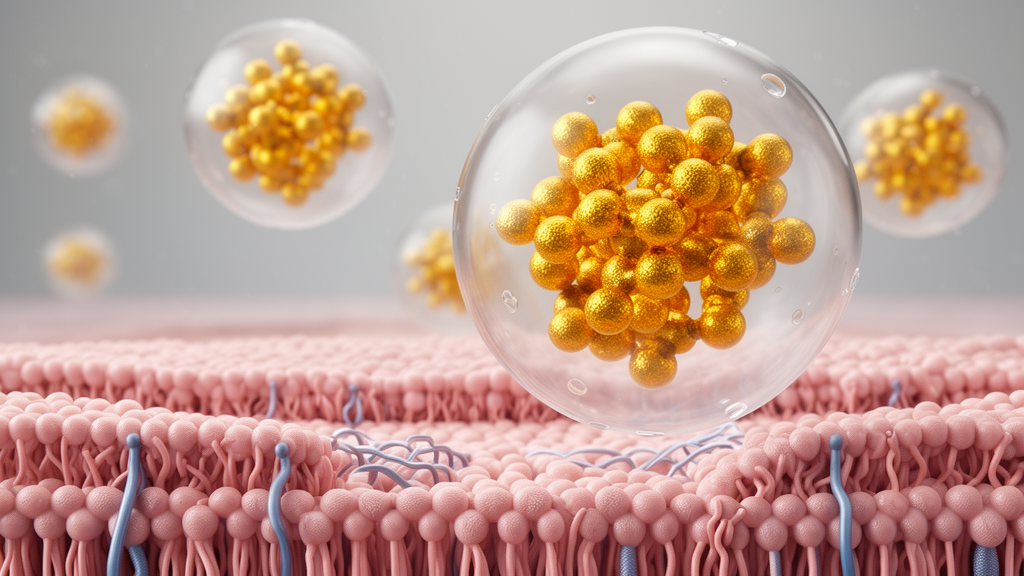
A comprehensive scientific review has examined curcumin-integrated polymeric and hybrid composite systems, focusing on the direct relationships connecting carrier architecture, physicochemical properties, release mechanisms, and overall biomedical performance. Published in Polymer Bulletin, the review critically evaluates how specific structural strategies—notably drug-carrier interactions, covalent conjugation, and nanoscale confinement—act to regulate curcumin stability, encapsulation capacity, and release kinetics across advanced drug delivery platforms.

The survey encompasses a broad range of material categories, examining synthetic polymers, polysaccharide matrices, and protein-based carriers alongside polymer–inorganic nanohybrids, framework-structured composites, and metal–organic frameworks. By analyzing these varied architectures, the authors detail how compositional choices influence molecular encapsulation and release behavior, emphasizing that the physical construction of each matrix plays a fundamental role in controlling the stability and confinement of the active compound.

Across the selected formulations analyzed in the literature, reported particle dimensions range from approximately 110 to 400 nanometers. Furthermore, these composite systems achieve encapsulation efficiencies between 83 percent and 99.9 percent, paired with sustained drug release extending up to 72 hours. However, the evaluation explicitly highlights that these quantitative performance metrics are not universal, as observed particle sizes, loading efficiencies, and release durations depend heavily on specific formulation compositions and distinct preparation conditions.

The review investigates diverse potential biomedical applications for these composite systems, discussing anticancer, antimicrobial, anti-inflammatory, and wound-healing therapies alongside developments in tissue engineering, targeted delivery, phototherapy, bioimaging, and theranostics. In evaluating these therapeutic avenues, the paper also examines critical translational aspects, including material biosafety, biodegradation pathways, biological fate, and prominent clinical translation barriers that currently confront hybrid composite technologies.

Despite notable formulation-specific advances, the authors caution that achieving improved encapsulation efficiencies and sustained drug release alone does not establish therapeutic efficacy or ensure long-term biological safety. To successfully advance curcumin-integrated polymeric and hybrid composite systems toward real-world biomedical applications, the review concludes that researchers must establish standardized material characterization, rigorous comparative evaluations, formulation-specific toxicological assessments, and dependable pharmacokinetic and biological evidence.

Subject of Research: Curcumin-integrated polymeric and hybrid composite drug delivery systems

Article Title: Curcumin-integrated polymeric and hybrid composite systems for advanced drug delivery: design, structure–property relationships, and biomedical applications

Article References: Shrimali, I., Sharma, L., Sharma, S., Kour, M., Jadoun, S., Seifalian, A. M., & Chauhan, N. P. S. (2027). Curcumin-integrated polymeric and hybrid composite systems for advanced drug delivery: design, structure–property relationships, and biomedical applications. Polymer Bulletin, 84(1), Article 50. https://doi.org/10.1007/s00289-026-06805-8

Image Credits: AI Generated

DOI: 10.1007/s00289-026-06805-8

Keywords: curcumin, polymeric carriers, hybrid composites, drug delivery systems, nanoscale confinement, covalent conjugation, synthetic polymers, polysaccharide matrices, protein-based carriers, metal-organic frameworks, polymer-inorganic nanohybrids, encapsulation efficiency, sustained release, targeted delivery, theranostics, biosafety, pharmacokinetics

News Source: Neil Sanderson. (November 21, 2026). Curcumin Polymer Carriers Require Rigorous Biological Evidence Beyond Controlled Release. Scienmag.

Tags: biosafetycovalent conjugationcurcumindrug delivery systemsencapsulation efficiencyhybrid compositesMetal-Organic Frameworksnanoscale confinementPharmacokineticspolymer-inorganic nanohybridspolymeric carrierspolysaccharide matricesprotein-based carrierssustained releasesynthetic polymersTargeted Deliverytheranostics
Share12Tweet7Share2ShareShareShare1

Related Posts

Exfoliated Dual-Ligand Cobalt and Nickel Nanosheets Boost Photoelectrocatalytic Water Oxidation

Exfoliated Dual-Ligand Cobalt and Nickel Nanosheets Boost Photoelectrocatalytic Water Oxidation

November 22, 2026
Rosemary-Derived Cobalt Complexes Enhance Crystallinity and Optical Response in Biopolymers

Rosemary-Derived Cobalt Complexes Enhance Crystallinity and Optical Response in Biopolymers

November 22, 2026

Ceramic Amphorae Shape Wine Chemistry Through Oxygen Transfer and Mineral Exchange

November 21, 2026

Encapsulated Soybean Oil Bodies Stabilize Egg-Free Mayonnaise When Paired With Whey Protein

November 21, 2026

POPULAR NEWS

  • Spatial Transcriptomics Maps Cellular Shifts During Mouse Intestinal Regeneration After Radiation

    Spatial Transcriptomics Maps Cellular Shifts During Mouse Intestinal Regeneration After Radiation

    29 shares
    Share 12 Tweet 7
  • Infant Gut Metabolites Link Cesarean Delivery to Elevated Childhood Asthma Risk

    29 shares
    Share 12 Tweet 7
  • Neural Network With Sliding Data Window Enhances Autonomous Ship Path Following

    29 shares
    Share 12 Tweet 7
  • Crayfish Optimization Paired with Gaussian Regression Accurately Predicts Mine Blasting Fragmentation

    29 shares
    Share 12 Tweet 7

About

We bring you the latest biotechnology news from best research centers and universities around the world. Check our website.

Follow us

Recent News

Direct Integration of GIS and AI in Tuberculosis Studies Remains Rare

Cortical Folding Motifs Reveal Distinct Brain Shape Variations and Asymmetry From Infancy

Parkinson’s Review Finds Gene-Smoking Interactions Across Seventeen Genes Lack Replication

Subscribe to Blog via Email

Enter your email address to subscribe to this blog and receive notifications of new posts by email.

Join 89 other subscribers
  • Contact Us

Bioengineer.org © Copyright 2023 All Rights Reserved.

Welcome Back!

Login to your account below

Forgotten Password?

Retrieve your password

Please enter your username or email address to reset your password.

Log In
No Result
View All Result
  • Homepages
    • Home Page 1
    • Home Page 2
  • News
  • National
  • Business
  • Health
  • Lifestyle
  • Science

Bioengineer.org © Copyright 2023 All Rights Reserved.