


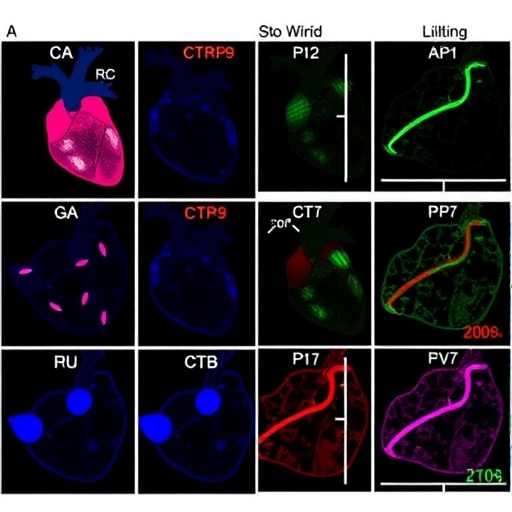
Recent research published in the Journal of Translational Medicine has brought to light the promising potential of CTRP9 in addressing heart failure, particularly in patients with preserved ejection fraction (HFpEF). This condition presents a significant challenge globally, as it affects a large demographic yet lacks effective treatment strategies. Researchers led by Xin et al. are paving the way for new therapeutic approaches that could transform the landscape of heart failure management. Their findings suggest that CTRP9, a member of the C1q/TNF-related protein family, plays a pivotal role in regulating lipid metabolism, which is critical in the pathophysiology of HFpEF.
The investigation into CTRP9’s function initiated from earlier studies that highlighted the importance of metabolic pathways in cardiovascular diseases. It has long been established that impaired lipid metabolism contributes to various forms of heart disease, and HFpEF is no exception to this rule. By examining the intricate relationship between CTRP9 levels and lipid profiles in patients, the research team discovered a compelling correlation. They found that diminished levels of CTRP9 were associated with unfavorable lipid profiles that exacerbate heart failure symptoms.
Mechanistically, CTRP9 appears to enhance lipid oxidation while simultaneously reducing lipogenesis. This dual action not only helps in restoring a healthy lipid profile but may also contribute to improved cardiac function. The heart, being a highly energy-dependent organ, relies significantly on fatty acids as a fuel source. Therefore, any disruption in lipid metabolism can lead to energy deficits, which ultimately affect heart performance. By modulating these metabolic pathways, CTRP9 emerges as a vital candidate for treatment strategies aimed at HFpEF.
In their study, Xin and colleagues utilized a combination of in vivo and in vitro experiments to substantiate their claims. One striking finding was that the administration of CTRP9 in experimental models of heart failure led to marked improvements in parameters such as cardiac output and muscle contractility. These benefits were attributed to the restoration of metabolic homeostasis, suggesting that CTRP9 not only acts as a metabolic regulator but also protects cardiac tissue from stress-induced damage.
Furthermore, the researchers investigated the signaling pathways involved in CTRP9’s action. They identified several key pathways that are activated upon CTRP9 treatment, including the AMP-activated protein kinase (AMPK) pathway, which is known for its role in cellular energy homeostasis. This discovery adds a layer of complexity to our understanding of CTRP9, indicating that its cardioprotective effects may also be linked to broader metabolic regulatory mechanisms.
In parallel with the metabolic insights, the study also delved into the inflammatory responses associated with heart failure. Chronic inflammation is a hallmark of HFpEF, and it exacerbates lipid metabolism disturbances. The administration of CTRP9 was shown to downregulate pro-inflammatory cytokines, providing another avenue through which CTRP9 can ameliorate heart failure symptoms. This finding not only underscores the multifaceted role of CTRP9 but also opens up opportunities for combination therapies that tackle both metabolic dysregulation and inflammation in heart failure patients.
As the research progresses, the authors encourage further clinical studies that could establish CTRP9 as a viable therapeutic agent for heart failure. Given the complexity of HFpEF and the limited treatment options currently available, the introduction of a novel treatment targeting lipid metabolism could have profound implications. The concept of leveraging metabolic regulators like CTRP9 to improve cardiac function represents a paradigm shift in how we approach heart disease management.
Looking forward, the implications of this research may extend beyond HFpEF. The connection between CTRP9 and lipid metabolism suggests that similar therapeutic strategies could be developed for other cardiovascular diseases characterized by metabolic disturbances. Moreover, understanding the precise molecular mechanisms underpinning CTRP9 action could unveil new therapeutic targets, potentially leading to a broader spectrum of treatments for various heart conditions.
In conclusion, the study conducted by Xin et al. highlights the significance of CTRP9 as more than just a biological marker; it positions CTRP9 as a potential cornerstone in the therapeutic landscape for heart failure with preserved ejection fraction. As research continues to unfold, the hope is that these findings will catalyze a new wave of innovative interventions that not only improve heart function but also enhance the quality of life for millions suffering from this debilitating condition.
Through innovative research and enhanced understanding of underlying mechanisms, the narrative surrounding heart failure is poised to evolve. The promise of CTRP9 ignites optimism not only in scientific circles but also among the patient community yearning for effective solutions in cardiovascular health.
Subject of Research: Cardiac Lipid Metabolism and Heart Failure
Article Title: CTRP9 ameliorates heart failure with preserved ejection fraction by regulating lipid metabolism
Article References:
Xin, J., Liu, R., Deng, M. et al. CTRP9 ameliorates heart failure with preserved ejection fraction by regulating lipid metabolism.
J Transl Med (2026). https://doi.org/10.1186/s12967-025-07661-2
Image Credits: AI Generated
DOI: 10.1186/s12967-025-07661-2
Keywords: Heart Failure, CTRP9, Lipid Metabolism, Ejection Fraction, Cardiovascular Disease, Metabolic Regulation, Inflammation.
Tags: C1q/TNF-related protein familycardiovascular disease metabolic pathwaysCTRP9 and heart failureenhancing lipid oxidation in heart failureheart failure management strategiesimpaired lipid metabolism in heart diseaselipid metabolism in HFpEFpreserved ejection fraction challengesreducing lipogenesis in heart diseaserole of CTRP9 in lipid profilestherapeutic approaches for heart failureXin et al. research on CTRP9



