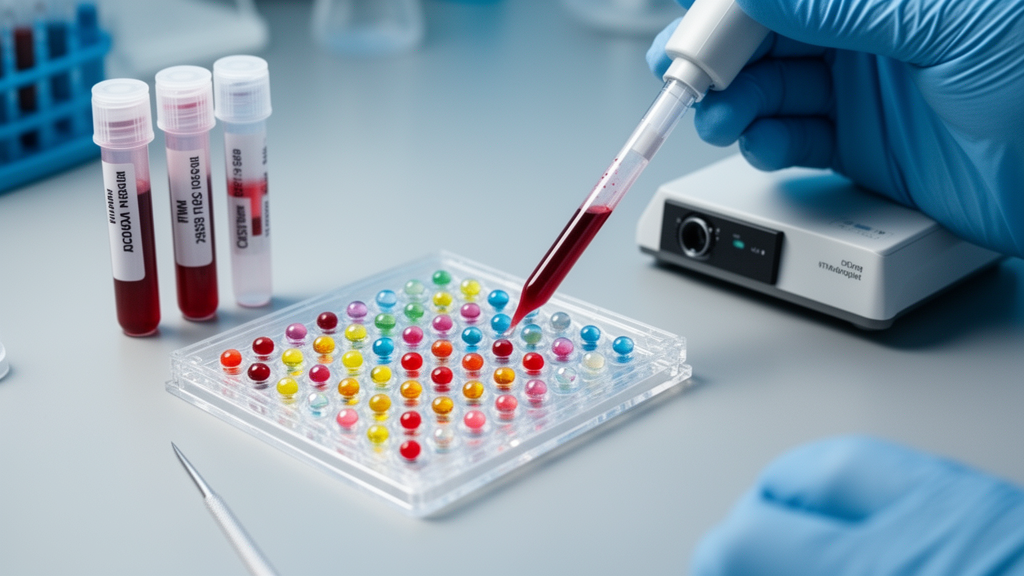
A peer-reviewed experimental study found that a CRISPR-assisted nanodroplet assay identified species and subspecies of nontuberculous mycobacteria in human respiratory samples in about four hours. Tested with 230 clinical samples, the platform, called CANDI (CRISPR-assisted Nanodroplet Differential Identification), correctly classified the organisms with 97.3% accuracy. The study, conducted by researchers at Tulane University and published on September 16, 2026, in Science Translational Medicine, evaluated the assay specifically for identifying NTM pathogens rather than distinguishing NTM disease from tuberculosis.
Nontuberculous mycobacteria, commonly abbreviated NTM, form a group of approximately 200 environmental bacteria found in soil and water, including household plumbing. Although they generally pose little threat to healthy people, these organisms can cause chronic, tuberculosis-like lung infections. The release reports that NTM lung disease affects as many as 300,000 Americans annually and has a five-year mortality rate approaching 18%. The illness is particularly consequential for older adults, people with underlying lung conditions and people with weakened immune systems, including some patients receiving cancer treatment or living with HIV.
NTM lung disease can be mistaken for tuberculosis because their symptoms are similar, but their treatments differ significantly. A misdiagnosis can therefore place a patient on an incorrect treatment plan for months, while the time required to identify the responsible organism can also prolong physical and emotional distress. The current standard diagnostic approach described in the release can take four to six weeks. CANDI was designed to analyze mucus from the lungs and other respiratory fluids and to screen for up to 15 clinically relevant NTM species and subspecies simultaneously, giving clinicians more specific information than a result that only indicates that nontuberculous mycobacteria are present.
Lead investigator Bo Ning, an assistant professor of molecular biology at Tulane University School of Medicine, said the slow diagnostic process leaves patients without an answer about the organism causing their disease or the treatment plan that should follow. The reported findings show that CANDI can rapidly identify NTM species and subspecies with high accuracy in the evaluated sample set. Because the source describes an experimental study using human tissue samples, it does not establish whether the assay will perform similarly in every clinical setting, what implementation would cost, or whether using its results to guide treatment improves patient outcomes. Although the method was designed for NTM infections, Ning characterized it as a platform technology that might be adapted for multiplex bacterial identification in other infections; the supplied evidence does not report tests of such applications.
Subject of Research: Experimental evaluation of a four-hour CRISPR nanodroplet assay for identifying nontuberculous mycobacteria in human respiratory samples
Article Title: New test could dramatically speed diagnosis of hard-to-detect lung infections
Article References: New test could dramatically speed diagnosis of hard-to-detect lung infections. Original publication (Bibliographic details unavailable.)
Image Credits: AI Generated
DOI: Not provided
Keywords: NTM lung disease, nontuberculous mycobacteria, CRISPR diagnostics, nanodroplet assay, respiratory samples, bacterial identification, clinical samples, Tulane University, infectious disease, molecular diagnostics, test, dramatically
News Source: Juliet Wilcox. (October 26, 2026). CRISPR nanodroplet assay identifies NTM species in human samples within four hours. Scienmag.