As authorities crack down on illicit drugs, University of South Australia experts have issued an alert on the use of the synthetic stimulant pentylone, as new research finds a 75% increase in detections across Australia.
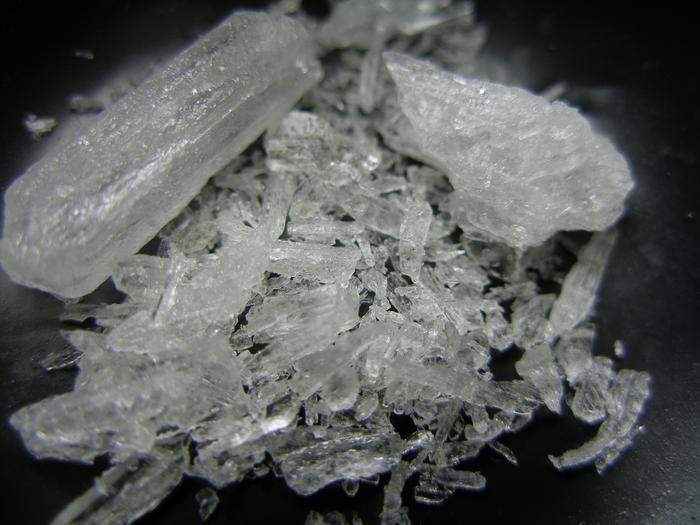
Credit: “Crystal Meth” by Radspunk is licensed under CC BY-SA 4.0.
As authorities crack down on illicit drugs, University of South Australia experts have issued an alert on the use of the synthetic stimulant pentylone, as new research finds a 75% increase in detections across Australia.
In a new study as part of the Australian Criminal Intelligence Commission’s National Wastewater Drug Monitoring Program, researchers identified 20 different novel psychoactive substances (NPS) in wastewater treatment plants across Australia (between Feb 22-23) with pentylone detected at every collection site. Other NPS, eutylone and phenibut were also commonly detected.
Pentylone, (street name ‘bath salts’), is a highly potent and unpredictable synthetic cathinone*, producing similar effects to stimulants such as methamphetamine or MDMA. This group of drugs produces stronger effects that wear off faster, leading to more frequent use.
Users of novel psychoactive substances are at risk due to limited information about the toxicity and unpredictable effects of these compounds.
In 2022 Australia had 1693 drug-induced deaths (64% males and 36% females).
UniSA researcher, Dr Emma Jaunay says any changes to drug levels in wastewater can provide an early warning for NPS circulating in the illicit drug market.
“Novel psychoactive substances are drugs that have been designed to mimic established illicit drugs, such as cannabis, cocaine, MDMA and LSD,” Dr Jaunay says.
“These types of drugs are unregulated and untested, and by nature their chemical composition is constantly changing to stay ahead of the law. When they first appear, they’re commonly called ‘legal highs’ because they are not yet classed as controlled or prohibited substances.
“In this study, we tested wastewater from across Australia to determine what type of NPS were being used across the year. Of the 59 different NPS we looked for, 20 were found in wastewater across the study – some occasionally, while others were at every site for multiple collections.
“The most common group of NPS detected were synthetic cathinones, also known as ‘bath salts’, which mimic the effect of stimulant drugs like MDMA.
“Specifically, we detected an increase of pentylone across Australia, with frequencies rising from 25% in April in 2022 to 100% across all states and territories by December that same year**.
“Interestingly, we found pentylone displaced eutylone, which highlights the constantly evolving nature of NPS, and how quickly drug preferences change.”
This study is unique in that the sample intentionally avoided special events and holiday periods to determine more typical trends across the year.
“Changes to drug levels present in wastewater can provide early signals about drug use and raise awareness of new drugs with harm potential,” Dr Jaunay says.
“Routine monitoring provides valuable insights about illicit drugs and their ‘legal’ counterparts before overdoses and fatalities occur.”
Notes to editors:
- *Synthetic cathinones such as pentylone, eutylone and phenibut are mostly white or brown powders, but can also be in crystalline form, capsules, or tablets. They can be swallowed, snorted or injected with effects appearing within 15-45 minutes and lasting from 2-4 hours.
- Additional illicit drug data here: https://www.aihw.gov.au/reports/alcohol/alcohol-tobacco-other-drugs-australia/contents/impacts/health-impacts#druginduceddeaths
…………………………………………………………………………………………………………………………
Media contact: Annabel Mansfield M: +61 479 182 489 E: [email protected]
UniSA researcher: Dr Emma Jaunay E: [email protected]
Journal
Science of The Total Environment
DOI
10.1016/j.scitotenv.2024.170473
Method of Research
Case study
Subject of Research
Not applicable
Article Title
Monitoring the use of novel psychoactive substances in Australia by wastewater-based epidemiology
Article Publication Date
1-Apr-2024
COI Statement
The authors declare the following financial interests/personal relationships which may be considered as potential competing interests: Cobus Gerber reports financial support was provided by Drug and Alcohol Services South Australia. Cobus Gerber reports financial support was provided by Australian Criminal Intelligence Commission.