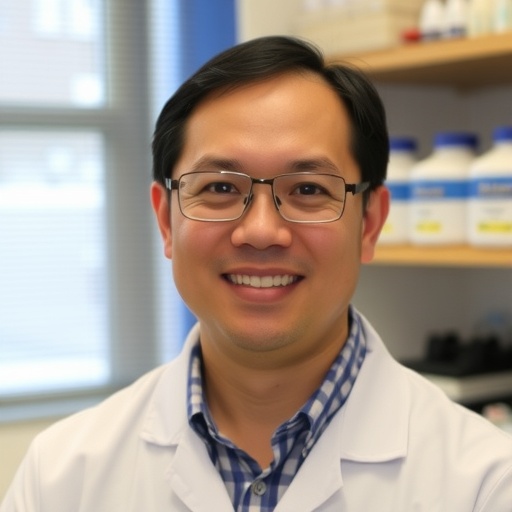
Researchers at University of California San Diego School of Medicine are conducting a longitudinal study to track neurological symptoms in COVID-19 “long-haulers.”
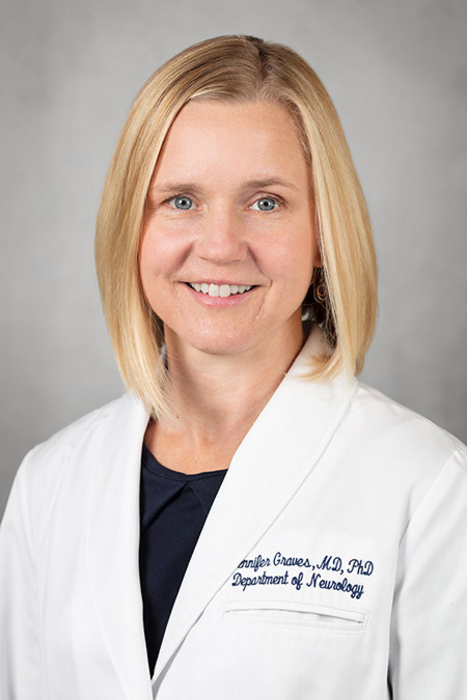
Credit: UC San Diego Health Sciences
Researchers at University of California San Diego School of Medicine are conducting a longitudinal study to track neurological symptoms in COVID-19 “long-haulers.”
The first round of results, published June 15, 2022 in Annals of Clinical and Translational Neurology, revealed the prevalence of various short- and long-term symptoms and found that, while many patients showed improvement, the majority still had some neurological symptoms after six months. A subset of individuals also exhibited significant coordination and cognitive issues, which had not been previously described.
Following mild-to-moderate SARS-CoV-2 infections, 56 persons with neurological symptoms were recruited to the study between October 2020 and October 2021. They completed a neurological exam, cognitive assessment, self-reported questionnaires and an optional brain scan. Baseline measurements were taken a few months after their initial infection and repeated three and six months later.
At the time of their first visit, 89 percent of participants were experiencing fatigue and 80 percent reported headaches. Other common neurological symptoms included memory impairment, insomnia and decreased concentration. Eighty percent of participants said these symptoms impacted their quality of life.
When participants returned for their six-month follow-up, only one-third reported complete resolution of symptoms. The other two-thirds of participants reported persistent neurological symptoms, though most had diminished in severity. The most prevalent symptoms at six months were memory impairment and decreased concentration.
The authors noted that none of the individuals with persistent symptoms at six months had any history of pre-existing neurological conditions prior to their SARS-CoV-2 infections.
“It’s encouraging that most people were showing some improvement at six months, but that wasn’t the case for everyone,” said senior author Jennifer S. Graves, MD, PhD, associate professor at UC San Diego School of Medicine and neurologist at UC San Diego Health. “Some of these participants are high-level professionals who we’d expect to score above average on cognitive assessments, but months after having COVID-19, they’re still scoring abnormally.”
Researchers were also surprised to find a novel phenotype within the cohort. Seven percent of participants displayed a previously unidentified set of symptoms that included cognitive deficits, tremor and difficulty balancing. The authors labeled the phenotype Post-Acute Sequelae of COVID-19 infection with Tremor, Ataxia and Cognitive deficit (PASC-TAC).
“These are folks who had no neurological problems before COVID-19, and now they have an incoordination of their body and possible incoordination of their thoughts,” said Graves. “We didn’t expect to find this, so we want to get the word out in case other physicians see this too.”
Researchers are still investigating how much the SARS-CoV-2 virus directly invades the brain, but Graves said it is more likely that these delayed neurological symptoms are caused by the infection triggering an inflammatory autoimmune response in the brain.
The team plans to continue monitoring participants’ symptoms annually for up to 10 years. Additional efforts will evaluate how different COVID-19 variants and vaccines affect long-term neurological symptoms.
“To have people’s cognition and quality of life still impacted so long after infection is something we as a society need to be taking a serious look at,” said Graves. “We still need to know how common this is, what biological processes are causing this, and what ongoing health care these people will need. This work is an important first step to getting there.”
Co-authors include: Jacqueline E. Shanley, Andrew F. Valenciano, Garrett Timmons, Annalise E. Miner, Visesha Kakarla, Jennifer H. Yang, Amanda Gooding, Marc A. Norman, Sarah J. Banks, NeuCovid Team, Michelle L. Ritter, Ronald J. Ellis and Lucy Horton at UC San Diego, as well as Torge Rempe at University of Florida.
# # #
Journal
Annals of Clinical and Translational Neurology
DOI
10.1002/acn3.51578
Article Publication Date
15-Jun-2022
COI Statement
Jennifer S. Graves is a steering committee member for an unrelated trial supported by Novartis Pharmaceuticals (grants #26940 and 30805).