• HOME
  • NEWS
  • EXPLORE
    • CAREER
      • Companies
      • Jobs
    • EVENTS
    • iGEM
      • News
      • Team
    • PHOTOS
    • VIDEO
    • WIKI
  • BLOG
  • COMMUNITY
    • FACEBOOK
    • INSTAGRAM
    • TWITTER
Thursday, November 12, 2026
BIOENGINEER.ORG
No Result
View All Result
  • Login
  • HOME
  • NEWS
  • EXPLORE
    • CAREER
      • Companies
      • Jobs
        • Lecturer
        • PhD Studentship
        • Postdoc
        • Research Assistant
    • EVENTS
    • iGEM
      • News
      • Team
    • PHOTOS
    • VIDEO
    • WIKI
  • BLOG
  • COMMUNITY
    • FACEBOOK
    • INSTAGRAM
    • TWITTER
No Result
View All Result
Bioengineer.org
No Result
View All Result
Home NEWS Science News Health

COVID-19: Bacteriophage could decrease mortality

Bioengineer by Bioengineer
June 24, 2020
in Health
Reading Time: 2 mins read
0
IMAGE
Share on FacebookShare on TwitterShare on LinkedinShare on RedditShare on Telegram

IMAGE

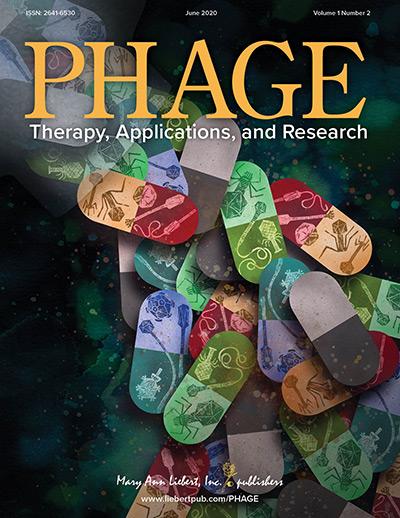
Credit: Mary Ann Liebert, Inc., publishers

New Rochelle, NY, June 24, 2020–Bacteriophage can reduce bacterial growth in the lungs, limiting fluid build-up. This could decrease the mortality of patients affected by COVID-19, according to the peer-reviewed journal PHAGE: Therapy, Applications, and Research. Click here to read the article.

“The bacterial growth rate could potentially be reduced by the aerosol application of natural bacteriophages. These prey on the main species of bacteria known to cause respiratory failure,” says Marcin Wojewodzic, PhD, University of Birmingham (U.K.).

Decreasing bacterial growth would also give the body more time to produce protective antibodies against the disease-causing coronavirus.

“Used correctly, phages have an advantage here of being able to very specifically target the bacteria that cause secondary infections,” said Martha Clokie, PhD, Editor-in-Chief of PHAGE and Professor of Microbiology, University of Leicester (U.K.). “They would remove the problematic bacterium but leave an otherwise fragile microbiome intact.”

###

About the Journal

PHAGE: Therapy, Applications, and Research is the only peer-reviewed journal dedicated to fundamental bacteriophage research and its applications in medicine, agriculture, aquaculture, veterinary applications, animal production, food safety, and food production. Led by Editor-in-Chief, Martha Clokie, PhD, University of Leicester, United Kingdom, the Journal showcases groundbreaking research, reviews, commentaries, opinion pieces, profiles and perspectives dedicated to defining the roles of phages in all facets of microbiology and microbial ecology and exploring their potential to manipulate bacterial communities and treat infection. More information is available on the PHAGE website.

About the Publisher

Mary Ann Liebert, Inc., publishers is known for establishing authoritative peer-reviewed journals in many promising areas of science and biomedical research. Its biotechnology trade magazine, GEN (Genetic Engineering & Biotechnology News), was the first in its field and is today the industry’s most widely read publication worldwide. A complete list of the firm’s 90 journals, books, and newsmagazines is available on the Mary Ann Liebert, Inc., publishers website.

Media Contact
Kathryn Ryan
kryan@liebertpub.com

Original Source

https://home.liebertpub.com/news/covid-19-bacteriophage-could-decrease-mortality/3727

Related Journal Article

http://dx.doi.org/10.1089/phage.2020.0014

Tags: BacteriologyClinical TrialsInfectious/Emerging DiseasesMedicine/HealthPulmonary/Respiratory Medicine
Share12Tweet8Share2ShareShareShare2

Related Posts

Study Examines Labor Conditions and Depressed Affect Among Chinese Workers

Study Examines Labor Conditions and Depressed Affect Among Chinese Workers

November 12, 2026
Minimally Invasive Ultrasound Surgery Matches Open Achilles Repair While Halving Medical Costs

Minimally Invasive Ultrasound Surgery Matches Open Achilles Repair While Halving Medical Costs

November 12, 2026

Pneumocystis Detection and Guillain-Barré Syndrome Followed Multimodal Lung Cancer Therapy

November 12, 2026

Gross Total Resection Linked to Lower One-Year Mortality in Brain Tumors

November 12, 2026
Please login to join discussion

POPULAR NEWS

  • Exercise Training Regulates Mitochondrial Dynamic Proteins in Visceral Fat of Diabetic Rats

    Exercise Training Regulates Mitochondrial Dynamic Proteins in Visceral Fat of Diabetic Rats

    29 shares
    Share 12 Tweet 7
  • Bacterial Consortium Enhances Antioxidant Levels and Crop Yield in Black Rice

    29 shares
    Share 12 Tweet 7
  • Urinary Multi-Omics Panel Enables Non-Invasive Detection of Clear Cell Kidney Cancer

    29 shares
    Share 12 Tweet 7
  • Integrated Local Oscillator and Active Phase Stabilization Improve Heterodyne CARS Imaging Contrast

    29 shares
    Share 12 Tweet 7

About

We bring you the latest biotechnology news from best research centers and universities around the world. Check our website.

Follow us

Recent News

Study Examines Labor Conditions and Depressed Affect Among Chinese Workers

Implicit Scheme Solves Fractional Burgers Equation Using Caputo-Fabrizio Non-Singular Derivative

Minimally Invasive Ultrasound Surgery Matches Open Achilles Repair While Halving Medical Costs

Subscribe to Blog via Email

Enter your email address to subscribe to this blog and receive notifications of new posts by email.

Join 86 other subscribers
  • Contact Us

Bioengineer.org © Copyright 2023 All Rights Reserved.

Welcome Back!

Login to your account below

Forgotten Password?

Retrieve your password

Please enter your username or email address to reset your password.

Log In
No Result
View All Result
  • Homepages
    • Home Page 1
    • Home Page 2
  • News
  • National
  • Business
  • Health
  • Lifestyle
  • Science

Bioengineer.org © Copyright 2023 All Rights Reserved.