


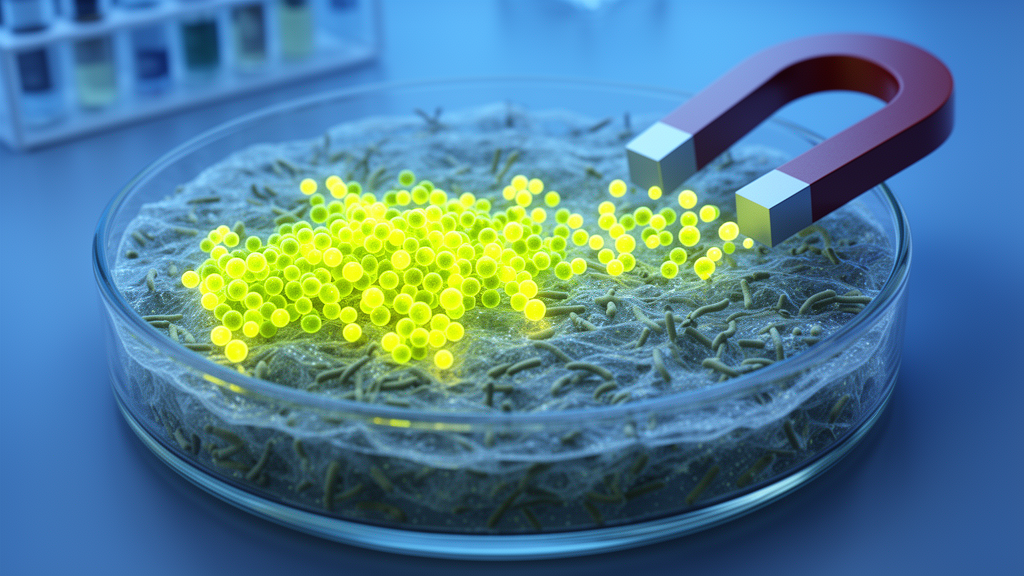
Multidrug-resistant Acinetobacter baumannii is one of the harder hospital pathogens to treat, largely because it combines antibiotic resistance with the ability to form stubborn biofilms on surfaces and tissues. The researchers found that the resulting Fe₃O₄@Coumarin nanoparticles inhibited bacterial growth and biofilm formation at substantially lower concentrations than coumarin alone.
The team tested four multidrug-resistant clinical isolates of A. baumannii alongside the ATCC reference strain. They functionalized Fe₃O₄ nanoparticles with coumarin using a glucose-mediated ligand-exchange method, then characterized the product with a battery of analytical techniques, including FTIR, SEM, XRD, VSM, EDS, and zeta potential analysis. These measurements confirmed that the coumarin was successfully attached while the nanoparticles retained their crystalline structure and functional groups.
The characterization data also pointed to properties considered useful for biomedical applications. Particle sizes fell in the range of roughly 50 to 100 nanometers, elemental composition was appropriate, and zeta potential measurements indicated colloidal stability. Vibrating sample magnetometry showed superparamagnetic behavior and high saturation magnetization, meaning the particles respond strongly to a magnetic field but do not retain magnetism when the field is removed.
Functionally, the nanoparticles outperformed free coumarin in every antimicrobial assay the researchers ran. Minimum inhibitory concentration (MIC) and minimum bactericidal concentration (MBC) values, measured by broth microdilution, were 160 and 320 micrograms per milliliter for the functionalized nanoparticles, compared with 640 and 1280 micrograms per milliliter for coumarin alone. In other words, the nanoparticle formulation achieved the same endpoints at about a quarter of the coumarin dose.
The anti-biofilm results were even more pronounced. Using crystal violet staining, the team determined a minimum biofilm inhibitory concentration (MBIC) of 160 micrograms per milliliter and a minimum biofilm eradication concentration (MBEC) of 320 micrograms per milliliter for the nanoparticles. Free coumarin required 1280 micrograms per milliliter for both endpoints, an eightfold difference for inhibition. Biofilms are central to A. baumannii’s persistence in clinical settings, so compounds that disrupt them at lower concentrations are of particular interest.
To probe the mechanism, the researchers quantified expression of genes involved in biofilm formation and quorum sensing, the bacterial communication system that coordinates collective behaviors. Quantitative real-time PCR showed that Fe₃O₄@Coumarin nanoparticles reduced expression of abaI and abaR, genes central to the quorum-sensing circuit, to below 50 percent of control levels. Coumarin alone reduced their expression by roughly 30 percent. The nanoparticles also decreased expression of bap, a gene encoding a large biofilm-associated protein, by more than 70 percent.
The authors conclude that Fe₃O₄@Coumarin nanoparticles could be more effective than coumarin alone in combating multidrug-resistant A. baumannii. The work fits into a broader research effort exploring nanoparticle-based delivery of antimicrobial compounds, including earlier studies of silver, zinc oxide, and carvacrol-loaded nanoparticles against the same species.
Several caveats apply. The study was conducted in vitro, on a small panel of isolates plus one reference strain, and the reported concentrations reflect laboratory assay conditions rather than clinical dosing. The article is published under Springer’s open-access shared-it format, meaning the version available is the peer-reviewed accepted manuscript, citable with a permanent DOI, and subject to further edits before the final version of record replaces it. The magnetic and colloidal properties the authors describe support biomedical potential, but translating nanoparticle formulations into therapeutic use would require substantially further testing. What the study does establish is a measurable, dose-dependent improvement when coumarin is delivered on an iron oxide nanoparticle scaffold, along with evidence that this improvement extends to the quorum-sensing and biofilm machinery that makes A. baumannii difficult to eradicate.
Subject of Research: Nanoparticle-functionalized coumarin as an antibacterial and anti-biofilm agent against multidrug-resistant Acinetobacter baumannii
Article Title: Enhanced antibacterial and anti-quorum-sensing activity of coumarin via functionalization with Fe₃O₄ nanoparticles against multidrug-resistant Acinetobacter baumannii
Article References: Bazazzadeh, F., Masuomi, M. H., Khazaie, S., Zamani, A., & Mahdevar, M. (2026). Enhanced antibacterial and anti-quorum-sensing activity of coumarin via functionalization with Fe₃O₄ nanoparticles against multidrug-resistant Acinetobacter baumannii. Annals of Clinical Microbiology and Antimicrobials. https://doi.org/10.1186/s12941-026-00879-y
Image Credits: AI Generated
DOI: 10.1186/s12941-026-00879-y
Keywords: Acinetobacter baumannii, Fe3O4 nanoparticles, coumarin, antibacterial activity, biofilm, quorum sensing, multidrug resistance, MIC, gene expression, nanomedicine, Enhanced, antibacterial
News Source: Juliet Wilcox. (October 30, 2026). Coumarin-loaded magnetic nanoparticles curb drug-resistant Acinetobacter biofilms in lab tests. Scienmag.



