• HOME
  • NEWS
  • EXPLORE
    • CAREER
      • Companies
      • Jobs
    • EVENTS
    • iGEM
      • News
      • Team
    • PHOTOS
    • VIDEO
    • WIKI
  • BLOG
  • COMMUNITY
    • FACEBOOK
    • INSTAGRAM
    • TWITTER
Sunday, July 5, 2026
BIOENGINEER.ORG
No Result
View All Result
  • Login
  • HOME
  • NEWS
  • EXPLORE
    • CAREER
      • Companies
      • Jobs
        • Lecturer
        • PhD Studentship
        • Postdoc
        • Research Assistant
    • EVENTS
    • iGEM
      • News
      • Team
    • PHOTOS
    • VIDEO
    • WIKI
  • BLOG
  • COMMUNITY
    • FACEBOOK
    • INSTAGRAM
    • TWITTER
  • HOME
  • NEWS
  • EXPLORE
    • CAREER
      • Companies
      • Jobs
        • Lecturer
        • PhD Studentship
        • Postdoc
        • Research Assistant
    • EVENTS
    • iGEM
      • News
      • Team
    • PHOTOS
    • VIDEO
    • WIKI
  • BLOG
  • COMMUNITY
    • FACEBOOK
    • INSTAGRAM
    • TWITTER
No Result
View All Result
Bioengineer.org
No Result
View All Result
Home NEWS Science News Chemistry

Cosmic X-rays reveal an indubitable signature of black holes

Bioengineer by Bioengineer
September 21, 2020
in Chemistry
Reading Time: 2 mins read
0
IMAGE
Share on FacebookShare on TwitterShare on LinkedinShare on RedditShare on Telegram

IMAGE

Credit: Srimanta Banerjee, Sudip Bhattacharyya, Marat Gilfanov

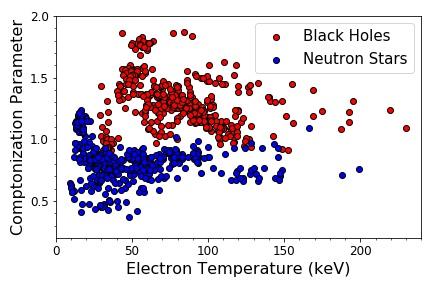
An international team of astrophysicists has found distinctive signatures of black hole event horizon, unmistakably separating them from neutron stars — objects, comparable to black holes in mass and size but confined within a hard surface. This is by far the strongest steady signature of stellar-mass black holes to date. The team consisting of Mr. Srimanta Banerjee and Professor Sudip Bhattacharyya from the Tata Institute of Fundamental Research, India, and Professor Marat Gilfanov and Professor Rashid Sunyaev from Max Planck Institute for Astrophysics, Germany and Space Research Institute of Russian Academy of Sciences, Russia is publishing this research in a paper that has been accepted for publication in Monthly Notices of the Royal Astronomical Society.

A black hole is an exotic cosmic object without a hard surface predicted by Einstein’s theory of General Relativity. Although it does not have a surface, it is confined within an invisible boundary, called an event horizon, from within which nothing, not even light, can escape. Definitive proof of the existence of such objects is a holy grail of modern physics and astronomy.

Only one supermassive black hole — with the mass more than 6 billion times the mass of the Sun — has so far been imaged using the surrounding radiation in radio wavelengths. But stellar-mass black holes — with masses of about ten times the mass of the Sun — should bend the spacetime around them at least ten thousand trillion times more than such a supermassive black hole does. Such smaller black holes are therefore indispensable to probe some extreme aspects of nature. When these smaller black holes merge with each other, they could be inferred from gravitational waves. Such waves are transient events, lasting for a fraction of a second and it is of immense interest to have a definitive proof of the existence of a stable stellar-mass black hole, which shine mainly in X-rays by devouring material from a companion star.

A neutron star, the densest known object in the universe with a hard surface, can also shine in X-rays by accreting matter from a companion star in a similar way, characterized by extremely high efficiency of conversion of the rest-mass energy mc2 to radiation, of the order of 20%. In order to prove the existence of stellar-mass black holes, one needs to distinguish them from such neutron stars. The authors of this research have done exactly that. Using the archival X-ray data from the now decommissioned astronomy satellite Rossi X-Ray Timing Explorer, they have identified the effect of the lack of hard surface on the observed X-ray emission, and thus have found an extremely strong signature of accreting stellar-mass black holes.

###

Media Contact
Sudip Bhattacharyya
[email protected]

Related Journal Article

http://dx.doi.org/10.1093/mnras/staa2788

Tags: AstronomyAstrophysicsSpace/Planetary Science
Share12Tweet8Share2ShareShareShare2

Related Posts

Intelligent Microgrid Management Promises Lower Household Energy Bills and Reduced Diesel Emissions — Chemistry

Intelligent Microgrid Management Promises Lower Household Energy Bills and Reduced Diesel Emissions

July 4, 2026
Graz University of Technology Deciphers the Structural Secrets of MOF Thin Films — Chemistry

Graz University of Technology Deciphers the Structural Secrets of MOF Thin Films

July 2, 2026

Breaking Thermodynamic Limits: Wavelength-Driven Catalysis Advances Ammonia Synthesis

July 2, 2026

From Quantum Mechanics to AI-Powered Materials Discovery: MARVEL Marks 12 Years of Transforming Computational Science

July 2, 2026
Please login to join discussion

POPULAR NEWS

  • Detection of EDCs in Breast Milk and Infant Urine Up to Six Months Highlights Early Exposure Risks

    77 shares
    Share 31 Tweet 19
  • Saying Goodbye to PGY-6: Pediatric Fellowship Realities

    103 shares
    Share 41 Tweet 26
  • New Drug Candidate Developed at McMaster Shows Potential for Treating Brain Cancer

    58 shares
    Share 23 Tweet 15
  • KTU Researchers Explore Ultrasound’s Role in Enhancing Blood Flow Beyond Diagnostics

    53 shares
    Share 21 Tweet 13

About

We bring you the latest biotechnology news from best research centers and universities around the world. Check our website.

Follow us

Recent News

Quasi-Bound States Boost Quantum Well Photoresponse

Lysine Pyruvylation Links Glycolysis to Epigenetics

Multiphysics Coupling: Single vs. Multiple DeepONet Branches

Subscribe to Blog via Email

Success! An email was just sent to confirm your subscription. Please find the email now and click 'Confirm' to start subscribing.

Join 83 other subscribers
  • Contact Us

Bioengineer.org © Copyright 2023 All Rights Reserved.

Welcome Back!

Login to your account below

Forgotten Password?

Retrieve your password

Please enter your username or email address to reset your password.

Log In
No Result
View All Result
  • Homepages
    • Home Page 1
    • Home Page 2
  • News
  • National
  • Business
  • Health
  • Lifestyle
  • Science

Bioengineer.org © Copyright 2023 All Rights Reserved.