The study, published in BMC Chemistry, combines experimental structural analysis with computational modeling to evaluate the potential of these compounds as therapeutic agents.
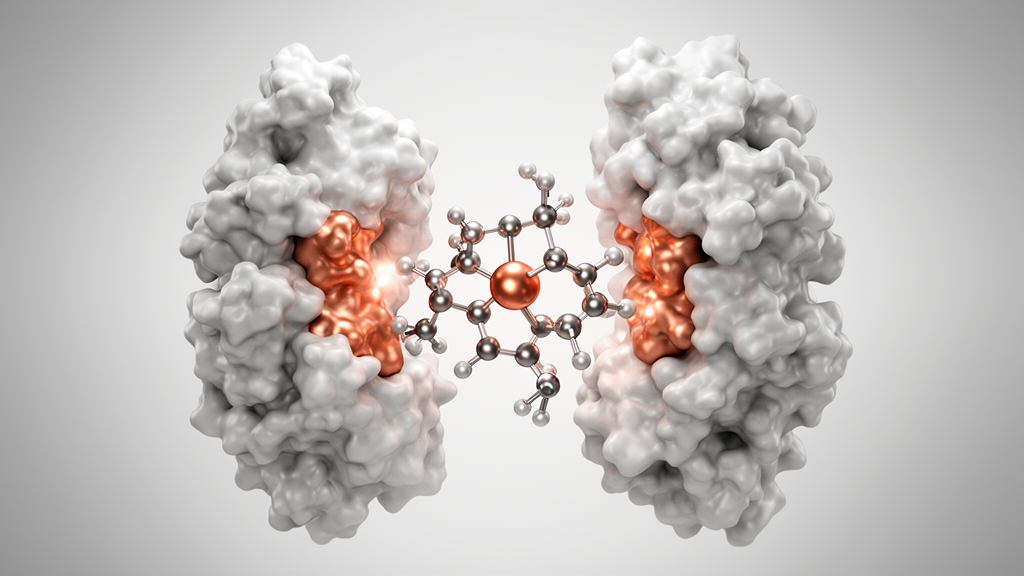
The two complexes feature the Schiff base ligand, abbreviated as SBL, with the chemical formula C10H8NO4F. In complex C1, the central copper(II) ion is coordinated with 2,2’-dipyridylamine, while complex C2 utilizes 5,5’-dimethyl-2,2’-bipyridine as the auxiliary ligand. The full chemical formulas are [Cu(C10H8NO4F)(C10H9N3)]·H2O for C1 and [Cu(C10H8NO4F)(C12H12N2)]·H2O·CH3OH for C2. Structural characterization revealed that the central Cu(II) ion in both complexes exhibits pentacoordination. This coordination involves binding to ONO donor sites of the Schiff base ligand as well as two nitrogen donor atoms provided by the distinct auxiliary ligands, resulting in a distorted square pyramidal geometry for both molecular structures.
To validate the experimental observations, the researchers performed theoretical computations using density functional theory, known as DFT. The calculations employed the B3LYP functional via the Gaussian 16 program.
The biological evaluation focused on the inhibitory activity of the complexes against jack bean urease, often abbreviated as UA. Both C1 and C2 exhibited significant inhibitory effects, but C1 demonstrated superior performance. The half-maximal inhibitory concentration, or IC50, for C1 was measured at 4.79 ± 0.77 µM. In comparison, the IC50 for C2 was 6.83 ± 1.19 µM. Notably, C1 outperformed the reference inhibitor acetohydroxamic acid, abbreviated as AHA. These quantitative results indicate that the structural differences between the two complexes have a measurable impact on their ability to inhibit the enzyme.
To understand the molecular basis for the superior activity of C1, the study employed molecular docking and molecular dynamics simulations. These computational techniques revealed that the enhanced activity of C1 originates from better steric matching and more stable interactions with the enzyme’s active site. The simulations provided structural evidence that aligns with the experimental activity trend, suggesting that the specific spatial arrangement of the ligands in C1 allows for a more effective binding mode. This insight helps explain why C1 achieves a lower IC50 value compared to C2, despite the similar core structure of the copper complex.
Further analysis included predictions of absorption, distribution, metabolism, and excretion, commonly referred to as ADME properties. The ADME predictions indicated that both complexes possess favorable drug-like properties and promising bioavailability. These findings suggest that the compounds may have potential for further development as therapeutic agents. The combination of strong inhibitory activity and favorable pharmacokinetic profiles highlights the promising therapeutic potential of copper(II) Schiff base complexes as urease inhibitors.
The article was published in BMC Chemistry, an open access journal, on September 28, 2026. The study provides a detailed account of the synthesis, structural characterization, and biological evaluation of the two copper complexes.
Subject of Research: Synthesis, structural characterization, and urease inhibitory activity of two Cu(II) Schiff base complexes
Article Title: Experimental and computational studies on two Cu(Ⅱ) Schiff base complexes: crystal structure, DFT, urease inhibitory activity, molecular docking, molecular dynamics and ADME study
Article References: Wang, H., Shi, H., Guo, P., Zhang, X., Zhou, Y., Wang, R., Yin, C., & Zhu, Y. (2026). Experimental and computational studies on two Cu(Ⅱ) Schiff base complexes: crystal structure, DFT, urease inhibitory activity, molecular docking, molecular dynamics and ADME study. BMC Chemistry. https://doi.org/10.1186/s13065-026-01934-7
Image Credits: AI Generated
DOI: 10.1186/s13065-026-01934-7
Keywords: copper complexes, Schiff base, urease inhibition, DFT, molecular docking, crystal structure, ADME, BMC Chemistry, Experimental, computational, studies, Schiff
News Source: Bethany Barker. (November 8, 2026). Copper Complexes Show Strong Urease Inhibition in Study. Scienmag.