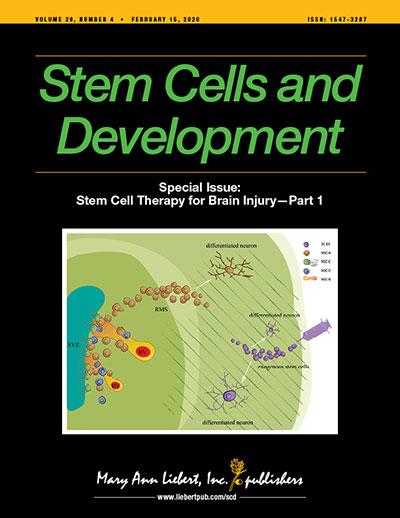
Credit: Mary Ann Liebert, Inc., publishers
New Rochelle, NY, February 19, 2020–Challenging the U.S. Food and Drug Administration’s current approach to evaluating and approving adipose-based cell therapies used in reparative medicine, a group of researchers proposes a new path forward that focuses on patient safety and includes evidence-based medical practice. Details of this new path forward and a response from the FDA are both published in Stem Cells and Development, a peer-reviewed journal from Mary Ann Liebert, Inc., publishers. Click here to read the full-text article for free on the Stem Cells and Development through March 19, 2020.
The article entitled “Arguments for a Different Regulatory Categorization and Framework for Stromal Vascular Fraction” was coauthored by Jeffrey Gimble, LaCell, Obatala Sciences, and Tulane University School of Medicine, New Orleans, LA, and an international team of colleagues. They argue that to bring adipose-based regenerative therapies to market in a more efficient way, the two types of cell populations produced — adipose-derived stromal/stem cells (ASCs) and stromal vascular fraction (SVF) — should be evaluated differently. One is an allogeneic product and one is autologous, while one is a cultured homogeneous product and the other is a freshly harvested heterogeneous product. These are different cell preparations that vary in cell function and differentiation potential. The researchers contend that they should be evaluated based on their different risk profiles. An additional aspect of this new path forward includes protecting patients by keeping out “rogue clinics” and accrediting regenerative therapy facilities and physicians.
In the Commentary entitled “Clear Evidence of Safety and Efficacy Is Needed for Stromal Vascular Fraction Products,” Peter Marks, MD, PHD, U.S. Food and Drug Administration, Silvery Spring, MD, writes that the arguments made by Gimble et al., and the path they propose “overlook several key aspects relevant to promoting scientific advancement of the field of regenerative medicine and ensuring that autologous SVF is safe and effective for the treatment of various specific conditions before it is marketed to patients.” He concludes that “autologous cellular therapies do hold tremendous promise, but they will only fund their way into routine clinical practice to bring benefit to all patients if they are held to the same standards to demonstrate safety and efficacy as other unproven medical products”.
Graham C. Parker, PhD, Editor-in-Chief of Stem Cells and Development and The Carman and Ann Adams Department of Pediatrics, Wayne State University School of Medicine, Detroit, MI states: “Stem Cells and Development values honest opinions on these difficult issues, and encourages all stakeholders — patients, clinicians, researchers and regulators alike — to look to us as a venue for considered debate and safe progress in reparative medicine.”
###
About the Journal
Stem Cells and Development, is an authoritative peer-reviewed journal published 24 times per year in print and online. The Journal is dedicated to communication and objective analysis of developments in the biology, characteristics, and therapeutic utility of stem cells, especially those of the hematopoietic system. A complete table of contents and free sample issue may be viewed on the Stem Cells and Development website.
About the Publisher
Mary Ann Liebert, Inc., publishers is a privately held, fully integrated media company known for establishing authoritative peer-reviewed journals in many promising areas of science and biomedical research, including Cellular Reprogramming, Tissue Engineering, and Human Gene Therapy. Its biotechnology trade magazine, GEN (Genetic Engineering & Biotechnology News), was the first in its field and is today the industry’s most widely read publication worldwide. A complete list of the firm’s 90 journals, books, and newsmagazines is available on the Mary Ann Liebert, Inc., publishers website.
Media Contact
Kathryn Ryan
[email protected]
914-740-2250
Original Source
https:/
Related Journal Article
http://dx.