At Tampere University Hospital in Finland, a quiet revolution in cancer care is underway. Clinicians have begun delivering a specialized form of radiation therapy that targets the surface of rectal tumors with an intensely concentrated dose, with the explicit goal of destroying the cancer entirely so that patients may never need the operation that has defined rectal cancer treatment for decades: removal of part or all of the rectum. That operation, while often lifesaving, can leave patients with a permanent stoma, an opening in the abdomen through which waste is collected in an external bag, along with long-term complications affecting bowel function, urination and sexuality. Finland is now at the forefront of implementing this novel approach, and the team behind it believes the technique could reshape how an increasingly large group of patients is treated worldwide.
The scale of the problem is considerable. Every year, roughly 730,000 new cases of rectal cancer are diagnosed around the globe, making it one of the most common malignancies affecting the digestive tract. For most of modern surgical history, the standard of care has involved radical resection, in which surgeons remove the tumor together with a margin of healthy tissue and the surrounding lymph nodes. The procedure is genuinely effective at curing the cancer, but the anatomical cost is high. The rectum plays a central role in continence and bowel function, and its removal or reconstruction can permanently alter how a person lives. For some patients, particularly those whose tumors sit low in the rectum close to the anal sphincter, a permanent colostomy is an unavoidable consequence.
Professor Toni Seppälä of Tampere University and Tampere University Hospital frames the clinical challenge in terms of a dual mandate. Curing cancer, he emphasizes, is always the primary goal, but the team also wants to preserve the best possible quality of life. If a tumor can be completely eradicated without removing the rectum, a patient may, in the best-case scenario, avoid both major surgery and a stoma. That framing captures the philosophy driving a broader international movement in rectal oncology: the recognition that survival alone is no longer the only meaningful endpoint, and that the functional and psychological toll of radical treatment deserves equal weight in treatment planning.
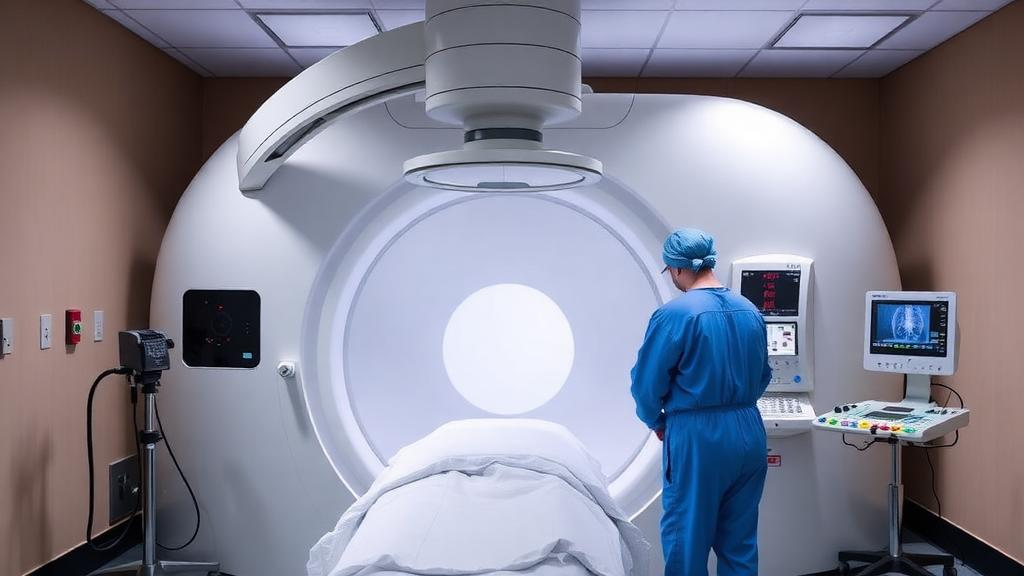
The new therapy introduced at Tays is known medically as high-dose-rate brachytherapy, or HDR brachytherapy, delivered in a contact configuration. Unlike external beam radiotherapy, in which radiation is generated by a machine positioned outside the body and must travel through healthy tissue to reach its target, contact brachytherapy places the radiation source directly against the tumor. A device is inserted into the rectum and positioned at the tumor surface, allowing clinicians to deliver a very high dose of radiation precisely where it is needed. The treatment utilizes an iridium-192 radiation source, a radioactive isotope commonly employed in brachytherapy applications because it emits energetic gamma rays suitable for destroying cancer cells while permitting rapid dose falloff at a distance.
That physical property, the steep gradient of dose, is the key technical advantage of the method. Because the radiation source sits immediately adjacent to the tumor, the cancer cells receive a devastating dose while the surrounding healthy tissues, including the bowel wall beyond the tumor, the bladder, and nearby nerves and blood vessels, are largely spared. In conventional external radiotherapy, achieving that kind of selectivity is far harder, and dose limits imposed by surrounding organs often constrain how much radiation the tumor itself can safely receive. Contact brachytherapy effectively sidesteps that constraint by shortening the distance between source and target to millimeters, exploiting the inverse relationship between distance and radiation intensity to concentrate therapeutic energy with remarkable precision.
The treatment is not appropriate for every patient with rectal cancer, and the hospital is careful to emphasize that point. Eligibility is assessed by a multidisciplinary team that includes colorectal surgeons, oncologists, radiation oncologists and radiologists. Tumor size, depth of invasion into the bowel wall, location, and the presence or absence of spread to lymph nodes or distant organs all factor into the decision. One particularly important patient group consists of frail and elderly people for whom major rectal cancer surgery may be especially burdensome or may even pose an excessive risk. It is estimated that more than 100 such patients in Finland every year could stand to benefit from an effective alternative to radical resection, a figure that gives a sense of the immediate clinical demand even before broader patient groups are considered.
The introduction of contact brachytherapy at Tays is part of a wider shift in thinking that has transformed rectal cancer treatment over the past several years. International studies have demonstrated that in some patients, the tumor disappears completely following a combination of radiotherapy and anti-cancer medication, a result termed a complete clinical response. In those cases, careful surveillance may be considered as an alternative to immediate surgery. This strategy is known as organ-preserving treatment, or the watch-and-wait approach. Patients are monitored closely with regular endoscopic examinations and imaging so that any residual tumor or local regrowth can be detected early and treated surgically if necessary. For patients who maintain a complete response over the long term, the rectum is preserved, along with continence and quality of life.
Tumor-targeted brachytherapy is designed to push that strategy further by increasing the number of patients who achieve a complete clinical response in the first place. By intensifying the local radiation dose delivered to the tumor, clinicians hope to eradicate more cancers outright and thereby expand the pool of patients who can safely retain their rectum. As Seppälä explains, the goal is not to treat the cancer less intensively, but more precisely. The team wants to identify a treatment that is sufficiently effective for each patient while avoiding treatments and side effects that would yield no additional benefit. In other words, the intensification is aimed at the tumor itself, not at the patient as a whole, which is precisely where the dose-concentrating physics of brachytherapy offers its advantage.
The clinical innovation is embedded in a structured research framework. The new treatment is linked to the NORPPA research programme, coordinated by Tampere University and Tampere University Hospital, which is developing new organ-preserving treatment approaches for rectal cancer. The research network includes hospitals from across Finland and Estonia, creating a multinational cohort infrastructure capable of generating meaningful evidence about outcomes. The next phase, the NORPPA-2 study, is due to begin in 2027 and will investigate the effectiveness of HDR brachytherapy as part of an organ-preserving treatment strategy. The study will examine how effectively tumor eradication can be achieved by intensifying local radiotherapy and, critically, how many patients can avoid major surgery as a result.
The ambitions of the research programme extend beyond radiation alone. If local radiotherapy proves sufficiently effective against the tumor, the researchers will also investigate whether some patients could be treated without chemotherapy, sparing them the substantial systemic side effects associated with cytotoxic drugs. And if the study confirms the effectiveness and safety of the new method, the group of rectal cancer patients offered organ-preserving treatment as an alternative to surgery could expand significantly in the future. For a disease diagnosed three-quarters of a million times each year, the implications are far-reaching. What is emerging in Tampere is a vision of rectal cancer care in which the question is no longer simply how to remove the cancer, but how to destroy it with the least possible collateral damage to the body and the life that continues after treatment. The iridium-192 source inserted through the rectum may look unassuming, but it represents a deliberate rethinking of the trade-offs that have long been accepted as the price of cure.
Subject of Research: High-dose-rate contact brachytherapy as an organ-preserving treatment for rectal cancer
Article Title: Novel radiotherapy may save increasingly many rectal cancer patients from surgery and stoma
Article References: Novel radiotherapy may save increasingly many rectal cancer patients from surgery and stoma. (n.d.). Original publication
Image Credits: AI Generated
DOI: Not provided
Keywords: rectal cancer, HDR brachytherapy, contact radiotherapy, organ preservation, watch-and-wait, stoma avoidance, iridium-192, Tampere University Hospital, NORPPA study, radiation oncology, multidisciplinary cancer care, quality of life
News Source: Nathaniel Bowman. (October 8, 2026). Contact Radiotherapy Offers Rectal Cancer Patients a Path Around Major Surgery and Stomas. Scienmag.