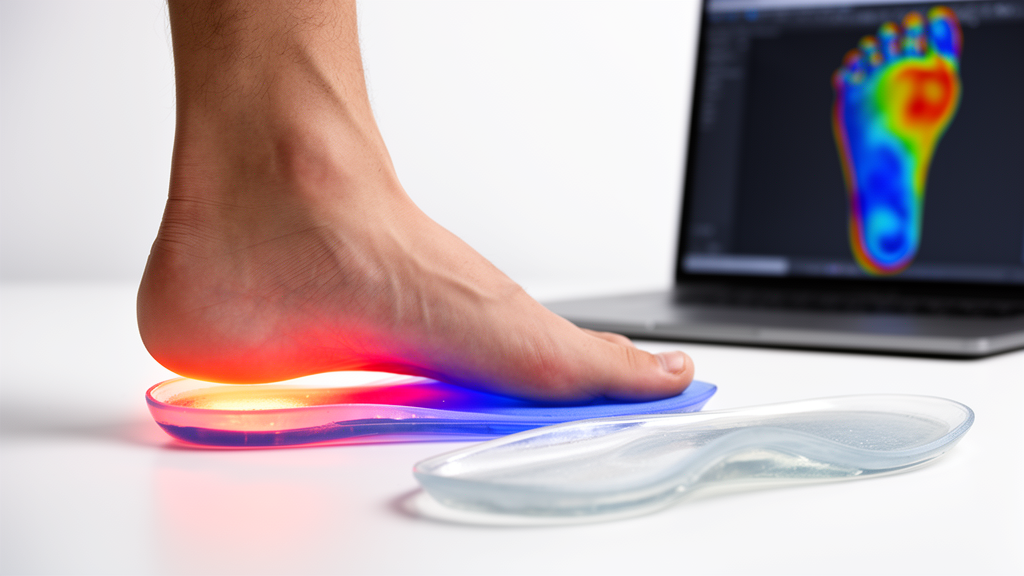
The review, published in Frontiers in Bioengineering and Biotechnology, synthesised 45 research articles published between January 2000 and December 2025, and its authors conclude that while several insole design strategies show promise for reducing plantar pressure, the evidence base remains surprisingly thin, with most conclusions resting on single studies or heterogeneous modelling approaches that resist direct comparison.
The research team, led by Xiaolong Li and Miao Gao of the Beijing Institute of Fashion Technology, together with colleagues at The Hong Kong Polytechnic University, searched Web of Science, ScienceDirect and PubMed for studies in which finite element analysis was the primary method, the insole was the central research subject, and both foot and insole models were present. From 1,317 initial records, 45 studies survived screening. Each was scored with the MQSSFE quality instrument, a 37-item checklist spanning study design, subject recruitment, model configuration, loading conditions, validation and model assumptions. The mean quality score was 23.91 out of a possible 37, with 27 studies rated high quality and 18 low quality. Inter-rater reliability was good, with an intraclass correlation coefficient of 0.856 and a 95 percent confidence interval of 0.752 to 0.918, although a paired-samples t-test revealed a constant systematic offset between the two assessors’ total scores.
Because the included studies differed so widely in insole features, outcome variables, subject models and methodological rigour, meta-analysis was not feasible. Instead, the reviewers used a best-evidence synthesis, grading each outcome as strong, moderate, limited, conflicting or no evidence, and only pooling studies judged cross-study comparable. Sensitivity analyses confirmed that the evidence grades held regardless of which methodological quality classification scheme was applied, suggesting the review’s main conclusions are robust to scoring decisions.
The clearest signal concerned conforming insoles, which mould to the plantar surface of the foot. All eight studies in this category consistently reported that conforming insoles reduce foot loading, and limited evidence suggests they also relieve high pressure under the metatarsal heads and in the plantar fascia. Yet the optimal degree of conformity remains unresolved. Some studies found full-conforming designs most effective, while one reported that half-conforming insoles performed better, possibly because full conformity produced abnormal pressure peaks in the heel. One study proposed a 54 percent conforming index as optimal, but only for the heel region. The reviewers attribute these inconsistencies to differences in multiparameter designs and incomplete exploration of the conformity spectrum.
Wedge and arch-support insoles, the two main alignment-modifying designs, showed a consistent trade-off. Lateral wedge insoles reduced stress on the medial femoral cartilage and medial meniscus and redistributed internal knee joint loads, which may aid recovery from osteoarthritis, but they increased loads on the lateral meniscus, the subtalar joint and the plantar fascia, and shifted metatarsal stress toward the fourth and fifth metatarsals, creating new fracture risks. Reported effective angles included 5 degrees and 8 degrees for lateral wedges and 7.5 to 8 degrees for medial wedges, though the reviewers caution that no optimal angle range can currently be established because cross-study comparison was not possible. For arch supports, increasing height helped correct flatfoot deformity and partially relieved plantar pressure, but heights of 33, 42 and 48 millimetres in different studies raised stress on foot ligaments, cartilage and the plantar fascia, making excessive support clearly undesirable.
Plug-and-hole structures, in which material is added or removed beneath high-pressure regions, emerged as a versatile pressure-relief strategy. Multiple small compliant plugs or holes positioned under high-pressure areas redistributed load, with one study identifying a multihole configuration of 5 millimetre diameter, 6 millimetre depth and 2 millimetre spacing, and another reporting a multiplug design using 4 millimetre diameter plugs, 1 millimetre intervals, 70 percent penetration of insole thickness and 7 to 9 plugs made of Poron. Large single plugs and holes, typically placed over wounds, effectively unload the underlying tissue, but they generate secondary pressure peaks at their edges that may seed new ulcers. Edge stiffness gradients or multiple smaller structures appear to mitigate this risk. The reduction in soft-tissue stress from single-hole designs was the only outcome in this category supported by moderate evidence.
Variable stiffness insoles, whose regional material properties are tuned to plantar pressure maps, showed moderate evidence of reducing peak plantar pressure when stiffness was optimised, often through iterative algorithms. Low-modulus materials concentrated near 0 to 4.7 megapascals were deemed optimal for the metatarsal and heel regions. However, one optimisation study assigned near-zero modulus values to highly loaded regions, values the reviewers note may be impossible to manufacture, highlighting a gap between computational optimisation and realisable materials. Softer materials and greater thickness generally relieved pressure across categories, but both strategies have upper thresholds: overly compliant insoles may bottom out for lack of support, and excessive thickness encroaches on shoe-cavity volume and may cause pain.
The review also exposed systemic weaknesses in the modelling literature. Nearly all finite element models were built from a single participant, only four studies used female foot models, and only seven reported participant nationality or ethnicity. Models of pathological feet were often constructed from healthy anatomy. Loading conditions frequently omitted muscle and inertial forces, mesh sensitivity analyses were rarely reported, and internal tissue predictions seldom received direct experimental validation, since validating such measures requires invasive or cadaveric experiments. The reviewers advise interpreting simulated internal tissue stresses with caution, while noting that finite element analysis still offers a non-invasive way to assess the directional effects of design changes that would be difficult or harmful to test in vivo.
Looking forward, the authors call for standardised insole terminology, explicit reporting of material sources and stiffness properties, inclusion of realistic footwear geometry such as toe-spring curvature and heel-to-toe drop, and reporting of simulated pressures against the 200 kilopascal threshold associated with ulcer risk in diabetes research. They suggest Taguchi experimental designs to explore multiparameter spaces efficiently and point to graph neural networks, which can approximate foot finite element models at substantially lower computational cost, as surrogate models that may accelerate personalised insole development. For now, the review’s verdict is measured: insoles show biomechanical promise in simulation, but clinical therapeutic effects for specific conditions cannot yet be established from the available evidence, and clinical intervention and follow-up studies in patient populations remain the necessary next step.
Subject of Research: A systematic review of finite element analysis studies on how insole design features affect foot biomechanics.
Article Title: Finite element analysis of foot-insole biomechanics for insole design: a systematic review
Article References: Li, X., Gao, M., Chen, T. L.-W., Yu, B., Yang, F., Yang, Z., & Wang, Y. (2026). Finite element analysis of foot-insole biomechanics for insole design: a systematic review. Frontiers in Bioengineering and Biotechnology, 14, Article 1994273. https://doi.org/10.3389/fbioe.2026.1994273
Image Credits: AI Generated
DOI: 10.3389/fbioe.2026.1994273
Keywords: finite element analysis, insole design, foot biomechanics, plantar pressure, systematic review, arch support, wedge insoles, variable stiffness, diabetic foot ulcers, biomechanical modelling, foot orthoses, Finite
News Source: Gregory Coleman. (October 28, 2026). Computer Simulations Reveal Which Insole Designs Actually Ease Foot Pressure. Scienmag.