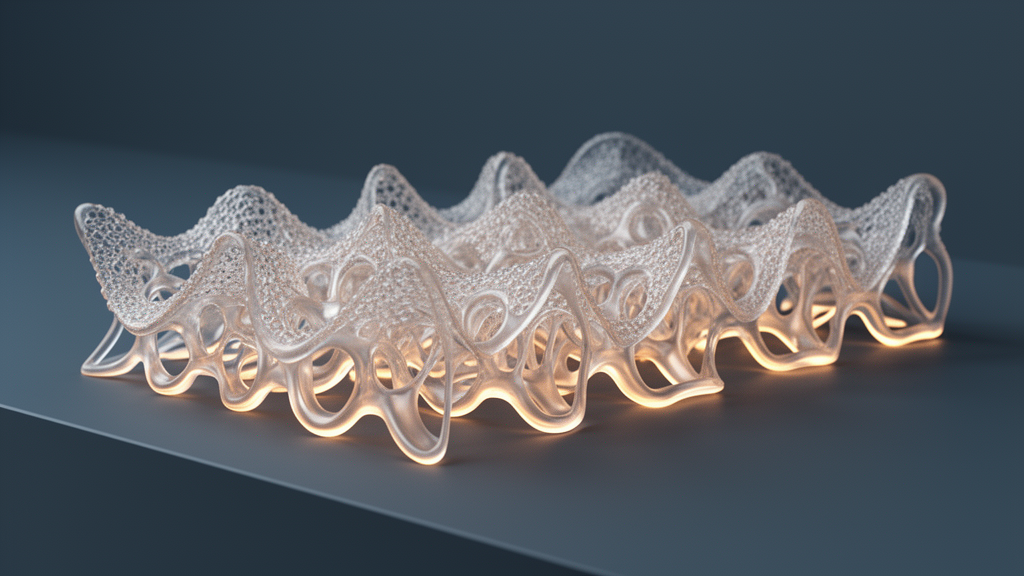
A comprehensive scientific review published in Archives of Computational Methods in Engineering establishes that four-dimensional manufacturing must transition beyond elementary shape-morphing demonstrations into a rigorous, computer-augmented engineering discipline centered on time-evolving functionality. Authors Mehmet Erdi Korkmaz and Munish Kumar Gupta demonstrate that modern advanced manufacturing has historically operated under static design paradigms in which material properties, structural geometries, and component metrics are treated as permanently fixed once fabrication concludes. While conventional manufacturing assumptions enabled notable developments in classical structural analysis, they cannot adequately predict or manage the performance of advanced materials exposed to complex service conditions over extended operational lifetimes. Additive manufacturing and functional grading have expanded geometric control and compositional tailoring, yet physical manufacturing captures only the instantaneous state of a fabricated component. True operational behavior emerges dynamically through continuous interactions between evolving material state variables and external thermal, mechanical, chemical, and environmental service histories, requiring unified computational frameworks to predict functionality over time.
To establish a coherent theoretical foundation, the authors organize four-dimensional manufacturing around a structured stimulus-state-response logic in which production processes initialize internal material states, computational physics formulations govern their temporal evolution, and functional performance emerges as a predictable outcome. Computational responses are categorized into three distinct operational classes representing progressive levels of engineering abstraction: shape evolution, property evolution, and performance evolution. Shape evolution represents the most familiar manifestation, encompassing visible geometric alterations such as bending, folding, and structural recovery driven by stimulus-dependent kinematic relationships, phase transformation kinetics, viscoelastic relaxation, or diffusion dynamics. In contrast, property evolution occurs without nominal geometric modification, involving temporal shifts in yield strength, hardness, elastic modulus, residual stress magnitude, or microstructural phase stability as internal variables adjust under operational loads. Performance evolution forms the most computationally demanding tier, tracking how engineering metrics including fatigue endurance, tribological wear resistance, and structural load-bearing capacity progressively alter throughout service life.
Bulk-driven smart materials, particularly shape memory alloys, provide the foundational constitutive and computational baseline from which time-dependent functional modeling has developed. In these volumetric systems, macroscopic responses are dictated by reversible martensitic phase transformations occurring uniformly throughout the component volume. Continuum finite element implementations traditionally track martensite volume fraction and transformation strain as primary internal state variables governed by thermo-mechanical loading paths. While phenomenological continuum models offer high computational efficiency for large-scale structural simulations, microstructural and crystal-plasticity formulations are increasingly required to capture crystallographic anisotropy, local stress concentrations, and cyclic degradation. Under repeated operational activation, shape memory alloys exhibit pronounced rate sensitivity, thermal lag, and progressive functional fatigue manifested through residual strain accumulation and shifting hysteresis loops. However, conventional modeling formulations typically prioritize primary shape recovery kinematics, frequently neglecting long-term damage accumulation, material property deterioration, and subsurface interactions that dictate actual service survivability.
Shape memory polymers and other bulk-responsive media introduce additional computational complexities stemming from time-dependent viscoelastic relaxation and non-uniform macromolecular mobility. Unlike solid-solid phase transformations in alloys, shape memory polymer behavior is governed by glass transition dynamics and temperature-dependent relaxation spectra, typically captured using Prony series representations, hereditary integral formulations, and Williams-Landel-Ferry shift factors within finite-strain constitutive equations. Advanced numerical implementations, such as thermo-visco-plastic user material subroutines in explicit finite element solvers, frequently require extremely small numerical time increments that generate substantial computational burdens. Furthermore, functionally graded and multi-material polymeric architectures produce localized variations in crosslink density and thermal conductivity that yield non-uniform recovery paths. Similarly, stimuli-responsive hydrogels rely on diffusion kinetics and poroelastic or chemomechanical transport formulations where solvent swelling induces Mullins-type network rearrangement, while field-active electroactive and magneto-responsive elastomers demand nonlinear multiphysics schemes that encounter polarization fatigue, particle reorganization, and dielectric breakdown under cyclic field activation.
Contrasting sharply with bulk-driven volumetric actuation, the review highlights surface-driven four-dimensional manufacturing as a technologically vital yet computationally underexplored engineering frontier. Classical surface engineering traditionally regards surface treatments as static, post-fabrication enhancements designed to impart fixed hardness or residual stress distributions that remain invariant during operational service. In contrast, surface-driven four-dimensional manufacturing treats near-surface states as dynamically evolving internal state variables whose progressive alterations dictate component reliability. Mechanical and thermal surface modification techniques, including precision ball burnishing, ultrasonic surface peening, and localized laser-based treatments, intentionally introduce steep depth-dependent gradients in residual stress, plastic strain, microhardness, and crystalline grain refinement. While these engineered surface zones occupy only a minimal fraction of the total component volume, their continuous temporal evolution under cyclic operational loads acts as the primary governing mechanism for structural fatigue life, crack initiation suppression, friction regulation, and surface wear resistance.
The mechanics governing surface-driven systems pose formidable computational challenges because their underlying physical mechanisms are inherently localized, depth-dependent, and largely irreversible. In bulk-responsive smart materials, functional responses are predominantly manifested as reversible volumetric actuation or shape morphing that can be cycled repeatedly through external stimulus reversal. Conversely, surface-driven functionality manifests indirectly through the retardation of microcrack initiation, the reduction of progressive wear rates, and the preservation of structural integrity under aggressive service environments. These emergent functional traits do not represent intrinsic static constants of the bulk material, but rather represent evolving outcomes arising from continuous subsurface stress redistribution and microstructural modification. Consequently, static surface integrity metrics are fundamentally inadequate for performance prediction, necessitating specialized computational frameworks that resolve localized steep gradients, account for profound loading-history dependence, and simulate the monotonic degradation, relaxation, and damage development occurring within near-surface boundary layers.
To mathematically capture these history-dependent phenomena, the computational frameworks rely on internal state variable formulations rooted in rigorous continuum thermodynamics. Material behavior is governed by differential evolution equations relating time rates of internal variables to local stress states, operating temperatures, spatial gradients, and accumulated cycle counts. To ensure thermodynamic consistency, these evolution equations are strictly constrained by the Clausius-Duhem inequality, guaranteeing positive internal dissipation and preventing nonphysical energy creation during functional development. In surface-engineered components, specialized evolution laws describe the competitive interaction between residual stress relaxation and cumulative plastic strain accumulation, alongside depth-resolved kinetic equations tracking damage variable progression under multi-axial cyclic loading. Because surface-driven state variables do not spontaneously reset upon mechanical unloading, the mathematical formulation must accommodate threshold behavior, monotonic saturation, and irreversible regime transitions, providing the vital computational link between microstructural physics and macroscopic engineering performance.
Resolving the steep spatial gradients characteristic of surface-engineered boundary layers requires advanced numerical formulations that transcend conventional homogeneous finite element techniques. Standard continuum elements cannot accurately resolve sharp near-surface gradients without excessive mesh refinement, which drastically inflates computational expenditure and introduces numerical instabilities during protracted cyclic simulations. To resolve this limitation, researchers employ depth-dependent property assignments and gradient-enhanced plasticity formulations that incorporate intrinsic material length scales directly into the free-energy functional. Coupled crystal plasticity-continuum models bridge grain-scale dislocation slip, crystallographic orientation, and local hardening with component-level macroscopic deformation. Furthermore, computational frameworks must rigorously capture bidirectional surface-bulk coupling; evolving near-surface residual stresses and microstructural layers do not develop in isolation, but are heavily constrained by bulk elastic-plastic deformation, mechanical equilibrium, and load redistribution across multiple geometric scales.
Simulating extended service lifetimes involving millions of operational cycles introduces acute numerical integration bottlenecks that exceed the practical limits of direct cycle-by-cycle finite element analysis. Computational strategies must balance numerical accuracy with tractability, utilizing staggered solution algorithms for large-scale thermo-mechanical problems or monolithic fully coupled solvers when strong physical field feedback dominates. To mitigate temporal simulation costs, specialized acceleration methodologies, including cycle-jump schemes, incremental accumulation formulations, and mean-field cycle averaging, extrapolate state-variable trajectories across extended loading blocks while monitoring threshold-governed damage transitions. Additionally, reduced-order modeling techniques, such as proper orthogonal decomposition and dynamic mode decomposition, project high-dimensional governing equations onto reduced subspaces to facilitate rapid parametric design. When coupled with physics-informed machine learning and hybrid physics-data modeling frameworks, these computational tools integrate empirical datasets while strictly enforcing thermodynamic conservation laws, providing scalable platforms for optimization and digital twin deployment.
Despite substantial theoretical progress, the review identifies critical technological and methodological bottlenecks that currently restrict surface-driven four-dimensional manufacturing to laboratory prototypes rather than certified industrial components. Fabricating stable, highly reproducible near-surface microstructural gradients remains exceptionally difficult, and real-world components must withstand complex, multi-stimulus operating environments combining unsynchronized thermal, mechanical, and chemical triggers. Current predictive models remain heavily constrained by the scarcity of standardized experimental datasets and the technical difficulty of performing in-situ, depth-resolved characterization of subsurface stress relaxation and microstructural evolution using non-destructive methods such as X-ray microtomography and high-resolution strain mapping. Moving forward, the field requires standardized end-of-life criteria, validated digital design infrastructures, and cross-disciplinary qualification protocols to transition computationally enabled four-dimensional manufacturing into critical structural applications across aerospace structures, biomedical implants, soft robotics, and adaptive mechanical assemblies.
Subject of Research: Computational modeling of time-evolving functionality and surface-driven mechanisms in 4D manufacturing
Article Title: A Review on Computational Modeling of Time-Evolving Functionality in 4d Manufacturing: From Smart Materials to Surface-Driven Systems
Article References: Korkmaz, M. E., & Gupta, M. K. (2026). A Review on Computational Modeling of Time-Evolving Functionality in 4d Manufacturing: From Smart Materials to Surface-Driven Systems. Archives of Computational Methods in Engineering, 33(9), 12809-12847. https://doi.org/10.1007/s11831-026-10658-9
Image Credits: AI Generated
DOI: 10.1007/s11831-026-10658-9
Keywords: 4D manufacturing, computational modeling, surface-driven systems, smart materials, internal state variables, residual stresses, shape memory alloys, shape memory polymers, gradient microstructures, multiphysics simulation, finite element analysis, cyclic loading, damage accumulation, reduced-order modeling, surface integrity, constitutive evolution laws
News Source: Denise Maddox. (November 26, 2026). Computational Review Reframes 4D Manufacturing Through Time-Evolving Surface States. Scienmag.