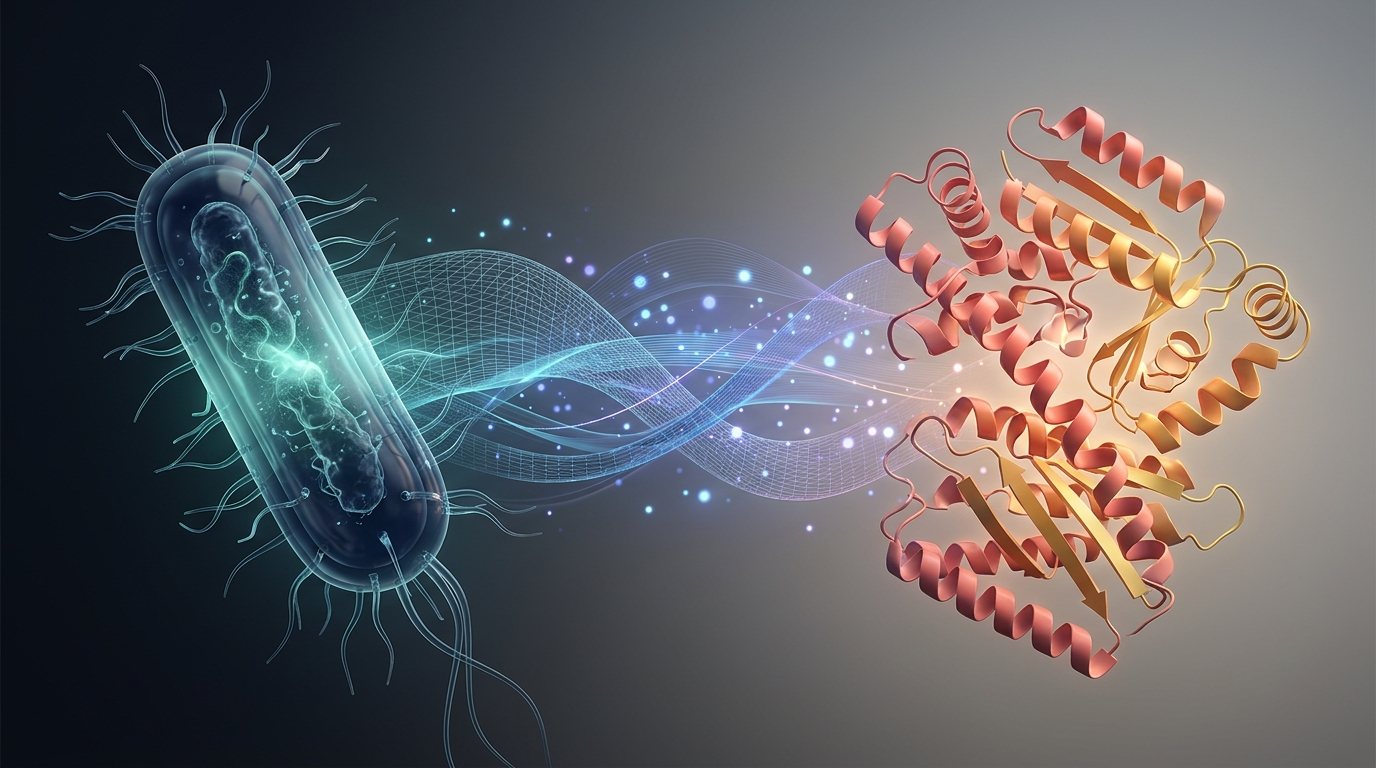
Researchers have predicted the structures and functions of all proteins in Escherichia coli UTI89, a model strain of uropathogenic E. coli, by developing an integrated computational sequence-structure-function pipeline that operates on primary sequences. Reported March 11, 2026, in PLOS Genetics by Chunxiang Peng, Henry Schreiber, Chengxin Zhang, Quancheng Liu, Scott Hultgren, and Lydia Freddolino, the study used those predicted functions to perform whole-genome enrichment analysis, revealing possible roles and related biological mechanisms of poorly annotated proteins in the organism.
The research addresses a significant challenge in modern biology: deducing structural and functional information about proteins from their sequences. Although rapid advances in high-throughput sequencing technologies have vastly increased the number of known protein sequences, experimental characterization of their structures and functions lags behind. According to the authors, this knowledge gap impedes understanding of the biological mechanisms of these proteins and hinders the interpretation of high-throughput experiments. Most computational approaches rely on homology with well-annotated proteins, yet many proteins lack identifiable homologues, which reduces the power of homology-based prediction.
To address the limits of homology-dependent methods, the team integrated protein structure and function prediction methods into a complete pipeline that predicts both structure and function from primary sequences across all proteins in E. coli UTI89. Using the resulting functional predictions for whole-genome enrichment analysis, the investigators examined poorly annotated proteins in this model uropathogenic strain to infer their possible roles and associated biological mechanisms. In addition to the genome-wide computational analysis, the researchers further validated the performance of their pipeline through detailed case studies of two genes, UTI89_C0931 and ybtS.
The authors also compiled the UTI89 structure and function database, offering it as a resource to aid researchers in elucidating the roles of unannotated proteins. According to the team, the database aims to bridge critical knowledge gaps in microbial pathogenicity and resistance and to enhance capacity to tackle emerging health threats. Because experimental characterization lags behind sequence data, the study’s whole-genome results represent computational predictions and possible functional roles within the model strain E. coli UTI89, supported by targeted case-study validation of UTI89_C0931 and ybtS to guide subsequent investigation of unannotated proteins.
Subject of Research: Computational protein structure and function prediction in Escherichia coli UTI89
Article Title: Whole-proteome structure/function prediction in uropathogenic E. coli reveals previously missed host-microbe and microbe-phage interaction pathways
Article References: Peng, C., Schreiber, H., Zhang, C., Liu, Q., Hultgren, S., & Freddolino, L. (2026). Whole-proteome structure/function prediction in uropathogenic E. coli reveals previously missed host-microbe and microbe-phage interaction pathways. PLOS Genetics, 22(11), e1012187. https://doi.org/10.1371/journal.pgen.1012187
Image Credits: AI Generated
DOI: 10.1371/journal.pgen.1012187
Keywords: Escherichia coli UTI89, uropathogenic E. coli, protein structure prediction, protein function prediction, poorly annotated proteins, whole-genome enrichment analysis, microbial pathogenicity, microbial resistance, Whole-proteome, structure, function, prediction
News Source: Drew Townsend. (November 3, 2026). Computational pipeline predicts protein structures and functions in uropathogenic E. coli. Scienmag.