
In the rapidly evolving landscape of cancer research, the intersection of computational biology and oncology is emerging as a pivotal frontier for therapeutic innovation. The study recently published by Durojaye et al. in Medical Oncology exemplifies this trend by harnessing advanced computational tools to engineer bespoke protein and peptide binders designed specifically to target cancer cells. This groundbreaking approach promises to revolutionize the way oncologists can outsmart malignant cells, potentially offering a new class of highly specific cancer therapeutics.
At the core of this research lies the convergence of multiple scientific disciplines, melding structural bioinformatics, molecular modeling, and machine learning to create molecules that can recognize and bind cancer-associated proteins with remarkable precision. Traditional cancer treatments often suffer from lack of specificity, resulting in collateral damage to healthy tissues. The innovative strategy outlined by Durojaye and colleagues leverages the computational design of protein and peptide binders, aiming to achieve heightened selectivity and efficacy, thereby minimizing systemic toxicity.
The methodology adopted entails a rigorous in silico screening process. Initially, the team identifies key oncogenic proteins that act as drivers of tumor progression. Using structural data derived from crystallography and cryo-electron microscopy, the molecular surfaces of these proteins are meticulously analyzed to pinpoint binding hotspots—regions amenable to modulation by designed molecules. The intricate nature of protein-protein interactions requiring high specificity necessitates a level of computational sophistication considered state-of-the-art.
.adsslot_Mn6KytBeHk{width:728px !important;height:90px !important;}
@media(max-width:1199px){ .adsslot_Mn6KytBeHk{width:468px !important;height:60px !important;}
}
@media(max-width:767px){ .adsslot_Mn6KytBeHk{width:320px !important;height:50px !important;}
}
ADVERTISEMENT
Subsequently, Durojaye et al. apply novel algorithms to generate and optimize peptide sequences capable of engrafting onto these hotspots. These sequences undergo iterative refinement cycles wherein binding affinity, stability, and specificity are computationally assessed. This approach circumvents the limitations of random peptide screens and expedites the identification of strong candidate binders. Importantly, the designed molecules are not restricted to natural amino acids; innovative inclusion of noncanonical residues enhances target engagement and resistance to proteolytic degradation.
Beyond design, molecular dynamics simulations play a crucial role in validating the behavior of these binders in a quasi-physiological environment. Such simulations allow researchers to observe conformational flexibility and binding kinetics at an atomic level in silico, providing predictive insights into molecule performance before any wet-lab experiments commence. This computational foresight represents a significant cost and time-saving advantage in drug development pipelines.
One of the most compelling aspects of this research is its adaptability. The computational framework established is highly modular, facilitating its application across diverse cancer types with minimal adjustments. Since many cancers share common aberrant signaling proteins, the platform can be rapidly deployed to generate custom binders targeting pathways unique to individual tumor phenotypes, heralding a new era of precision medicine.
Furthermore, the potential of these custom-designed binders extends beyond therapeutic applications. They can serve as tools for diagnostic imaging, enabling enhanced tumor visualization through conjugation with contrast agents or radionuclides. This dual diagnostic-therapeutic (“theranostic”) capability stands to significantly improve early cancer detection and monitoring, allowing clinicians to tailor treatments dynamically in response to tumor evolution.
The integration of artificial intelligence (AI) into this pipeline cannot be overstated. Machine learning algorithms trained on vast datasets of protein sequences and structures facilitate pattern recognition and predictive modeling, accelerating binder design beyond human capability. AI also aids in identifying unintended off-target interactions, enhancing the safety profile of candidate molecules. This symbiosis between computational power and biological insight exemplifies modern drug discovery paradigms.
Crucially, the researchers underscore the importance of experimental corroboration. Candidate protein and peptide binders are synthesized and subjected to rigorous biochemical assays to assess binding affinity and specificity in vitro. Subsequently, cell-based assays evaluate their capacity to interfere with cancer cell proliferation and survival, providing tangible proof of concept. This seamless integration of in silico and in vitro techniques strengthens the translational potential of their findings.
The study also addresses the challenge of immunogenicity, a common obstacle in deploying novel biologics. By simulating immune recognition patterns, the team designs binders less likely to elicit adverse immune responses, a key consideration for clinical implementation. Customization at the sequence level allows fine-tuning to evade host defenses, enhancing therapeutic durability.
From a computational standpoint, the work by Durojaye et al. represents a paradigm shift. They have developed a scalable, reproducible, and efficient platform for rapid binder design, which could democratize access to bespoke cancer therapeutics. This has profound implications not just for oncology but for infectious disease, autoimmune disorders, and beyond, where precisely tailored protein interactors are invaluable.
As this research advances, challenges remain. Translating computational predictions into safe and effective drugs entails navigating complex biological systems in vivo, overcoming hurdles such as delivery, pharmacokinetics, and tumor microenvironment barriers. However, the modular and flexible nature of the computational designs offers avenues to systematically address these issues through iterative optimization cycles.
In the broader context of cancer therapy, the work signals a critical departure from conventional small-molecule drugs and monoclonal antibodies towards a new generation of synthetic biologics. By exploiting the unique advantages of peptides—such as smaller size, easier synthesis, and tunable properties—the approach bridges the gap between large protein therapeutics and traditional chemotherapeutics.
The implications of this study extend to the pharmaceutical industry and personalized medicine. Custom protein and peptide binders designed computationally hold promise as tailored interventions for patients with rare or drug-resistant cancers, where off-the-shelf treatments fail. This individualized strategy aligns with the ongoing shift toward patient-specific therapeutics driven by genomic and proteomic profiling.
Moreover, the environmental footprint of drug development could be reduced through such computational methods. Designing molecules in silico drastically cuts down costly and resource-intensive laboratory experimentation, promoting greener and faster pathways to market. This sustainable aspect adds another layer of appeal amidst global efforts to reduce biomedical waste.
Looking ahead, collaborations between computational biologists, oncologists, structural biologists, and AI experts will be pivotal in refining these methodologies. The cross-disciplinary nature of such endeavors epitomizes the future of biomedical science, where technology and human ingenuity coalesce to confront the complexity of diseases like cancer.
Ultimately, the study by Durojaye and collaborators exemplifies how computational biology can be harnessed to design tailored therapeutics capable of transforming cancer treatment. By strategically engineering protein and peptide binders that outsmart malignant cells, they illuminate a pathway toward highly selective, effective, and safe cancer therapies with the potential for profound clinical impact.
Subject of Research: Computational design of custom protein and peptide binders for targeted cancer therapy.
Article Title: Computational biology meets oncology: designing custom protein and peptide binders to outsmart cancer.
Article References:
Durojaye, O.A., Uzoeto, H.O., Okoro, N.O. et al. Computational biology meets oncology: designing custom protein and peptide binders to outsmart cancer. Med Oncol 42, 361 (2025). https://doi.org/10.1007/s12032-025-02936-6
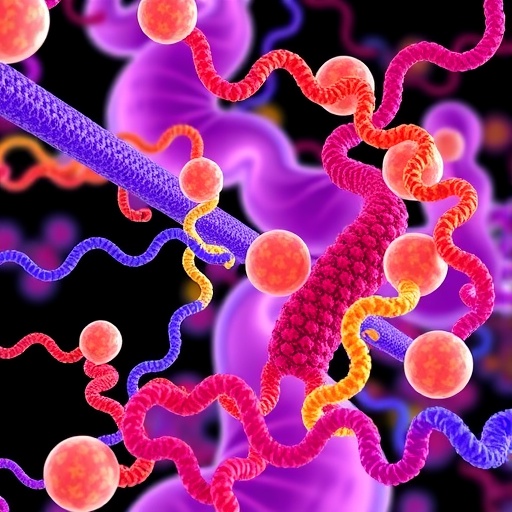
Image Credits: AI Generated
Tags: advanced computational tools in medicinecomputational biology in cancer researchcustom protein binders for cancer therapyin silico screening for oncologymachine learning applications in drug designminimizing toxicity in cancer treatmentsmolecular modeling for cancer treatmentoncogenic proteins in tumor progressionpeptide binders targeting cancer cellsspecificity in cancer therapeuticsstructural bioinformatics in oncologytherapeutic innovation in oncology