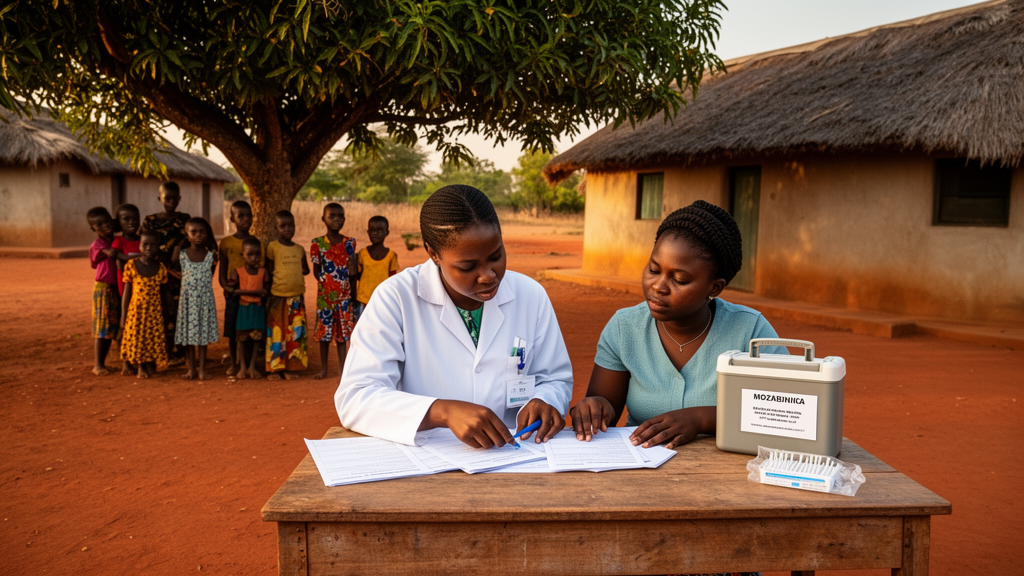
In many parts of Sub-Saharan Africa, deaths are never formally registered and their causes remain unknown, leaving health systems without timely and reliable mortality information. Mozambique has introduced mortality surveillance initiatives to address these gaps and inform health policies, but their effectiveness depends on acceptance and integration into the health system. A qualitative study published in BMC Public Health has now examined how individuals, families, community leaders and health authorities view two such methods: minimally invasive tissue sampling, known as MITS, and verbal autopsy, or VA.
The research team, led by Amilcar Magaço and colleagues, conducted a qualitative case study in the districts of Manhiça and Quelimane. They carried out twenty-eight semi-structured interviews and ten focus group discussions in two phases, one before and one during the introduction of mortality surveillance. Audio data were transcribed, coded and analysed thematically, using a combination of inductive and deductive approaches guided by the five constructs of the Diffusion of Innovation theory.
The central finding was broadly positive. Community members, local leaders and health authorities regarded MITS and VA as valuable tools for strengthening mortality surveillance in Mozambique, particularly in areas where deaths frequently go undocumented. Participants noted that the procedures align with local needs and priorities, above all the desire to understand the cause of death. That sense of relevance, the authors report, increases the perceived usefulness of the methods and the likelihood that the resulting information can serve as a basis for meaningful action.
The study’s title captures one of its most striking themes: ‘Now we know why our children are dying.’ Participants perceived MITS as providing credible and clinically useful cause-of-death information that could dispel rumours. Verbal autopsy, by contrast, was viewed as more practical, adaptable and culturally acceptable, particularly in remote areas.
Acceptance, however, was not unconditional. Although some concerns about cultural and religious sensitivities remained, many participants expressed growing acceptance of MITS and VA once the procedures were clearly explained, including their advantages and how they align with local needs. For MITS specifically, acceptability depended on respectful handling of the body and on the timely return of the deceased for burial.
Scalability emerged as a second dividing line between the two methods. Participants considered MITS more feasible in better-equipped urban settings, while verbal autopsy was seen as better suited to remote areas where laboratory support is limited. Participants regarded the two approaches as complementary rather than competing, with wider implementation requiring community trust, cultural sensitivity, adequate infrastructure and training, and sustainable integration with existing Civil Registration and Vital Statistics and health information systems.
The study addresses a structural problem: the performance of Civil Registration and Vital Statistics systems is sub-optimal in many Sub-Saharan African countries, resulting in a lack of timely and reliable mortality and cause-of-death information. Mozambique’s mortality surveillance initiatives were introduced precisely to close these gaps, and the new findings indicate that community perspectives will shape whether they succeed.
The authors conclude that embedding MITS and VA within routine health structures, rather than as standalone research activities, will be decisive for their endurance. For countries facing similar gaps in cause-of-death data, the Mozambican case suggests that mortality surveillance methods are most likely to be adopted when the information they produce answers questions communities are already asking, and when the procedures respect the bodies and beliefs of the families involved.
Subject of Research: ‘Now we know why our children are dying’: community and health authorities perspectives on minimally invasive tissue sampling and verbal autopsy for mortality surveillance in Mozambique
Article Title: ‘Now we know why our children are dying’: community and health authorities perspectives on minimally invasive tissue sampling and verbal autopsy for mortality surveillance in Mozambique
Article References: Magaço, A., Cumbane, C., Tediosi, F., Winkler, M. S., Mandomando, I., Cobos Muñoz, D., & Munguambe, K. (2026). ‘Now we know why our children are dying’: community and health authorities perspectives on minimally invasive tissue sampling and verbal autopsy for mortality surveillance in Mozambique. BMC Public Health. https://doi.org/10.1186/s12889-026-29990-7
Image Credits: AI Generated
DOI: 10.1186/s12889-026-29990-7
Keywords: know, children, dying, community, health, authorities, perspectives, minimally, invasive, tissue, sampling, verbal
News Source: Ophelia Keating. (October 25, 2026). Communities and health authorities weigh tissue sampling and verbal autopsy for mortality surveillance in Mozambique. Scienmag.