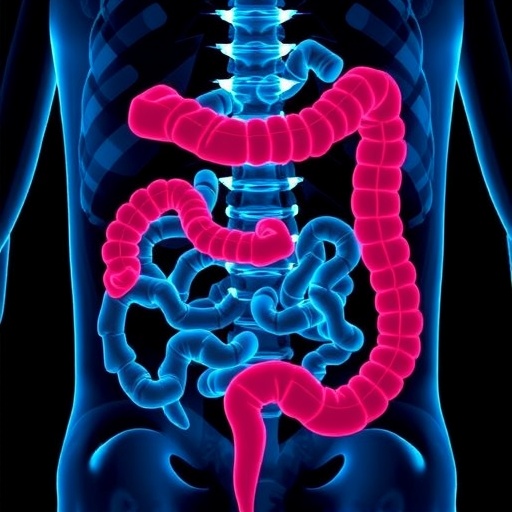
A simple stool test mailed to the home may be associated with a substantially lower risk of dying from colorectal cancer, according to a long-term analysis of Sweden’s Stockholm–Gotland screening programme. Researchers from Karolinska Institutet and Umeå University report that people who actively participated in screening had an estimated 43 per cent lower risk of colorectal cancer death than comparable individuals who were not screened. The findings, published in JAMA Network Open, are based on up to 14 years of follow-up and more than 376,000 people, making the study one of the largest evaluations of population-based colorectal cancer screening in Sweden.
Colorectal cancer is among the most frequently diagnosed cancers worldwide, but its outcome is strongly influenced by the stage at which it is detected. Tumours identified before they invade deeply into the bowel wall or spread to distant organs are generally far more treatable than advanced disease. Screening is designed to find cancer earlier, when symptoms may be absent, and to detect precancerous growths that can potentially be removed before they become malignant. In Sweden, people aged 60 to 74 are offered screening every two years. The initial test is performed at home using a kit that collects a small stool sample, which is analysed for occult blood—minute quantities that cannot be seen without laboratory testing.
The test used in this type of programme is designed to identify blood released intermittently from abnormalities in the digestive tract. Blood in a stool sample does not prove that a person has cancer, since it may also result from benign polyps, haemorrhoids or other conditions. However, a positive result signals the need for further investigation, usually a colonoscopy. During colonoscopy, a specialist examines the lining of the colon and rectum with a flexible camera and can remove polyps or take tissue samples for microscopic analysis. This two-stage process means that screening is not simply a diagnostic test for cancer: it can also interrupt the biological pathway from precancerous lesion to invasive disease.
Stockholm and Gotland were among the first Swedish regions to introduce routine colorectal cancer screening, beginning in 2008. The researchers examined people invited to participate between 2008 and 2012 and compared them with a control group consisting of individuals who were invited later or had not yet been invited. By following both groups through Swedish health registers, the investigators were able to track cancer diagnoses and deaths over a period extending to 14 years. In total, the study included 376,511 individuals, among whom 1,668 deaths from colorectal cancer were recorded during follow-up.
The central challenge was to distinguish the effect of screening from the characteristics of the people who choose to participate. Individuals who return a screening sample may differ from those who do not in ways that also affect their health. They may be more likely to visit doctors, follow medical advice, maintain healthier lifestyles or seek treatment promptly. Conversely, people with serious existing illness may be less likely to complete screening. These differences can create what epidemiologists call selection bias, making screening appear more or less effective than it truly is. The study therefore used statistical methods intended to correct for both contamination and nonadherence.
Contamination bias occurs when members of a comparison group receive screening outside the programme being evaluated. If some supposedly unscreened individuals undergo testing later, the distinction between the screened and control groups becomes blurred, potentially reducing the apparent benefit of the intervention. Nonadherence creates the opposite problem: some people receive an invitation but do not submit a sample. The researchers incorporated these factors into their analysis in an effort to estimate two related effects. The first was the impact of being invited to screening, regardless of whether the invitation was accepted. The second was the estimated impact of actually participating.
The analysis found that receiving an invitation was associated with a 26 per cent lower risk of dying from colorectal cancer. When the researchers adjusted for people who did not comply with invitations and for screening that occurred in the control group, active participation was associated with a 43 per cent lower risk of colorectal cancer death. The difference between these figures is important. An invitation can only offer an opportunity for early detection; the potential benefit depends on whether a person completes the test, responds to an abnormal result and undergoes recommended follow-up. The findings suggest that the health effect among participants may be considerably larger than the average effect measured across everyone invited.
“An earlier evaluation of the programme showed that those who received an invitation to screening had a 14 per cent lower risk of dying from the disease,” says Johannes Blom, senior consultant and associate professor at the Department of Clinical Science and Education, Södersjukhuset, Karolinska Institutet, and corresponding author of the study. “We have now been able to show that mortality is significantly lower among those who actually take part in screening.” Blom also highlights a persistent public-health problem: despite the test being free and relatively simple to complete at home, approximately one-third of people do not submit a sample.
The study’s results are especially relevant because colorectal cancer can remain biologically silent for years. A tumour may grow without causing pain, altered bowel habits or visible bleeding, and waiting for symptoms can therefore allow the disease to progress. At the same time, a positive stool test is not a diagnosis and may lead to additional procedures, including colonoscopy, which carries small but real risks such as bleeding or bowel perforation. The appropriate interpretation is that screening changes the probability of detecting disease earlier; it does not guarantee that every cancer will be found or that every participant will benefit. Some tumours bleed too little to be detected, while others may develop between screening rounds.
The researchers caution that their findings remain observational and depend on statistical adjustment rather than random assignment. Randomised trials, in which participants are allocated by chance to screening or no screening, provide the strongest protection against unknown differences between groups. In a large population programme operating over many years, however, such trials can be difficult to maintain, particularly once screening becomes standard care. Swedish national health registers offered the researchers a large study population, prolonged follow-up and reliable information on cancer outcomes, but residual uncertainty cannot be completely eliminated. The reported 43 per cent reduction should therefore be understood as an adjusted population estimate, not proof that screening alone caused the entire difference.
Even with these limitations, the findings reinforce the value of participation in organised colorectal cancer screening. A home stool test may appear routine, but it can trigger a chain of events that detects a tumour at a more curable stage or identifies a precancerous polyp before it becomes cancer. The researchers say that improving participation could save lives, particularly among people who avoid screening because they feel healthy or find the subject uncomfortable. The study was funded by the Swedish Cancer Society, the Swedish Research Council and Region Stockholm, and the authors reported no conflicts of interest. Its broader message is direct: when an invitation arrives, returning the sample may be one of the simplest preventive actions capable of changing the course of colorectal cancer.
Subject of Research: People
Article Title: “Fecal Occult Blood Screening Outcomes Adjusted for Contamination Bias and Nonadherence”
News Publication Date: 20 August 2026
Web References: https://doi.org/10.1001/jamanetworkopen.2026.29856
References: Blom J, Nyström L, Jonsson H. “Fecal Occult Blood Screening Outcomes Adjusted for Contamination Bias and Nonadherence.” JAMA Network Open. Published online 20 August 2026. doi:10.1001/jamanetworkopen.2026.29856.
Keywords: Colorectal cancer, colon cancer, cancer screening, fecal occult blood testing, preventive medicine, medical diagnosis, oncology, gastroenterology, colorectal cancer mortality, public health
Tags: age-specific cancer screening recommendationsbenefits of routine cancer screeningcolorectal cancer screeningearly detection of colorectal cancerimpact of screening on cancer outcomeslarge-scale cancer screening researchlong-term cancer mortality reductionmailed at-home cancer screeningpopulation-based cancer screening programprecancerous growth detectionstool test for colorectal cancerSweden colorectal cancer screening study