• HOME
  • NEWS
  • EXPLORE
    • CAREER
      • Companies
      • Jobs
    • EVENTS
    • iGEM
      • News
      • Team
    • PHOTOS
    • VIDEO
    • WIKI
  • BLOG
  • COMMUNITY
    • FACEBOOK
    • INSTAGRAM
    • TWITTER
Monday, May 18, 2026
BIOENGINEER.ORG
No Result
View All Result
  • Login
  • HOME
  • NEWS
  • EXPLORE
    • CAREER
      • Companies
      • Jobs
        • Lecturer
        • PhD Studentship
        • Postdoc
        • Research Assistant
    • EVENTS
    • iGEM
      • News
      • Team
    • PHOTOS
    • VIDEO
    • WIKI
  • BLOG
  • COMMUNITY
    • FACEBOOK
    • INSTAGRAM
    • TWITTER
  • HOME
  • NEWS
  • EXPLORE
    • CAREER
      • Companies
      • Jobs
        • Lecturer
        • PhD Studentship
        • Postdoc
        • Research Assistant
    • EVENTS
    • iGEM
      • News
      • Team
    • PHOTOS
    • VIDEO
    • WIKI
  • BLOG
  • COMMUNITY
    • FACEBOOK
    • INSTAGRAM
    • TWITTER
No Result
View All Result
Bioengineer.org
No Result
View All Result
Home NEWS Science News Biology

Colorectal cancer partner-in-crime identified

Bioengineer by Bioengineer
February 20, 2020
in Biology
Reading Time: 2 mins read
0
IMAGE
Share on FacebookShare on TwitterShare on LinkedinShare on RedditShare on Telegram

IMAGE

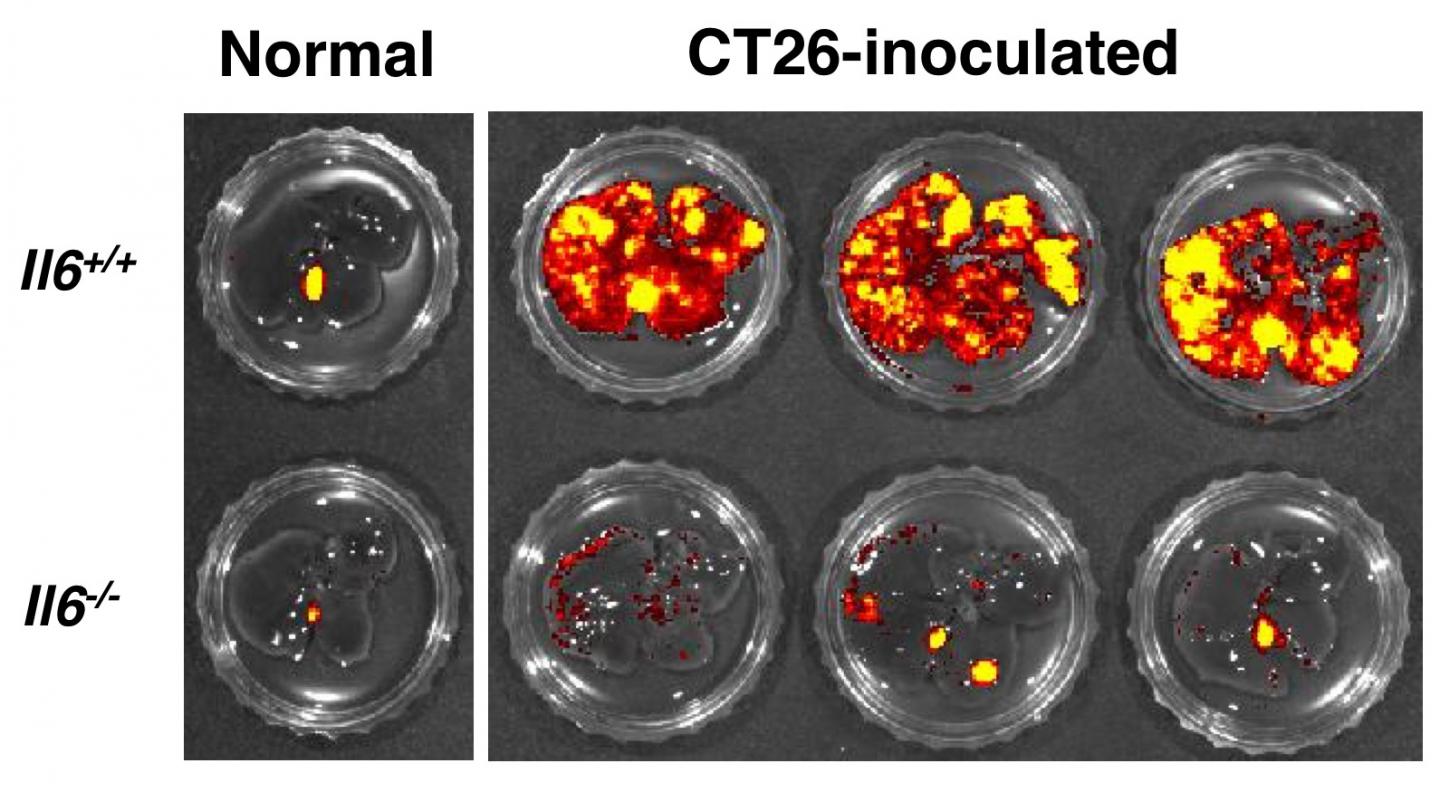
Credit: Toyoshima Y. et al., Cancer Immunology Research. December 1, 2019


A protein that helps colorectal cancer cells spread to other parts of the body could be an effective treatment target.

Colorectal cancer patients with an immune system-regulating protein called interleukin 6 (IL-6) are more likely to have recurring tumors that can also spread to the liver, according to research published in the journal Cancer Immunology Research. The Hokkaido University investigations into the protein’s role in liver metastasis could help improve colorectal cancer treatment options.

Colorectal cancer is the second most common cancer in women and third most common in men. The spreading of this cancer to other organs, most often to the liver, significantly reduces patient survival.

One cancer treatment approach is immune therapy, which stimulates a person’s own immune system to attack tumor sites. However, its effectiveness varies with different cancers and in different people. This suggests that several different mechanisms are working at the same time to suppress the immune systems of those with cancer. Scientists are seeking ways to improve the effectiveness of immune therapy for patients.

Immunologist Hidemitsu Kitamura and colleagues at Japan’s Hokkaido University had previously found IL-6 expression plays a role in suppressing immune response in tumor tissues. They wanted to see if it also helps spread colorectal cancer to the liver.

To do this, they used two groups of mice, one in which IL-6 expression was turned off and the other with IL-6 expression turned on. Both groups were inoculated with colorectal cancer cells. They assessed cancer levels in the liver, as well as the effects of IL-6 on different types of immune cells. They also analyzed IL-6 expression in human colorectal cancer patients.

They found that IL-6 expression had a significant effect on the spread of colorectal cancer to the liver in both mice and humans by helping suppress certain anti-tumor immune functions. In contrast, when IL-6 expression was lacking, the roles of anti-tumor immune cells, like dendritic cells and cytotoxic T cells, were enhanced. A drug administration targeting immune suppressing protein PD-L1 showed to be more effective in mice lacking IL-6 expression. Furthermore, statistical analyses showed human colorectal cancer patients whose tumor tissues do not express IL-6 survived for longer than those whose tumors did express the protein.

“We hope that targeting IL-6 will be an effective approach to reduce the spread of cancer and improve survival in colorectal cancer patients. This approach could be combined with other immune therapy strategies, such as the one targeting PD-L1, to augment their effects on colorectal cancer in the future,” says Hidemitsu Kitamura.

###

Media Contact
Naoki Namba
[email protected]
81-117-062-185

Original Source

https://www.global.hokudai.ac.jp/blog/colorectal-cancer-partner-in-crime-identified/

Related Journal Article

http://dx.doi.org/10.1158/2326-6066.CIR-18-0766

Tags: cancerCell BiologyGeneticsImmunology/Allergies/AsthmaMedicine/HealthMolecular Biology
Share12Tweet8Share2ShareShareShare2

Related Posts

In-Depth Analysis Reveals Advances in Multiple Sclerosis Research Models — Biology

In-Depth Analysis Reveals Advances in Multiple Sclerosis Research Models

May 18, 2026
Uncovering C. elegans Immunity via Genetic Screens — Biology

Uncovering C. elegans Immunity via Genetic Screens

May 16, 2026

Single mother must adapt swiftly — the survival of her colony depends on it

May 15, 2026

Why Are Nearly Everyone Right-Handed? It Might Be Linked to How We Learned to Walk

May 15, 2026
Please login to join discussion

POPULAR NEWS

  • Research Indicates Potential Connection Between Prenatal Medication Exposure and Elevated Autism Risk

    844 shares
    Share 338 Tweet 211
  • New Study Reveals Plants Can Detect the Sound of Rain

    731 shares
    Share 292 Tweet 182
  • Salmonella Haem Blocks Macrophages, Boosts Infection

    62 shares
    Share 25 Tweet 16
  • Breastmilk Balances E. coli and Beneficial Bacteria in Infant Gut Microbiomes

    58 shares
    Share 23 Tweet 15

About

We bring you the latest biotechnology news from best research centers and universities around the world. Check our website.

Follow us

Recent News

Maternal Age and Pregnancy Heart Risks Explored

Hypoxic Burden Links to Bronchopulmonary Dysplasia Risk

Fossil Fuel Phase-Out: Challenges and Opportunities Under 1.5°C

Subscribe to Blog via Email

Enter your email address to subscribe to this blog and receive notifications of new posts by email.

Join 82 other subscribers
  • Contact Us

Bioengineer.org © Copyright 2023 All Rights Reserved.

Welcome Back!

Login to your account below

Forgotten Password?

Retrieve your password

Please enter your username or email address to reset your password.

Log In
No Result
View All Result
  • Homepages
    • Home Page 1
    • Home Page 2
  • News
  • National
  • Business
  • Health
  • Lifestyle
  • Science

Bioengineer.org © Copyright 2023 All Rights Reserved.