

• HOME
  • NEWS
  • EXPLORE
    • CAREER
      • Companies
      • Jobs
    • EVENTS
    • iGEM
      • News
      • Team
    • PHOTOS
    • VIDEO
    • WIKI
  • BLOG
  • COMMUNITY
    • FACEBOOK
    • INSTAGRAM
    • TWITTER
Sunday, October 4, 2026
BIOENGINEER.ORG
No Result
View All Result
  • Login
  • HOME
  • NEWS
  • EXPLORE
    • CAREER
      • Companies
      • Jobs
        • Lecturer
        • PhD Studentship
        • Postdoc
        • Research Assistant
    • EVENTS
    • iGEM
      • News
      • Team
    • PHOTOS
    • VIDEO
    • WIKI
  • BLOG
  • COMMUNITY
    • FACEBOOK
    • INSTAGRAM
    • TWITTER
  • HOME
  • NEWS
  • EXPLORE
    • CAREER
      • Companies
      • Jobs
        • Lecturer
        • PhD Studentship
        • Postdoc
        • Research Assistant
    • EVENTS
    • iGEM
      • News
      • Team
    • PHOTOS
    • VIDEO
    • WIKI
  • BLOG
  • COMMUNITY
    • FACEBOOK
    • INSTAGRAM
    • TWITTER
No Result
View All Result
Bioengineer.org
No Result
View All Result
Home NEWS Science News

Colorado State University selected for new nationwide high-intensity laser network

Bioengineer by Bioengineer
October 31, 2018
in Science News
Reading Time: 2 mins read
0
Share on FacebookShare on TwitterShare on LinkedinShare on RedditShare on Telegram
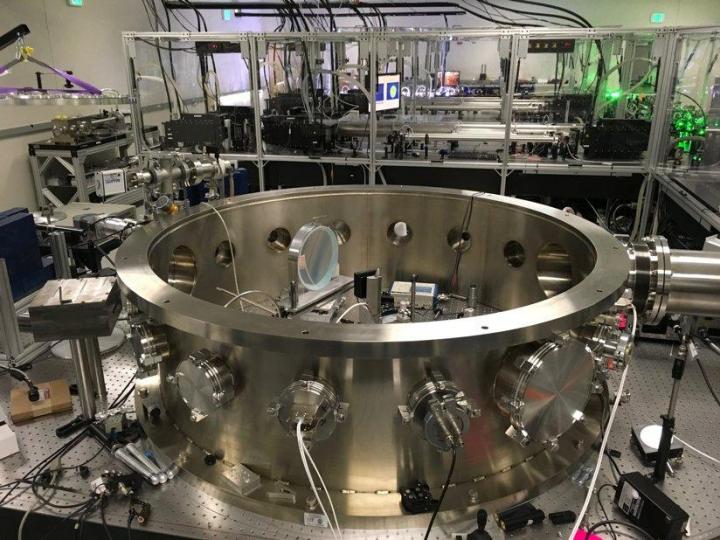
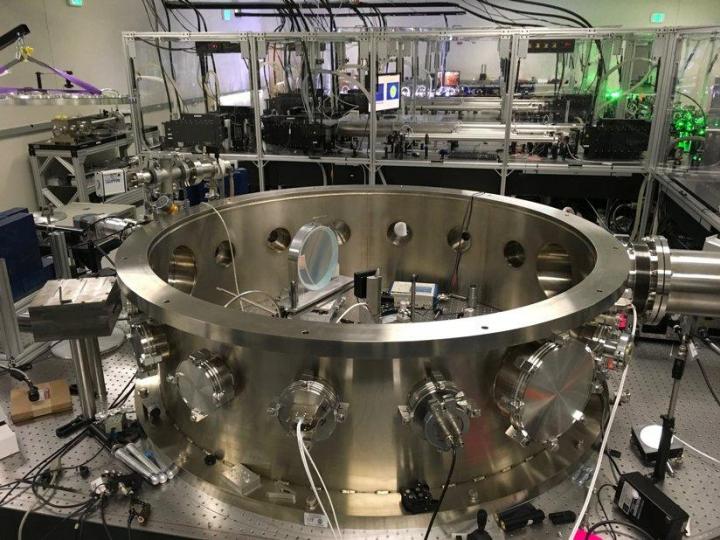
IMAGE

Credit: Colorado State University

Colorado State University scientists are joining a new research network called LaserNetUS, established by a two-year, $6.8 million grant from the U.S. Department of Energy.

The network is intended to give U.S. scientists access to some of the most intense laser sources available. The initiative is funded by the Department of Energy's Fusion Energy Sciences program (FES) within the Office of Science, and includes institutions nationwide operating high-intensity, ultrafast lasers. University Distinguished Professor Jorge Rocca, in the Department of Electrical and Computer Engineering and Department of Physics, is the network's lead investigator at CSU.

LaserNetUS includes some of the most powerful laser facilities in the U.S. It will provide U.S. scientists increased access to the unique, high-intensity laser facilities at nine institutions: University of Texas at Austin, The Ohio State University, Colorado State University, University of Michigan, University of Nebraska-Lincoln, Stanford Linear Accelerator National Laboratory, Lawrence Berkeley National Laboratory, Laboratory for Laser Energetics in Rochester, and Lawrence Livermore National Laboratory.

High-intensity lasers have a broad range of applications in basic research, manufacturing and medicine. For example, they can be used to recreate some of the most extreme conditions in the universe, such as those found in supernova explosions and near black holes. They can generate high-energy particles for high-energy physics research, or intense X-ray pulses to probe matter as it evolves on ultrafast time scales. They are also promising in many potential technological areas, such as for generating intense neutron bursts, which could evaluate aging aircraft components, or potentially deliver tightly focused radiation therapy to cancer tumors.

LaserNetUS will give many more U.S. scientists access to a broad suite of cutting-edge facilities, including the petawatt-class laser in CSU's Advanced Beam Laboratory, led by Rocca. Petawatt lasers generate light with at least a million billion watts of power, or nearly 100 times the output of all the world's power plants, but only in the briefest of bursts. Using the technology pioneered by two of the winners of this year's Nobel Prize in Physics, called chirped pulse amplification, these lasers fire off ultrafast bursts of light shorter than a tenth of a trillionth of a second.

The U.S. was the dominant innovator and user of high-intensity laser technology in the 1990s, but now Europe and Asia have taken the lead, according to a recent report from the National Academies of Sciences, Engineering and Medicine titled "Opportunities in Intense Ultrafast Lasers: Reaching for the Brightest Light." Currently, 80 to 90 percent of the world's high-intensity ultrafast laser systems are overseas, and all of the highest-powered research lasers currently in construction or already built are also overseas. The report's authors recommended establishing a national network of laser facilities to emulate successful efforts in Europe. LaserNetUS was established for exactly that purpose.

###

LaserNetUS will hold a nationwide call for proposals for access to the network's facilities. The proposals will be peer-reviewed by an independent review panel. This call will allow any researcher in the U.S. to get time on one of the high-intensity lasers at the LaserNetUS host institutions.

Media Contact

Anne Manning
[email protected]
970-491-7099
@ColoStateNews

Home

Original Source

https://engr.source.colostate.edu/colorado-state-university-selected-for-new-nationwide-high-intensity-laser-network/
Share13Tweet8Share2ShareShareShare2

Related Posts

Tiny Silica Nanocarriers With Polymer Gates Release Corrosion Inhibitors Only When Needed

Tiny Silica Nanocarriers With Polymer Gates Release Corrosion Inhibitors Only When Needed

October 4, 2026
Decade of Data: How Explainable AI Is Cracking Open the Black Box of Crash Severity Prediction

Decade of Data: How Explainable AI Is Cracking Open the Black Box of Crash Severity Prediction

October 4, 2026

Past Chytrid Infection Leaves Harlequin Toads More Vulnerable, Not Resistant, to Re-infection

October 4, 2026

Root Canal Bacteria and Breast Cancer: New Meta-Analysis Finds No Clear Link, But Clues to Tumor Progression

October 4, 2026
Please login to join discussion

POPULAR NEWS

  • Alloys That Shrink Their Own Grains: New PIX Mechanism Refines Metals With Heat Alone

    Alloys That Shrink Their Own Grains: New PIX Mechanism Refines Metals With Heat Alone

    29 shares
    Share 12 Tweet 7
  • Endurance Exercise Reshapes the Liver in Males and Females Through Distinct Molecular Routes

    29 shares
    Share 12 Tweet 7
  • Single Transcription Factor PU.1 Rapidly Converts Fibroblasts into Macrophage-Lineage Cells

    29 shares
    Share 12 Tweet 7
  • New Scale Measures How Ready Nurse Educators Really Are for the AI Era

    29 shares
    Share 12 Tweet 7

About

We bring you the latest biotechnology news from best research centers and universities around the world. Check our website.

Follow us

Recent News

Alloys That Shrink Their Own Grains: New PIX Mechanism Refines Metals With Heat Alone

Endurance Exercise Reshapes the Liver in Males and Females Through Distinct Molecular Routes

Single Transcription Factor PU.1 Rapidly Converts Fibroblasts into Macrophage-Lineage Cells

Subscribe to Blog via Email

Success! An email was just sent to confirm your subscription. Please find the email now and click 'Confirm' to start subscribing.

Join 85 other subscribers
  • Contact Us

Bioengineer.org © Copyright 2023 All Rights Reserved.

Welcome Back!

Login to your account below

Forgotten Password?

Retrieve your password

Please enter your username or email address to reset your password.

Log In
No Result
View All Result
  • Homepages
    • Home Page 1
    • Home Page 2
  • News
  • National
  • Business
  • Health
  • Lifestyle
  • Science

Bioengineer.org © Copyright 2023 All Rights Reserved.
