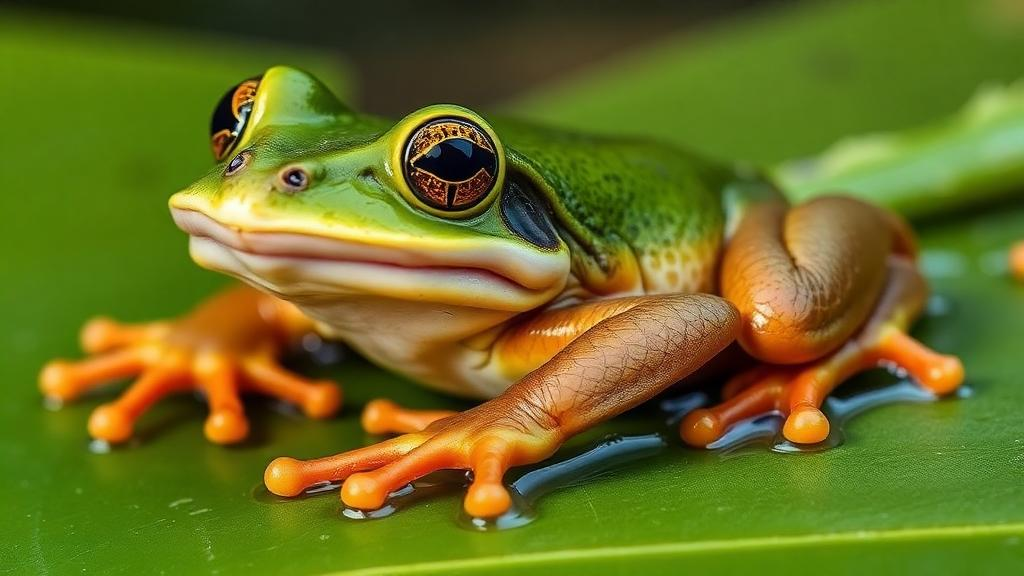
When the African clawed frog (Xenopus laevis) is plunged into near-winter temperatures, its liver undergoes a sweeping molecular overhaul, according to a new transcriptomic study published in BMC Genomics. A research team led by Eiko Iwakoshi-Ukena, Makoto Suzuki, Kazuyoshi Ukena and Hajime Ogino exposed the amphibians to 5 °C for five days and compared them with animals kept at 24 °C. The cold-exposed frogs developed pronounced hyperglycemia, and RNA sequencing of liver tissue revealed that 2,392 genes were upregulated while 2,031 genes were downregulated relative to the warm-maintained controls. The pattern, the authors report, points to a coordinated transcriptional reprogramming of hepatic metabolism that may help the animal maintain glucose homeostasis and conserve energy in the cold.
The most striking shift concerned sugar metabolism. Genes associated with gluconeogenesis — the production of new glucose — were significantly upregulated, including foxo1, g6pc1 and pck1. At the same time, genes involved in glycolysis and glucose utilization, such as gck, pfkm and ldhb, were downregulated. In other words, the liver’s transcriptional program pivoted from burning glucose toward manufacturing it, a change consistent with the elevated blood sugar levels observed in the cold-exposed animals. The authors note that these coordinated changes are consistent with a hepatic response that may support glucose homeostasis during cold exposure, though the study establishes transcriptional patterns rather than demonstrating functional outcomes directly.
Lipid metabolism underwent an equally directional transformation. Genes for fatty acid biosynthesis, fatty acid desaturation and cholesterol biosynthesis — including srebf1, acaca, fasn, scd, fads2, srebf2 and hmgcr — were upregulated, suggesting a transcriptional tilt toward building lipids rather than breaking them down. Mirroring this, genes related to fatty acid β-oxidation, the pathway that burns fatty acids for energy, were significantly downregulated: ppara, cpt1a, cpt1b, slc25a20, acadl, hadha and hadhb all showed reduced expression. In alignment with this pattern, multiple genes encoding components of the mitochondrial electron transport chain and the ATP synthesis machinery were also downregulated, indicating a broad transcriptional quieting of oxidative energy production in the cold liver.
Not every metabolic gene was switched down. Gene groups involved in antioxidant defenses were upregulated, including gpx4, gpx1, prdx2, prdx5 and prdx6, as well as ferritin-related genes. The authors validated representative transcriptomic changes using quantitative PCR analysis, supporting the RNA-seq measurements for the genes examined.
The study addresses a gap in comparative physiology. Ectothermic vertebrates, whose body temperature tracks their surroundings, show substantial physiological plasticity in response to environmental temperature fluctuations, and amphibians are known to make particularly pronounced metabolic adjustments under cold conditions. Yet the molecular mechanisms underlying the hepatic response to low temperatures have remained poorly understood. By profiling the transcriptome of the Xenopus liver under cold exposure, the team provides what it describes as a transcriptional framework for understanding hepatic responses to cold in this species, and identifies key metabolic pathways — gluconeogenesis, lipid and cholesterol synthesis, β-oxidation and oxidative phosphorylation — for future functional investigation.
Because the findings come from a five-day exposure in a single laboratory species, with gene expression as the primary readout, the authors frame the observed changes as consistent with, rather than proof of, a hepatic strategy for energy conservation and glucose support during cold. Even so, the tightly mirrored pattern — glucose production up, glucose consumption down, lipid synthesis up, lipid oxidation down, and the electron transport chain dialed back — offers a vivid snapshot of how a cold-blooded vertebrate’s central metabolic organ retunes itself at the level of its genes when the temperature drops.
Subject of Research: Hepatic transcriptomic and metabolic responses to cold exposure in the African clawed frog Xenopus laevis
Article Title: Transcriptomic profiling reveals coordinated hepatic metabolic reprogramming involving gluconeogenesis and fatty acid β-oxidation during cold exposure in Xenopus laevis
Article References: Iwakoshi-Ukena, E., Suzuki, M., Furumitsu, M., Shimanoe, N., Narimatsu, Y., Ukena, K., & Ogino, H. (2026). Transcriptomic profiling reveals coordinated hepatic metabolic reprogramming involving gluconeogenesis and fatty acid β-oxidation during cold exposure in Xenopus laevis. BMC Genomics. https://doi.org/10.1186/s12864-026-13498-w
Image Credits: AI Generated
DOI: 10.1186/s12864-026-13498-w
Keywords: Xenopus laevis, cold exposure, liver, transcriptomics, RNA-seq, gluconeogenesis, glycolysis, fatty acid beta-oxidation, hyperglycemia, oxidative phosphorylation, antioxidant defense, BMC Genomics
News Source: Daisy Hatcher. (October 24, 2026). Cold-exposed frog livers rewire metabolism toward glucose production and fat storage. Scienmag.