• HOME
  • NEWS
  • EXPLORE
    • CAREER
      • Companies
      • Jobs
    • EVENTS
    • iGEM
      • News
      • Team
    • PHOTOS
    • VIDEO
    • WIKI
  • BLOG
  • COMMUNITY
    • FACEBOOK
    • INSTAGRAM
    • TWITTER
Tuesday, August 18, 2026
BIOENGINEER.ORG
No Result
View All Result
  • Login
  • HOME
  • NEWS
  • EXPLORE
    • CAREER
      • Companies
      • Jobs
        • Lecturer
        • PhD Studentship
        • Postdoc
        • Research Assistant
    • EVENTS
    • iGEM
      • News
      • Team
    • PHOTOS
    • VIDEO
    • WIKI
  • BLOG
  • COMMUNITY
    • FACEBOOK
    • INSTAGRAM
    • TWITTER
  • HOME
  • NEWS
  • EXPLORE
    • CAREER
      • Companies
      • Jobs
        • Lecturer
        • PhD Studentship
        • Postdoc
        • Research Assistant
    • EVENTS
    • iGEM
      • News
      • Team
    • PHOTOS
    • VIDEO
    • WIKI
  • BLOG
  • COMMUNITY
    • FACEBOOK
    • INSTAGRAM
    • TWITTER
No Result
View All Result
Bioengineer.org
No Result
View All Result
Home NEWS Science News Biology

Coffee plants have a small but consistent core microbiome of fungi and bacteria

Bioengineer by Bioengineer
April 30, 2020
in Biology
Reading Time: 2 mins read
0
IMAGE
Share on FacebookShare on TwitterShare on LinkedinShare on RedditShare on Telegram

IMAGE

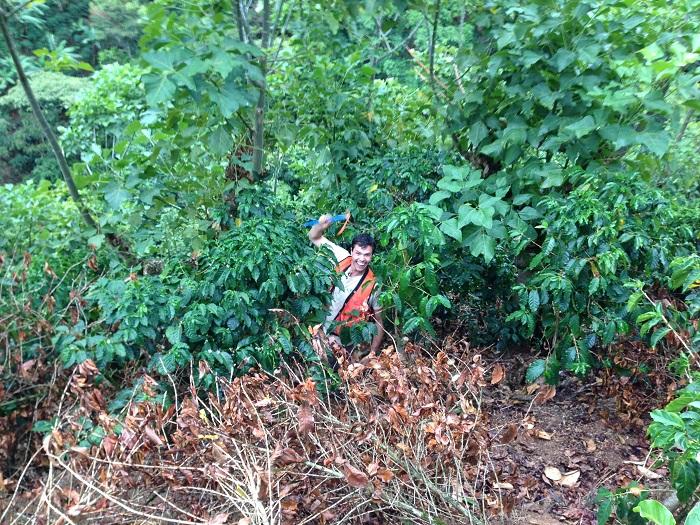
Credit: Roberta Fulthorpe

For most people, coffee is a necessary start to the day. For three scientists based in Toronto, coffee is a good research subject in a world with a changing climate.

These scientists explored the tissues of coffee roots to look for signs of a “core microbiome,” or for signs of microbes, such as bacteria and fungi, that form partnerships with the coffee plant.

The existence of consistent microbes within a certain plant microbiome is strongly indicative of beneficial relationships and a better understanding of coffee microbial partnerships is helpful in determining best management practices and predicting coffee responses to changing conditions.

To enhance our knowledge of the coffee plant microbiomes, these ecologists used next generation sequencing methods on samples from a number of Central American farms that differed drastically in environmental conditions and management systems. They discovered 26 bacterial and 31 fungal species that met their criteria for belonging to the core microbiome. Some of these species are known to have plant-beneficial properties and should be investigated in more detail.

“The bacterial core microbiome is much stronger and consistent, while the fungal microbiome is more sensitive to environmental conditions that are expected to expand in range with climate change,” said Roberta Fulthorpe, one of the scientists behind this research. “We also found that fungi appear to be related to coffee root characteristics while bacteria are not.”

The finding that a number of highly abundant microbial species consistently persist in coffee is a remarkable one. As team member Adam Martin explains: “That the same species are found across a huge range of temperatures, precipitation, soil conditions, and light availability, is novel evidence of a core microbiome that actually exists in real-world conditions.”

“Our results open the door for understanding if or how microbiomes can be managed in real-world cropping systems. Our work also leads to interesting questions on whether or not the flavor of our morning cup of coffee is influenced by the plant’s microbes.”

###

To learn more about first in-depth molecular study of the bacterial and fungal microbiome of coffee roots, read “Root Endophytes of Coffee (Coffea arabica): Variation Across Climatic Gradients and Relationships with Functional Traits” published on February 20th in Phytobiomes Journal.

Media Contact
Ashley Bergman Carlin
[email protected]

Related Journal Article

http://dx.doi.org/10.1094/PBIOMES-04-19-0021-R

Tags: Agricultural Production/EconomicsAgricultureClimate ChangeEcology/EnvironmentFood/Food ScienceGenesMicrobiologyPlant Sciences
Share12Tweet8Share2ShareShareShare2

Related Posts

Scientists Develop Real-Time Control Systems for Engineered Biology

Scientists Develop Real-Time Control Systems for Engineered Biology

August 18, 2026
Pesticide exposure disrupts ants’ behavior and navigation

Pesticide exposure disrupts ants’ behavior and navigation

August 17, 2026

Arabidopsis Reveals Imbalance Between Chloroplast Proton Motive Force and ATP Levels

August 17, 2026

Grasses, Not Just Flowers, Also Help Support Pollinators

August 17, 2026
Please login to join discussion

POPULAR NEWS

  • SUNY Poly Receives $15K Health Forward Foundation Grant for Respiratory Care Research

    29 shares
    Share 12 Tweet 7
  • Patient-specific blood–brain tumor barrier chip predicts glioblastoma treatment responses

    29 shares
    Share 12 Tweet 7
  • Natural leaf coatings could help hydrochar store carbon more effectively

    29 shares
    Share 12 Tweet 7
  • Severe mental illness tied to higher dementia risk and earlier strokes

    29 shares
    Share 12 Tweet 7

About

We bring you the latest biotechnology news from best research centers and universities around the world. Check our website.

Follow us

Recent News

SUNY Poly Receives $15K Health Forward Foundation Grant for Respiratory Care Research

Patient-specific blood–brain tumor barrier chip predicts glioblastoma treatment responses

Natural leaf coatings could help hydrochar store carbon more effectively

Subscribe to Blog via Email

Enter your email address to subscribe to this blog and receive notifications of new posts by email.

Join 85 other subscribers
  • Contact Us

Bioengineer.org © Copyright 2023 All Rights Reserved.

Welcome Back!

Login to your account below

Forgotten Password?

Retrieve your password

Please enter your username or email address to reset your password.

Log In
No Result
View All Result
  • Homepages
    • Home Page 1
    • Home Page 2
  • News
  • National
  • Business
  • Health
  • Lifestyle
  • Science

Bioengineer.org © Copyright 2023 All Rights Reserved.