• HOME
  • NEWS
  • EXPLORE
    • CAREER
      • Companies
      • Jobs
    • EVENTS
    • iGEM
      • News
      • Team
    • PHOTOS
    • VIDEO
    • WIKI
  • BLOG
  • COMMUNITY
    • FACEBOOK
    • INSTAGRAM
    • TWITTER
Monday, July 13, 2026
BIOENGINEER.ORG
No Result
View All Result
  • Login
  • HOME
  • NEWS
  • EXPLORE
    • CAREER
      • Companies
      • Jobs
        • Lecturer
        • PhD Studentship
        • Postdoc
        • Research Assistant
    • EVENTS
    • iGEM
      • News
      • Team
    • PHOTOS
    • VIDEO
    • WIKI
  • BLOG
  • COMMUNITY
    • FACEBOOK
    • INSTAGRAM
    • TWITTER
  • HOME
  • NEWS
  • EXPLORE
    • CAREER
      • Companies
      • Jobs
        • Lecturer
        • PhD Studentship
        • Postdoc
        • Research Assistant
    • EVENTS
    • iGEM
      • News
      • Team
    • PHOTOS
    • VIDEO
    • WIKI
  • BLOG
  • COMMUNITY
    • FACEBOOK
    • INSTAGRAM
    • TWITTER
No Result
View All Result
Bioengineer.org
No Result
View All Result
Home NEWS Science News Biology

Coffee, cocoa and vanilla: an opportunity for more trees in tropical agricultural landscapes

Bioengineer by Bioengineer
June 15, 2020
in Biology
Reading Time: 3 mins read
0
IMAGE
Share on FacebookShare on TwitterShare on LinkedinShare on RedditShare on Telegram

Research team from Göttingen University investigates the land-use history of agroforestry systems
IMAGE

Credit: Kristina Osen

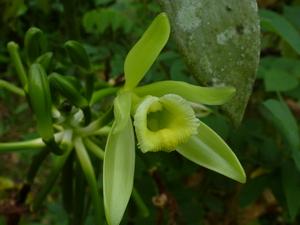
The cultivation of coffee, cocoa and vanilla secures the income of many small-holder farmers and is also a driver of land-use change in many tropical countries. In particular, cultivation in agroforestry systems, in which these crops are combined with trees that provide shade, is often considered to have great potential for ecologically sustainable cultivation. Researchers at the University of Göttingen are now showing that the land-use history of agroforestry systems plays a crucial role in assessing the sustainability of agroforestry. The results have been published in the journal Conservation Letters.

Tropical agroforests differ greatly in their land-use history, i.e. the former use of the land now occupied by agroforests. On the one hand, an agroforest can be established directly in a forest – in this case the undergrowth is removed and replaced by vanilla vines, coffee or cocoa bushes. In the process, many plant and animal species and important ecosystem services are lost. On the other hand, an agroforest can be established on land that is open – for example on a pasture or cornfield which was forest in former times but had been cleared for farming. In this case, the land would be replanted with trees, and so animal species that depend on trees may benefit. Trees also store carbon and may have a cooling effect, which can reduce global warming.

“Our results show that agroforestry systems can only lead to a significant enhancement of the landscape for biodiversity if they are established on open land,” says Dominic Martin, first author of the study. “The conversion of the remaining species-rich tropical forests into coffee, cocoa or vanilla plantations should, however, be avoided.” This requires incentives, adds Professor Holger Kreft, Head of the Biodiversity, Macroecology and Biogeography Group at the University of Göttingen. “Sustainability labels should take this into account and avoid giving certification to plantations that were previously forest. It is really only in this way that the ecological advantages of cultivation in agroforestry systems can be achieved. This can then help to ensure that our morning coffee can be enjoyed without a bitter aftertaste,” says Kreft.

###

The study comes from the multidisciplinary project “Diversity Turn” at the University of Göttingen, which is funded by the Volkswagen Foundation and the Ministry of Science and Culture of Lower Saxony.

Original publication: Dominic Martin et al. (2020) Land-use history determines ecosystem services and conservation value in tropical agroforestry. Conservation Letters. DOI: https://doi.org/10.1111/conl.12740

Alternative link: https://conbio.onlinelibrary.wiley.com/doi/full/10.1111/conl.12740

Contact:

Dominic Martin

University of Göttingen

Faculty of Forest Sciences and Forest Ecology

Biodiversity, Macroecology and Biogeography group

Büsgenweg 1, 37077 Göttingen, Germany

Tel: +49 (0)551 3933167

Mobile: +49 (0)17 629564000

Email: [email protected]

http://www.uni-goettingen.de/en/128741.html

Professor Holger Kreft

University of Göttingen

Faculty of Forest Sciences and Forest Ecology

Biodiversity, Macroecology and Biogeography group

Tel: +49 (0)551 3928757

Email: [email protected]

Media Contact
Melissa Sollich
[email protected]

Original Source

https://www.uni-goettingen.de/en/3240.html?id=5908

Related Journal Article

http://dx.doi.org/10.1111/conl.12740

Tags: Agricultural Production/EconomicsAgricultureEcology/EnvironmentForestryPlant Sciences
Share12Tweet8Share2ShareShareShare2

Related Posts

Han directs new $15M NIH center for organ-on-chip technology

Han directs new $15M NIH center for organ-on-chip technology

July 11, 2026
Bacteriophages Enable Next-Gen Smart Pathogen Detection Sensors

Bacteriophages Enable Next-Gen Smart Pathogen Detection Sensors

July 10, 2026

Temperature Fluctuations Have Greater Impact Than Previously Believed

July 10, 2026

New Study Uncovers Biology Behind Glioma Cancer Progression

July 10, 2026
Please login to join discussion

POPULAR NEWS

  • Detection of EDCs in Breast Milk and Infant Urine Up to Six Months Highlights Early Exposure Risks

    77 shares
    Share 31 Tweet 19
  • New Drug Candidate Developed at McMaster Shows Potential for Treating Brain Cancer

    58 shares
    Share 23 Tweet 15
  • KTU Researchers Explore Ultrasound’s Role in Enhancing Blood Flow Beyond Diagnostics

    53 shares
    Share 21 Tweet 13
  • Experimental Therapy Simultaneously Destroys Prostate Tumor Cells and Reactivates Antitumor Immunity

    46 shares
    Share 18 Tweet 12

About

We bring you the latest biotechnology news from best research centers and universities around the world. Check our website.

Follow us

Recent News

First Superconducting Quantum Heat Engine Paves Way for Bigger Quantum Computers

Digital Check-Ins Boost Cancer Patient Outcomes, Study Shows

Blocking Siglec-binding Sialoglycans to Halt Prostate Cancer Bone Spread

Subscribe to Blog via Email

Enter your email address to subscribe to this blog and receive notifications of new posts by email.

Join 85 other subscribers
  • Contact Us

Bioengineer.org © Copyright 2023 All Rights Reserved.

Welcome Back!

Login to your account below

Forgotten Password?

Retrieve your password

Please enter your username or email address to reset your password.

Log In
No Result
View All Result
  • Homepages
    • Home Page 1
    • Home Page 2
  • News
  • National
  • Business
  • Health
  • Lifestyle
  • Science

Bioengineer.org © Copyright 2023 All Rights Reserved.