• HOME
  • NEWS
  • EXPLORE
    • CAREER
      • Companies
      • Jobs
    • EVENTS
    • iGEM
      • News
      • Team
    • PHOTOS
    • VIDEO
    • WIKI
  • BLOG
  • COMMUNITY
    • FACEBOOK
    • INSTAGRAM
    • TWITTER
Tuesday, October 6, 2026
BIOENGINEER.ORG
No Result
View All Result
  • Login
  • HOME
  • NEWS
  • EXPLORE
    • CAREER
      • Companies
      • Jobs
        • Lecturer
        • PhD Studentship
        • Postdoc
        • Research Assistant
    • EVENTS
    • iGEM
      • News
      • Team
    • PHOTOS
    • VIDEO
    • WIKI
  • BLOG
  • COMMUNITY
    • FACEBOOK
    • INSTAGRAM
    • TWITTER
  • HOME
  • NEWS
  • EXPLORE
    • CAREER
      • Companies
      • Jobs
        • Lecturer
        • PhD Studentship
        • Postdoc
        • Research Assistant
    • EVENTS
    • iGEM
      • News
      • Team
    • PHOTOS
    • VIDEO
    • WIKI
  • BLOG
  • COMMUNITY
    • FACEBOOK
    • INSTAGRAM
    • TWITTER
No Result
View All Result
Bioengineer.org
No Result
View All Result
Home NEWS Science News Health

Closing in on liver fibrosis: Detailing the fibrosis process at unprecedented resolution

Bioengineer by Bioengineer
March 9, 2020
in Health
Reading Time: 2 mins read
0
IMAGE
Share on FacebookShare on TwitterShare on LinkedinShare on RedditShare on Telegram

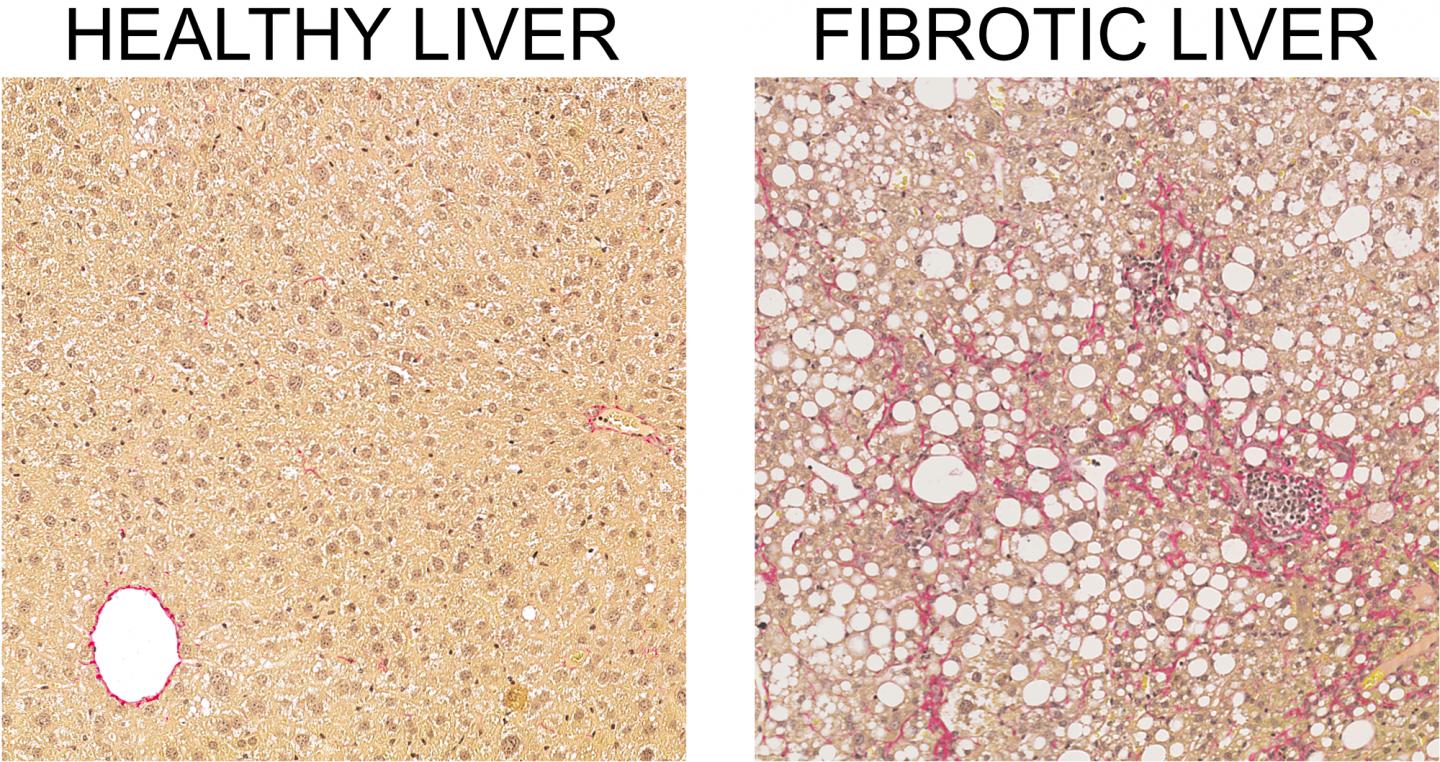
A new technology to investigate the cellular processes as they change during fibrosis development
IMAGE

Credit: SDU


The human liver carries out a wealth of vital functions through highly coordinated processes involving multiple cell types. However, when the liver is damaged by pharmaceuticals, cholestasis or chronic fat accumulation caused by alcohol or metabolic dysfunction, the various cell types undergo pathological changes and liver function deteriorates. Extensive inflammation severely affects most cellular processes and scar tissue (liver fibrosis) gradually replaces normal liver tissue.

The global prevalence of both liver inflammation and liver fibrosis has taken on pandemic proportions, but still no effective treatment is available. Liver fibrosis may hence develop into cirrhosis and liver cancer with liver transplantation as last resort.

A much better understanding of the cellular dynamics in the healthy and fibrotic liver is therefore essential for the development of diagnostic tools and therapies to timely diagnose and reverse advanced liver fibrosis.

In this project, researchers from University of Southern Denmark used mouse models of liver fibrosis and single-cell RNA sequencing technology to investigate the cellular processes as they change during fibrosis development.

At unprecedented resolution, they have detailed the fibrotic process and the changing interactions between liver cell types. Importantly, top genes found to correlate with liver fibrogenesis in mice turned out to be very accurate in the diagnosis also of human fibrosis.

Key findings are now being validated in studies of human patients aimed at further exploring novel diagnostic markers and identifying possible molecular targets for pharmacological intervention in the fibrotic process.

This validation is part of a larger study, conducted by Center for Functional Genomics and Tissue Plasticity of patients undergoing bariatric surgery. For that study, the researchers are studying liver biopsies taken before and 18 months after surgery to understand, which cell types and genes change and how they change.

###

Authors and support:

The findings have been published in the journal Hepatology. Main authors are graduate student Mike K. Terkelsen and Head of Research, Kim Ravnskjær from Department of Biochemistry and Molecular Biology, University of Southern Denmark. Contributing authors are from same department and Department of Molecular Medicine, Department of Clinical Research, Department of Pathology, Department of Gastroenterology and Hepatology, and Department of Nephrology, University of Southern Denmark.

This work was supported by the National Danish Research Foundation, the Fuhrmann Foundation, the Independent Research Fund Denmark, the European Commissions’ Marie Sklodowska-Curie Action, the European Foundation for the Study of Diabetes and University of Southern Denmark.

Media Contact
Birgitte Svennevig
[email protected]
45-27-59-86-79

Original Source

https://www.sdu.dk/en/om_sdu/Fakulteterne/naturvidenskab/nyheder-2020/Nye_detaljerede_billeder_af_ar-dannelse_i_leveren

Related Journal Article

http://dx.doi.org/10.1002/hep.31215

Tags: BiochemistryCell BiologyLiverMedicine/HealthMicrobiology
Share12Tweet8Share2ShareShareShare2

Related Posts

Confidence, Not Just Knowledge: The Psychological Bridge That Gets Heart Patients to Take Their Pills

Confidence, Not Just Knowledge: The Psychological Bridge That Gets Heart Patients to Take Their Pills

October 6, 2026
The Aorta's Hidden Second Pump: How Arterial Stretch May Steer Blood to the Brain

The Aorta’s Hidden Second Pump: How Arterial Stretch May Steer Blood to the Brain

October 6, 2026

Full Stomachs Fail to Distract Overweight Brains From High-Calorie Foods

October 6, 2026

Three Blood Biomarkers Together Predict ALS Progression and Survival, Study Finds

October 6, 2026
Please login to join discussion

POPULAR NEWS

  • Alloys That Shrink Their Own Grains: New PIX Mechanism Refines Metals With Heat Alone

    Alloys That Shrink Their Own Grains: New PIX Mechanism Refines Metals With Heat Alone

    29 shares
    Share 12 Tweet 7
  • Endurance Exercise Reshapes the Liver in Males and Females Through Distinct Molecular Routes

    29 shares
    Share 12 Tweet 7
  • Single Transcription Factor PU.1 Rapidly Converts Fibroblasts into Macrophage-Lineage Cells

    29 shares
    Share 12 Tweet 7
  • New Scale Measures How Ready Nurse Educators Really Are for the AI Era

    29 shares
    Share 12 Tweet 7

About

We bring you the latest biotechnology news from best research centers and universities around the world. Check our website.

Follow us

Recent News

Alloys That Shrink Their Own Grains: New PIX Mechanism Refines Metals With Heat Alone

Endurance Exercise Reshapes the Liver in Males and Females Through Distinct Molecular Routes

Single Transcription Factor PU.1 Rapidly Converts Fibroblasts into Macrophage-Lineage Cells

Subscribe to Blog via Email

Success! An email was just sent to confirm your subscription. Please find the email now and click 'Confirm' to start subscribing.

Join 85 other subscribers
  • Contact Us

Bioengineer.org © Copyright 2023 All Rights Reserved.

Welcome Back!

Login to your account below

Forgotten Password?

Retrieve your password

Please enter your username or email address to reset your password.

Log In
No Result
View All Result
  • Homepages
    • Home Page 1
    • Home Page 2
  • News
  • National
  • Business
  • Health
  • Lifestyle
  • Science

Bioengineer.org © Copyright 2023 All Rights Reserved.