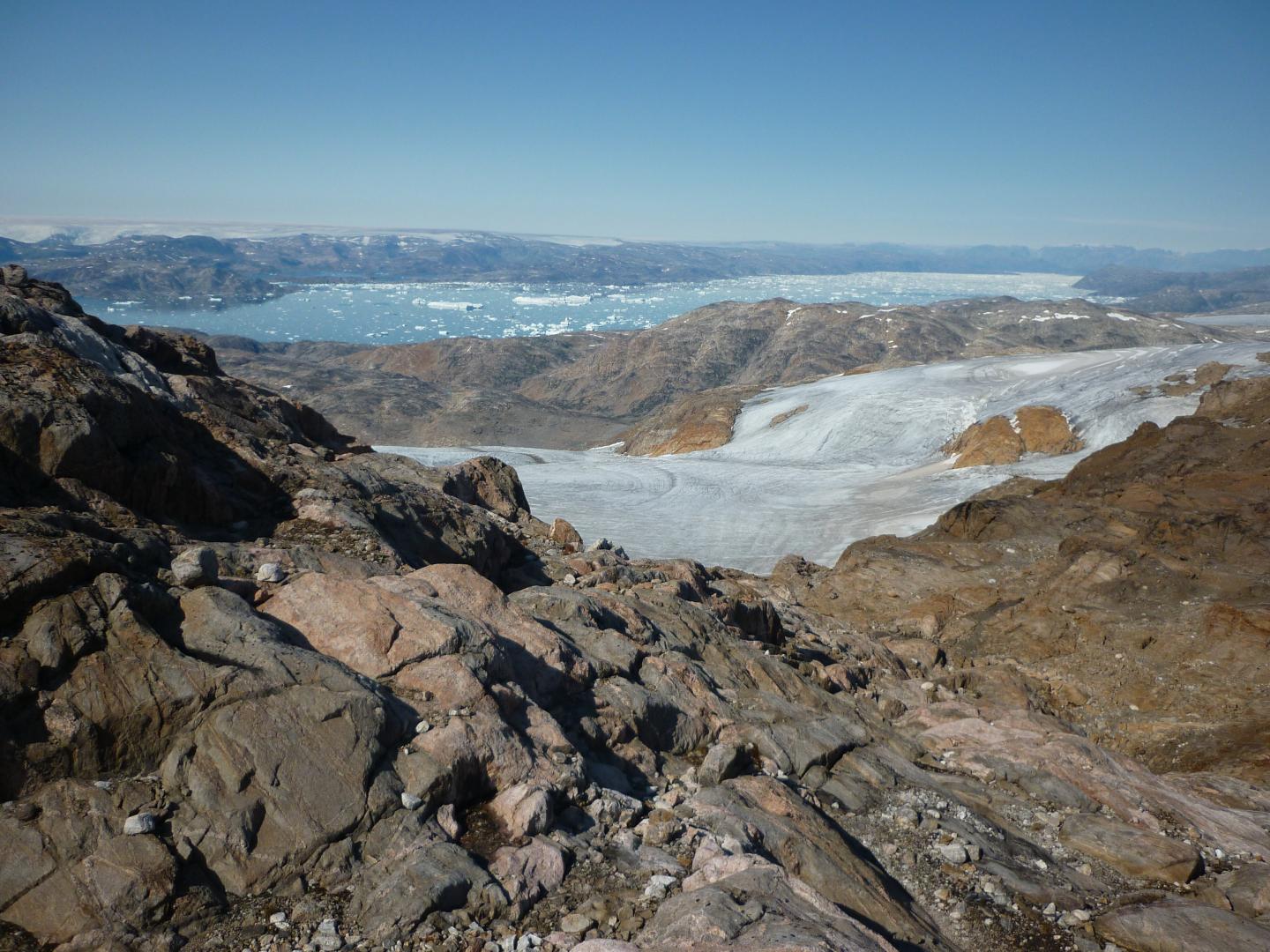
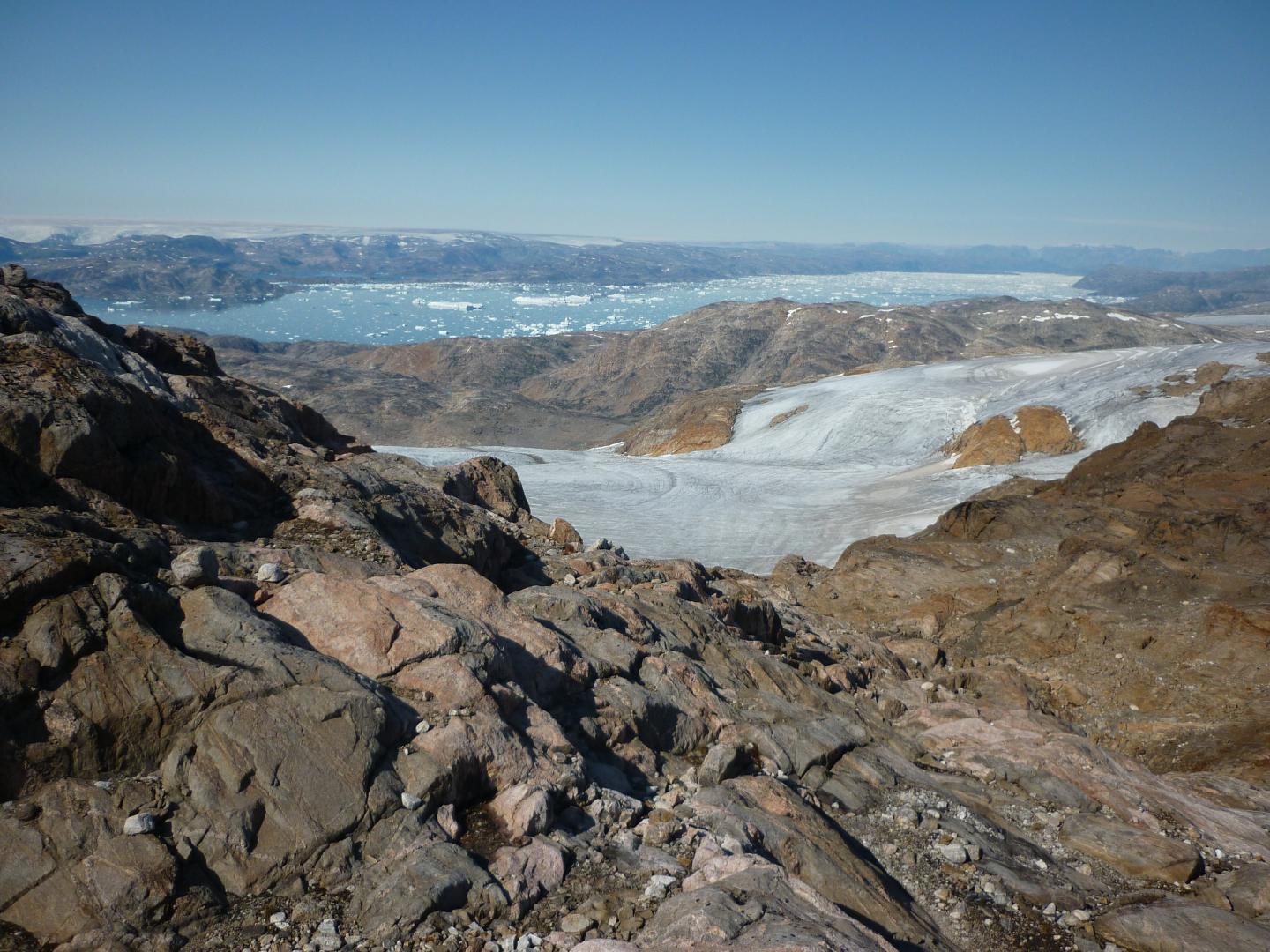
Credit: Professor Edward Hanna
Climatologists may be unable to accurately predict regional climate change over the North Atlantic because computer model simulations have failed to accurately include air pressure changes that have taken place in the Greenland region over the last three decades.
This deficiency may mean regional climate predictions for the UK and parts of Europe could be inaccurate, according to new research published today.
Researchers compared real data with simulation data over a 30 year period and found that the simulations on average showed slightly decreasing air pressure in the Greenland region, when in fact, the real data showed a significant increase in high air pressure – or so-called 'Greenland blocking' – during the summer months. These simulations are widely used by climate scientists worldwide as a basis for predicting future climate change.
The findings raise serious questions about the accuracy of regional climate projections in the UK and neighbouring parts of Europe because meteorological conditions in those regions are closely linked to air-pressure changes over Greenland.
Researchers warn that record wet summers in England and Wales such as those experienced in 2007 and 2012 could become more frequent if Greenland air pressure continues to strengthen over the next few decades, but such a trend might not be predicted due to inaccurate regional climate simulations.
The study, carried out by the University of Lincoln, UK, and the University of Liège in Belgium, also concluded that current models of melting on the Greenland Ice Sheet – a vast body of ice which covers more than 80 per cent of the surface of Greenland – may significantly underestimate the global sea-level rise expected by 2100.
Professor Edward Hanna led the study with Dr Richard Hall, both from the University of Lincoln's School of Geography, and Dr Xavier Fettweis of University of Liège. Professor Hanna said: "These differences between the estimates from the current climate models and observations suggests that the models cannot accurately represent recent conditions or predict future changes in Greenland climate.
"While there is natural variability in the climate system, we think that the recent rapid warming over Greenland since the early 1990s is not being fully simulated by the models, and that this misrepresentation could mean that future changes in atmospheric circulation and the jet stream over the wider North Atlantic region may not be properly simulated.
"Until now, no-one has systematically examined the projections to see how they represent the last few decades and future changes – up to the year 2100 – from a Greenland regional perspective. Previous work reported a tendency for global warming to result in a slightly more active jet stream in the atmosphere over the North Atlantic by 2100 but our results indicate we may actually see a somewhat weaker jet, at least in summer."
The research is the first to systematically compare global climate model data and observational data of air pressure changes for the Greenland region. The study, Recent changes in summer Greenland blocking captured by none of the CMIP5 models has been published in the European Geosciences Union journal, The Cryosphere.
###
Media Contact
Cerri Evans
[email protected]
44-125-588-6165
@unilincoln
http://www.lincoln.ac.uk/home/
Related Journal Article
http://dx.doi.org/10.5194/tc-2018-91