• HOME
  • NEWS
  • EXPLORE
    • CAREER
      • Companies
      • Jobs
    • EVENTS
    • iGEM
      • News
      • Team
    • PHOTOS
    • VIDEO
    • WIKI
  • BLOG
  • COMMUNITY
    • FACEBOOK
    • INSTAGRAM
    • TWITTER
Tuesday, November 10, 2026
BIOENGINEER.ORG
No Result
View All Result
  • Login
  • HOME
  • NEWS
  • EXPLORE
    • CAREER
      • Companies
      • Jobs
        • Lecturer
        • PhD Studentship
        • Postdoc
        • Research Assistant
    • EVENTS
    • iGEM
      • News
      • Team
    • PHOTOS
    • VIDEO
    • WIKI
  • BLOG
  • COMMUNITY
    • FACEBOOK
    • INSTAGRAM
    • TWITTER
No Result
View All Result
Bioengineer.org
No Result
View All Result
Home NEWS Science News Biology

Climate-driven evolution in trees alters their ecosystems

Bioengineer by Bioengineer
March 6, 2019
in Biology
Reading Time: 2 mins read
0
IMAGE
Share on FacebookShare on TwitterShare on LinkedinShare on RedditShare on Telegram

IMAGE

Credit: Ian Ware/University of Tennessee, Knoxville.

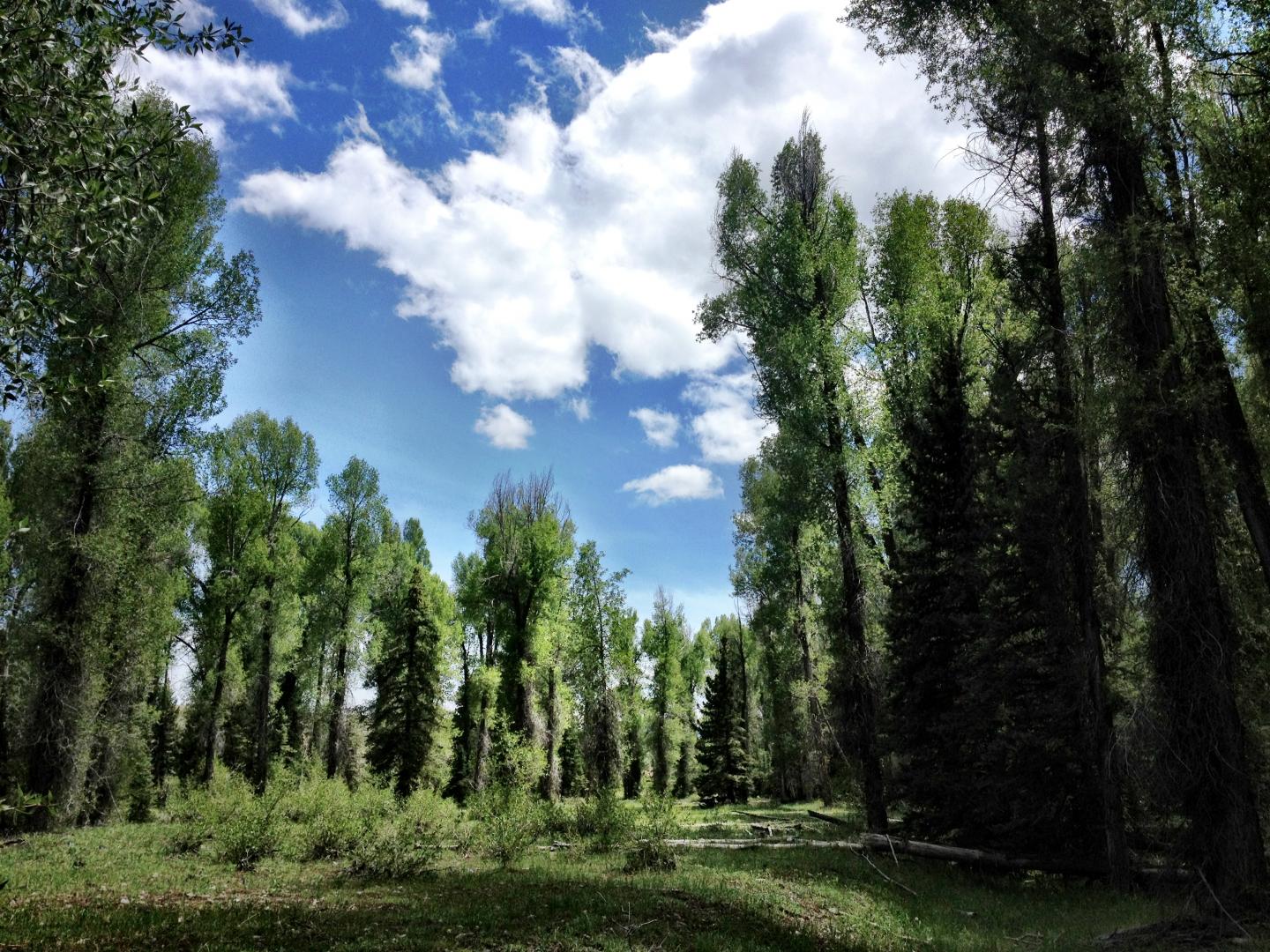
A new study published in Global Change Biology and coauthored by researchers from UT, explores how climate, evolution, plants, and soils are linked. The research is the first to show how climate-driven evolution in tree populations alters the way trees directly interact with their immediate soil environment.

By surveying 17 naturally occurring populations of narrowleaf cottonwood trees (Populus angustifolia), the researchers discovered that tree populations in warmer places have less genetic variation. This difference, in turn, has consequences for their soil microbial communities and soil chemical composition.

“Future climate change could reduce the potential for adaptation in plants, especially in less genetically varied populations. In order to cope with these stressful conditions, plants may be developing a stronger relationship with their soil microbiome and nutrients. It may be a mechanism for persistence in a changing world,” said Ian Ware, PhD candidate in UT’s Department of Ecology and Evolutionary Biology and lead author of the study.

Warmer temperatures in southern tree populations have resulted in earlier bud break and leaf-out–the time period in which buds, then leaves, become present on the growing plant. This evolution reduces genetic variation and alters the way tree populations interact with their soil environment.

“We show that as climates become warmer and drier, population-level genetic variation decreases and trees have a larger impact on their associated soil microbes and soil nutrient pools,” said Ware.

The finding suggests a mechanism for how these plants continue to exist in stressful climates.

“Understanding how plant-soil-microbe linkages evolve in response to changes in climate across habitats may provide information on the forces that drive local adaptation with consequences for nitrogen availability and soil carbon storage,” Ware said. “These findings have direct implications for climate change conservation and restoration practices, such as assisted migration and population management.”

###

CONTACT:

Andrea Schneibel (865-974-3993, andrea.schneibel@utk.edu)

Will Wells (wrw@vols.utk.edu)

Media Contact
Andrea Schneibel
andrea.schneibel@utk.edu

Original Source

https://news.utk.edu/2019/03/05/climate-driven-evolution-in-trees-alters-their-ecosystems/

Related Journal Article

http://dx.doi.org/10.1111/gcb.14553

Tags: BiologyClimate ChangeEcology/EnvironmentEvolutionGeology/Soil
Share12Tweet8Share2ShareShareShare2

Related Posts

Computational Analysis Shows Cysteine Mutations Disrupt SOD1 Structure in Amyotrophic Lateral Sclerosis

Computational Analysis Shows Cysteine Mutations Disrupt SOD1 Structure in Amyotrophic Lateral Sclerosis

November 10, 2026
Blood Multi-Omics Reveals Shared Genetic Drivers Linking Aortic Stenosis and Diastolic Dysfunction

Blood Multi-Omics Reveals Shared Genetic Drivers Linking Aortic Stenosis and Diastolic Dysfunction

November 10, 2026

Mediterranean Tree Root Exudates Rise During Drought and Associate With Specific Bacteria

November 10, 2026

Wildfire Impacts on Amphibian Microhabitats Vary by Distance from Ponds

November 10, 2026
Please login to join discussion

POPULAR NEWS

  • Computational Analysis Shows Cysteine Mutations Disrupt SOD1 Structure in Amyotrophic Lateral Sclerosis

    Computational Analysis Shows Cysteine Mutations Disrupt SOD1 Structure in Amyotrophic Lateral Sclerosis

    29 shares
    Share 12 Tweet 7
  • Fairness Framework Balances Minority Group Exposure While Maximizing Positive Network Opinions

    29 shares
    Share 12 Tweet 7
  • Elevated TBRG4 Expression Associates with Adverse Prostate Cancer Features and Progression

    29 shares
    Share 12 Tweet 7
  • Medical Checklists Improve Emergency Care in Simulated Antidepressant Poisoning Trial

    29 shares
    Share 12 Tweet 7

About

We bring you the latest biotechnology news from best research centers and universities around the world. Check our website.

Follow us

Recent News

Computational Analysis Shows Cysteine Mutations Disrupt SOD1 Structure in Amyotrophic Lateral Sclerosis

Fairness Framework Balances Minority Group Exposure While Maximizing Positive Network Opinions

Elevated TBRG4 Expression Associates with Adverse Prostate Cancer Features and Progression

Subscribe to Blog via Email

Enter your email address to subscribe to this blog and receive notifications of new posts by email.

Join 87 other subscribers
  • Contact Us

Bioengineer.org © Copyright 2023 All Rights Reserved.

Welcome Back!

Login to your account below

Forgotten Password?

Retrieve your password

Please enter your username or email address to reset your password.

Log In
No Result
View All Result
  • Homepages
    • Home Page 1
    • Home Page 2
  • News
  • National
  • Business
  • Health
  • Lifestyle
  • Science

Bioengineer.org © Copyright 2023 All Rights Reserved.