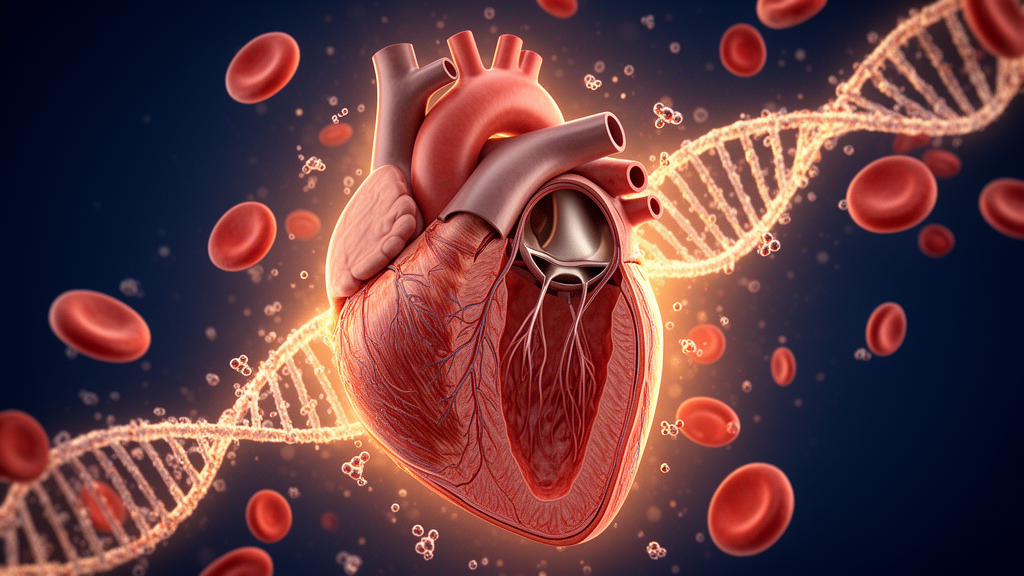
Researchers investigating cardiovascular disease mechanisms have uncovered shared genomic variants and convergent transcriptomic networks linking aortic stenosis with left ventricular diastolic dysfunction in heart failure. Published in the journal BioData Mining, the multi-omics study led by Zeeshan Ahmed, Partho P. Sengupta, and colleagues demonstrates that aortic valve narrowing and impaired myocardial relaxation frequently co-evolve from common upstream mechanobiological and inflammatory drivers rather than developing as isolated sequential pathologies. Aortic stenosis has traditionally been viewed as a primary mechanical defect that imposes afterload on the heart, secondarily promoting left ventricular stiffening and diastolic impairment. However, emerging clinical observations and deep learning algorithms trained on echocardiography and electrocardiography data indicate that diastolic dysfunction scores can predict future aortic stenosis progression even in individuals with anatomically normal valves. By analyzing whole-genome sequencing and transcriptomic data from peripheral blood mononuclear cells, the team demonstrated that these conditions share inherited variants and convergent stress-response pathways.
The clinical significance of deciphering this shared pathogenesis is emphasized by the global burden of heart failure, which remains a leading cause of morbidity and mortality. Heart failure with preserved ejection fraction accounts for approximately half of all heart failure cases and has historically been attributed to myocardial stiffness and impaired active diastolic relaxation. Concurrently, large clinical registries such as the European Society of Cardiology Heart Failure Long-Term Registry document that approximately ten percent of heart failure patients present with aortic valve disease, with aortic stenosis being particularly prevalent in the preserved ejection fraction subgroup. Clinical studies further indicate that mild aortic stenosis and aortic sclerosis frequently coexist with subclinical left ventricular diastolic dysfunction. Moreover, patients undergoing transcatheter aortic valve replacement frequently exhibit ongoing myocardial stiffening, persistent inflammation, and extracellular matrix expansion. These sustained abnormalities suggest that both diseases arise from a shared mechanoinflammatory environment marked by arterial stiffness, elevated afterload, and disrupted ventriculo-valvular-vascular coupling.
To map the genomic foundations linking these conditions, the research team analyzed blood samples from heart failure and cardiomyopathy patients under research protocols approved by the Institutional Review Board at Rutgers University, adhering strictly to the ethical standards of the 1964 Declaration of Helsinki. The whole-genome sequencing cohort comprised ninety-six individuals, consisting of thirty-five female cases and sixty male cases aged between twenty-nine and ninety-four years, along with one case of undocumented sex. A matched subset of sixty-one patients, including twenty-one females and forty males aged between forty-five and ninety-two years, underwent parallel transcriptomic profiling using ribonucleic acid sequencing. The patient transcriptomes were compared against eleven healthy control individuals who had no reported heart failure diagnosis. All molecular analyses evaluated peripheral blood mononuclear cells, an accessible cellular compartment reflecting systemic immune activation and circulating inflammatory activity that plays a pivotal biological role in both remote myocardial tissue remodeling and progressive valvular pathology.
Next-generation sequencing was conducted on an Illumina NovaSeq 6000 S4 platform using paired-end reads of one hundred fifty base pairs, achieving an average sequencing depth of thirty-fold coverage across TruSeq Stranded mRNA and Nextera DNA Flex libraries. Genomic sequencing data were processed through the open-source JWES pipeline, which aligns sequence reads against human reference genome build thirty-eight using the Burrows-Wheeler Aligner and executes variant discovery through the Genome Analysis Toolkit. Identified single nucleotide variations were annotated using the Ensembl Variant Effect Predictor, dbSNP, ClinVar, and gnomAD. Pathogenicity scores were calculated using SIFT and PolyPhen-2 within the dbNSFP framework. Simultaneously, transcriptomic reads were processed through the GVViZ pipeline, utilizing HISAT and Bowtie2 for spliced transcript alignment against hg38 and RSEM for quantification of transcript abundance. Differential expression was determined using a false discovery rate threshold of 0.05 and an absolute log2 fold change greater than 1.5, followed by pathway enrichment against KEGG and Reactome.
Descriptive genomic variant analysis across all ninety-six patient samples identified between 3,469,545 and 4,400,530 single nucleotide variants per individual, averaging 3,632,878 variants in males and 3,655,876 in females. Within target cardiovascular genes, no statistically significant differences emerged between male and female samples regarding overall single nucleotide variant counts, moderate-impact alterations, or high-impact disruptions, confirming that the genomic architecture of these loci remains consistent across sexes. Most identified variants in target genes were classified as modifier impact, averaging 2,713 per sample, or approximately ninety-three percent, reflecting intronic and non-coding alterations. Low-impact synonymous substitutions averaged seventy-five per sample, comprising roughly 2.6 percent of target variations. Moderate-impact missense substitutions averaged forty-six per sample, accounting for 1.6 percent, while high-impact loss-of-function variants, such as stop-gained and splice-site disruptions, were detected in seven patients. Cross-referencing against gnomAD identified 46,404 common population variants, alongside 1,047 rare and 2,888 ultra-rare alleles.
To interrogate specific and shared pathophysiological mechanisms, the research team curated a targeted panel of forty-five genes based on documented associations in DisGeNET, Gene Ontology, KEGG, and Reactome. Nine genes were recognized for established roles in aortic stenosis, comprising BMP2, TGFB3, ALPL, ITGA5, RUNX2, SPP1, PIEZO1, AREG, and SOX9. Nine genes were curated for specific links to left ventricular diastolic dysfunction: MYBPC3, COL3A1, TGFB2, SOD2, BIRC5, ANKRD1, MYH9, NDRG1, and GDF15. Importantly, twenty-seven genes were identified as shared between both conditions, including TGFB1, NOS3, IL6, AGT, AGTR1, MPO, NOTCH1, ACE, COL1A1, LGALS3, MMP9, TIMP1, TNF, TNNI3, TNNT2, RHOA, ITGB1, PTK2, FN1, ROCK1, FOXO1, CRP, MMP2, AMOTL2, NPPB, YAP1, and TTN. Across all forty-five target genes, the whole-genome sequencing analysis identified 16,136 unique variant-gene pairs within the patient cohort, reflecting complex involvement in vascular calcification, myocardial remodeling, and cellular stress signaling. Recurrence analysis highlighted frequent variants present across twenty or more samples in TTN, ALPL, AGT, and TNNT2.
Variant profiling within disease-specific subsets demonstrated clear associations with structural heart disease and vascular phenotypes. In the aortic stenosis subset, functional variants were detected across five genes: AREG, PIEZO1, and SPP1 each showed two moderate-impact variants, with SPP1 carrying an additional high-impact variant, while BMP2 and RUNX2 showed three and four moderate-impact variants, respectively. In the diastolic dysfunction subset, seven genes harbored functional variants, led by MYBPC3 with fifteen variants detected across forty-eight participants, including two protein-altering variants classified as highly pathogenic for hypertrophic cardiomyopathy. Additional diastolic dysfunction markers included COL3A1 with three functional variants linked to vascular Ehlers-Danlos syndrome, SOD2 with two variants associated with ischemic and dilated cardiomyopathy, GDF15 with four functional variants related to coronary artery disease, and BIRC5 with three variants, including one high-impact alteration for myocardial remodeling. Five genes—MYBPC3, COL3A1, TNNI3, TNNT2, and TTN—are listed in the American College of Medical Genetics and Genomics criteria, confirming their established clinical validity.
Genomic characterization of the twenty-seven shared genes revealed functional variants across twenty-four distinct loci associated with cardiovascular diseases. Among these, NOTCH1 demonstrated sixteen functional variants across eighty-eight participants, connecting bicuspid aortopathy and thoracic aortic dissection with left ventricular outflow tract obstructive defects. The giant sarcomeric gene TTN exhibited the highest overall mutational diversity in the entire investigation, accumulating 276 functional variants across ninety-one participants that mapped to an extensive spectrum of cardiomyopathies, ventricular hypertrophy, and arrhythmogenic conditions. ACE revealed eight functional variants across all ninety-six participants, including a high-impact variant linked to hypertension, cardioembolic stroke, and myocardial infarction. ITGB1 carried four functional variants across seventy-one participants, including a highly damaging alteration associated with cardiac remodeling and tissue stiffness. Additional functional variations were documented in ROCK1, which carried five variants including a high-impact alteration tied to vascular stiffness, as well as four variants in TIMP1, three in MMP9, and two in TGFB1.
Transcriptomic profiling of the sixty-one heart failure cases against eleven healthy controls identified significant transcriptional downregulation across several key loci. Using a false discovery rate threshold below 0.05 and an absolute log2 fold change greater than 1.5, eight genes emerged as significant differentially expressed genes, all demonstrating downregulation in heart failure cases relative to healthy controls. In the aortic stenosis panel, ALPL, ITGA5, and PIEZO1 met these criteria, with ALPL showing the highest expression intensity in controls and variable downregulation in patients. In the diastolic dysfunction panel, MYH9 and NDRG1 were identified as significant downregulated differentially expressed genes, while MYBPC3 and BIRC5 showed moderate downregulation. Among the shared genes, TGFB1, TIMP1, and RHOA were confirmed as significant downregulated differentially expressed genes, accompanied by reduced expression of MMP9 and ITGB1. In contrast, LGALS3 maintained consistently high expression across both cohorts, reflecting a general biomarker of chronic inflammation rather than a disease-stage-specific signal.
Integrating whole-genome sequencing variant burden with transcriptomic results revealed that accumulated sequence variation directly correlates with transcriptional dysregulation. Within the eight significant differentially expressed genes, the research team calculated an average of 447 variant observations per gene across the ninety-six samples, compared to 339 per gene among thirty-seven non-differentially expressed target genes, representing a thirty-two percent higher variant burden in dysregulated loci. In particular, PIEZO1, MYH9, and ALPL demonstrated the highest combined burdens. Functional enrichment confirmed that Hippo signaling was significantly enriched in both aortic stenosis and diastolic dysfunction subsets, AGE-RAGE signaling in diastolic dysfunction and shared subsets, and TGF-beta signaling across aortic stenosis and shared subsets. The target genes also showed extensive connections to non-cardiovascular diseases, including rheumatoid arthritis, diabetic nephropathy, and various cancers, alongside sex-stratified clinical onset that appeared earlier in males. Although limited by reliance on peripheral blood without cardiac tissue biopsy or secondary experimental validation, these findings establish that aortic stenosis and diastolic dysfunction share foundational mechanobiological and genomic drivers in heart failure.
Subject of Research: Multi-omics blood profiling of shared genetic drivers linking aortic stenosis and left ventricular diastolic dysfunction in heart failure
Article Title: Multi-omics analysis of genetic drivers linking aortic stenosis and left ventricular diastolic dysfunction in heart failure
Article References: Ahmed, Z., Govindareddy, P., Mathew, J., Yanamala, N., & Sengupta, P. P. (2026). Multi-omics analysis of genetic drivers linking aortic stenosis and left ventricular diastolic dysfunction in heart failure. BioData Mining, 19(1), Article 56. https://doi.org/10.1186/s13040-026-00564-y
Image Credits: AI Generated
DOI: 10.1186/s13040-026-00564-y
Keywords: aortic stenosis, left ventricular diastolic dysfunction, heart failure, heart failure with preserved ejection fraction, multi-omics, whole genome sequencing, RNA sequencing, peripheral blood mononuclear cells, differentially expressed genes, variant burden analysis, Hippo signaling pathway, AGE-RAGE signaling pathway, TGF-beta signaling, MYBPC3, PIEZO1, TTN, NOTCH1, extracellular matrix remodeling
News Source: Juliet Wilcox. (November 10, 2026). Blood Multi-Omics Reveals Shared Genetic Drivers Linking Aortic Stenosis and Diastolic Dysfunction. Scienmag.