• HOME
  • NEWS
  • EXPLORE
    • CAREER
      • Companies
      • Jobs
    • EVENTS
    • iGEM
      • News
      • Team
    • PHOTOS
    • VIDEO
    • WIKI
  • BLOG
  • COMMUNITY
    • FACEBOOK
    • INSTAGRAM
    • TWITTER
Wednesday, May 13, 2026
BIOENGINEER.ORG
No Result
View All Result
  • Login
  • HOME
  • NEWS
  • EXPLORE
    • CAREER
      • Companies
      • Jobs
        • Lecturer
        • PhD Studentship
        • Postdoc
        • Research Assistant
    • EVENTS
    • iGEM
      • News
      • Team
    • PHOTOS
    • VIDEO
    • WIKI
  • BLOG
  • COMMUNITY
    • FACEBOOK
    • INSTAGRAM
    • TWITTER
  • HOME
  • NEWS
  • EXPLORE
    • CAREER
      • Companies
      • Jobs
        • Lecturer
        • PhD Studentship
        • Postdoc
        • Research Assistant
    • EVENTS
    • iGEM
      • News
      • Team
    • PHOTOS
    • VIDEO
    • WIKI
  • BLOG
  • COMMUNITY
    • FACEBOOK
    • INSTAGRAM
    • TWITTER
No Result
View All Result
Bioengineer.org
No Result
View All Result
Home NEWS Science News Biology

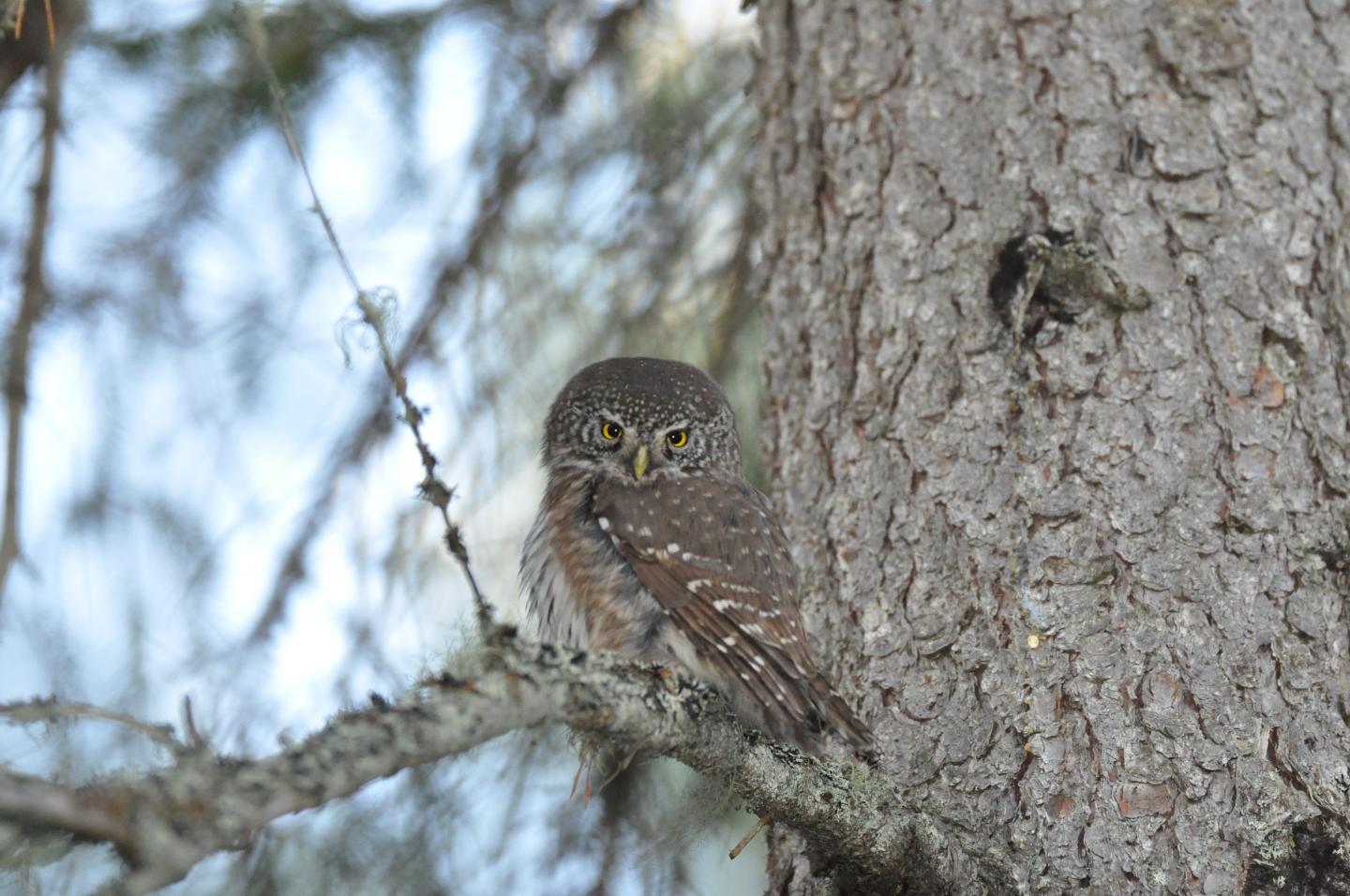
Climate change may melt the “freezers” of pygmy owls and reduce their overwinter survival

Bioengineer by Bioengineer
August 5, 2020
in Biology
Reading Time: 3 mins read
0
IMAGE
Share on FacebookShare on TwitterShare on LinkedinShare on RedditShare on Telegram

IMAGE

Credit: Photo: Erkki Korpimäki

Ecologists at the University of Turku, Finland, have discovered that the food hoards pygmy owls collect in nest-boxes (“freezers”) for winter rot due to high precipitation caused by heavy autumn rains and if the hoarding has been initiated early in the autumn. The results of the study show that climate change may impair predators’ foraging and thus decrease local overwinter survival. The study has been published in the internationally esteemed Global Change Biology journal.

Doctoral Candidate Giulia Masoero together with co-authors from the Department of Biology at the University of Turku analysed the unique long-term data set collected by Professor Erkki Korpimäki and his research group in 2003-2018. The aim was to study how the changing weather conditions in late autumn and winter affect the initiation of pygmy owls’ food hoarding as well as the accumulation, use and preservability of the hoarded food. The data set was collected from the Kauhava region in South Bothnia with over 500 food hoards and a research area covering 1,000 square kilometres.

Pygmy owls are small predators that feed on small mammals, especially voles which are their main prey, and birds. Pygmy owls start hoarding for winter usually in late October when the temperature drops below 0° C. They hoard a large amount of prey in tree cavities or nest boxes.

The food stores may be located in multiple nest boxes some kilometres apart. Female owls that are larger than males as well as young owls accumulate larger food stores than males and adult owls.

According to Erkki Korpimäki, the hoarded food is important for pygmy owls during winter, when small mammal prey are under snow and birds are scarce.

– This hoarding behaviour is highly susceptible to global warming because the weather during autumn and winter can affect the condition and usability of the food stores. In several northern areas, autumns have already become warmer and winters milder and rainy. Predictions show that climate change will likely continue along this path and the length of winter will strongly decrease.

According to the study, the more rainy days there are between mid-October and mid-December, the more likely the food hoards of pygmy owls are to rotten. The owls use rotten food hoards particularly during poor vole years. However, the study showed that having rotten food hoards reduced the recapture probability of female owls in the study area, meaning female owls either die or are forced to leave the area.

– This result indicates that either the use of the rotten low-quality food and/or the energy waste linked with collecting a large food store that will not be used can lead to lower survival or dispersal from the study area, notes Doctoral Candidate Giulia Masoero.

Pygmy owls might be partly able to adapt to climate change by delaying food hoarding but will more likely suffer due to the changes caused by the warming climate. The results of the study together with global climate predictions thus suggest that climate change has the potential to strongly impair the foraging behaviour and food intake of wintering predators, likely having negative impacts on the boreal forest food web as a whole.

###

Media Contact
Doctoral Candidate Giulia Masoero
[email protected]

Original Source

https://www.utu.fi/en/news/press-release/climate-change-may-melt-the-freezers-of-pygmy-owls-and-reduce-their-overwinter

Related Journal Article

http://dx.doi.org/10.1111/gcb.15250

Tags: BiologyClimate ChangeEcology/EnvironmentEvolutionPopulation Biology
Share12Tweet8Share2ShareShareShare2

Related Posts

Using Real-Time Brain Signals to Forecast and Prevent Attention Lapses in Children — Biology

Using Real-Time Brain Signals to Forecast and Prevent Attention Lapses in Children

May 13, 2026
Cutting-Edge Genomic Techniques Reveal Unexpected Cellular Changes in the Aging Brain — Biology

Cutting-Edge Genomic Techniques Reveal Unexpected Cellular Changes in the Aging Brain

May 12, 2026

USC Researchers Initiate Study on the Most Advanced Lab-Grown Kidney Structures

May 12, 2026

Childbirth in Humans Is Not Uniquely Challenging Among Mammals, New Research Shows

May 12, 2026
Please login to join discussion

POPULAR NEWS

  • Research Indicates Potential Connection Between Prenatal Medication Exposure and Elevated Autism Risk

    842 shares
    Share 337 Tweet 211
  • New Study Reveals Plants Can Detect the Sound of Rain

    728 shares
    Share 290 Tweet 182
  • Salmonella Haem Blocks Macrophages, Boosts Infection

    62 shares
    Share 25 Tweet 16
  • Breastmilk Balances E. coli and Beneficial Bacteria in Infant Gut Microbiomes

    57 shares
    Share 23 Tweet 14

About

We bring you the latest biotechnology news from best research centers and universities around the world. Check our website.

Follow us

Recent News

Perimenopause Presents a Key Window for Heart Disease Prevention in Women

Penn Scientists Develop AI Tool to Accelerate Antibiotic Discovery

MIT-MGH Team Develops Novel Cancer Vaccine Strategy That Enhances T Cell Potency

Subscribe to Blog via Email

Enter your email address to subscribe to this blog and receive notifications of new posts by email.

Join 82 other subscribers
  • Contact Us

Bioengineer.org © Copyright 2023 All Rights Reserved.

Welcome Back!

Login to your account below

Forgotten Password?

Retrieve your password

Please enter your username or email address to reset your password.

Log In
No Result
View All Result
  • Homepages
    • Home Page 1
    • Home Page 2
  • News
  • National
  • Business
  • Health
  • Lifestyle
  • Science

Bioengineer.org © Copyright 2023 All Rights Reserved.