• HOME
  • NEWS
  • EXPLORE
    • CAREER
      • Companies
      • Jobs
    • EVENTS
    • iGEM
      • News
      • Team
    • PHOTOS
    • VIDEO
    • WIKI
  • BLOG
  • COMMUNITY
    • FACEBOOK
    • INSTAGRAM
    • TWITTER
Saturday, June 27, 2026
BIOENGINEER.ORG
No Result
View All Result
  • Login
  • HOME
  • NEWS
  • EXPLORE
    • CAREER
      • Companies
      • Jobs
        • Lecturer
        • PhD Studentship
        • Postdoc
        • Research Assistant
    • EVENTS
    • iGEM
      • News
      • Team
    • PHOTOS
    • VIDEO
    • WIKI
  • BLOG
  • COMMUNITY
    • FACEBOOK
    • INSTAGRAM
    • TWITTER
  • HOME
  • NEWS
  • EXPLORE
    • CAREER
      • Companies
      • Jobs
        • Lecturer
        • PhD Studentship
        • Postdoc
        • Research Assistant
    • EVENTS
    • iGEM
      • News
      • Team
    • PHOTOS
    • VIDEO
    • WIKI
  • BLOG
  • COMMUNITY
    • FACEBOOK
    • INSTAGRAM
    • TWITTER
No Result
View All Result
Bioengineer.org
No Result
View All Result
Home NEWS Science News Chemistry

Clemson doctoral candidate uses rockets to surf the Alaskan sky

Bioengineer by Bioengineer
August 11, 2020
in Chemistry
Reading Time: 3 mins read
0
IMAGE
Share on FacebookShare on TwitterShare on LinkedinShare on RedditShare on Telegram

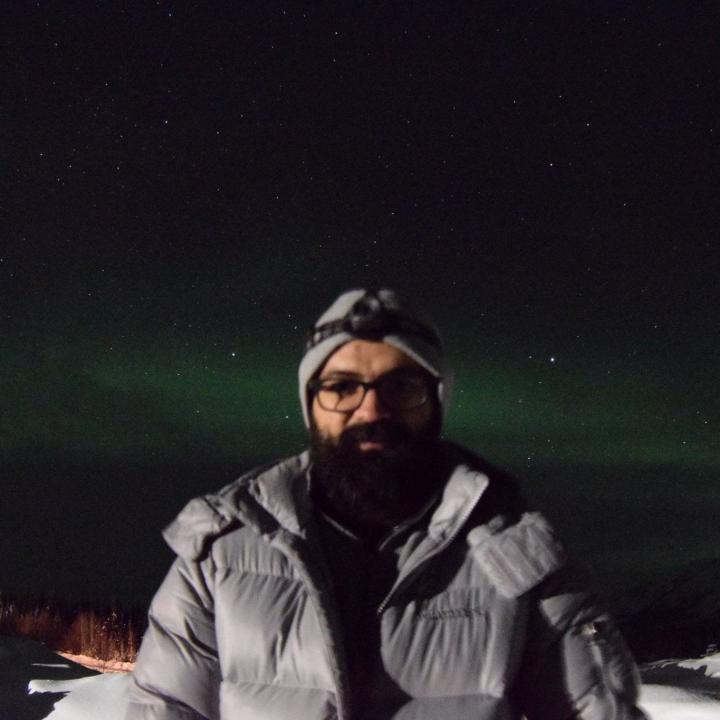
Clemson postdoc and a multi-institutional research team documented “surfer waves” in the upper atmosphere that create a pipeline of energy between layers in space.
IMAGE

Credit: Courtesy of Rafael Mesquita

CLEMSON, South Carolina — When you think of surfing and Brazil, the first image that comes to mind is probably warm waves crashing on a white sand beach, not a cloud of gas swirling 65 miles above the Earth. But the latter is exactly what was found by Clemson University researcher Rafael Mesquita, a native of Brazil.

Mesquita and a multi-institutional research team documented “surfer waves” in the upper atmosphere that create a pipeline of energy between layers in space. Just like ocean waves crash onto the beach, the atmospheric “surfer waves” generate turbulence that carries oxygen down low and nitrogen up high. Usually the oxygen is high in the atmosphere and nitrogen is closer to Earth’s surface.

“For many years, atmospheric scientists have studied oxygen showing up lower than it should be, but we identified a possible cause for it and revealed more detail than ever before,” said Mesquita, a doctoral candidate in the College of Science’s department of physics and astronomy.

The groundbreaking discovery was funded by NASA. It is featured on the NASA Heliophysics homepage and was published July 23, 2020 in the Journal of Geophysical Research – Space Physics. The paper is titled “In?situ observations of neutral shear instability in the statically stable high?latitude mesosphere and lower thermosphere during quiet geomagnetic conditions.”

The Clemson research team launched rockets that released a harmless gas as a contrast medium to illuminate the atmospheric wind patterns so they could be photographed. Called the Super Soaker campaign, the research was conducted at the Poker Flat Research Range in Alaska on January 26, 2018.

“Our measurements were made at 65 miles above Earth’s surface and showed winds swirling at about 100 miles per hour,” Mesquita said.

The “surfer waves,” currents of wind curling into each other and creating the dramatic effect of waves in the sky, are a result of the Kelvin-Helmholtz instability (KHI). This effect is often seen in nature when gases or liquids pass each other at different speeds, creating the curling pattern similar to waves on the beach or dust swirls in the desert.

Now that Clemson scientists have observed the KHI in more detail than ever, they have a clearer understanding of how the winds in the upper atmosphere carry gases farther than they thought possible.

“These surfer waves offer insight into the complex system of Earth’s atmosphere where slight temperature changes on one side of the world affect wind patterns on the other,” Mesquita concluded. “The upper reaches of the atmosphere may seem like a world away, but what happens up there affects us more than we may realize.”

###

Clemson’s research team was led by physics and astronomy professor emeritus Miguel Larsen. The study was funded by NASA and the National Science Foundation and was conducted in partnership with Atmospheric & Space Technology Research Associates and the U.S. Naval Research Laboratory Space Science Division. The rocket range operation and launches were supported by NASA Wallops Flight Facility personnel. Researchers from the Geophysical Institute at University of Alaska-Fairbanks and Global Atmospheric Technologies and Sciences provided supporting instrumentation.

Media Contact
Jim Melvin
[email protected]

Original Source

https://newsstand.clemson.edu/mediarelations/clemson-doctoral-candidate-uses-rockets-to-surf-the-alaskan-sky/?_ga=2.206502227.1936689759.1597063872-1322819783.1593712473

Related Journal Article

http://dx.doi.org/10.1029/2020JA027972

Tags: AstrophysicsAtmospheric ChemistryAtmospheric ScienceMeteorologyTemperature-Dependent PhenomenaWeather/Storms
Share12Tweet8Share2ShareShareShare2

Related Posts

AI and Physics Collaborate to Design Advanced Hydrogen Storage Materials

June 25, 2026

International Team Including Dresden Scientists Develops Novel Designer Proteins for Advanced Study of Living Tissue

June 25, 2026

New Study Uncovers Key Factors Driving Water Chemistry in Nanoscale Environments

June 25, 2026

Plasma Technology Extends Catalyst Lifespan in Hydrogen Production

June 24, 2026
Please login to join discussion

POPULAR NEWS

  • Saying Goodbye to PGY-6: Pediatric Fellowship Realities

    103 shares
    Share 41 Tweet 26
  • Multi-Hospital Study Reveals Long Covid Burden Is Twice as High as Current Estimates

    92 shares
    Share 36 Tweet 23
  • Detection of EDCs in Breast Milk and Infant Urine Up to Six Months Highlights Early Exposure Risks

    77 shares
    Share 31 Tweet 19
  • New Drug Candidate Developed at McMaster Shows Potential for Treating Brain Cancer

    58 shares
    Share 23 Tweet 15

About

We bring you the latest biotechnology news from best research centers and universities around the world. Check our website.

Follow us

Recent News

Tracking Lanthanide-Labeled Microplastics in Plants

POSTECH Researchers Slash Cost of Reconstituted Cell-Free Systems by 95%

AI and Physics Collaborate to Design Advanced Hydrogen Storage Materials

Subscribe to Blog via Email

Success! An email was just sent to confirm your subscription. Please find the email now and click 'Confirm' to start subscribing.

Join 82 other subscribers
  • Contact Us

Bioengineer.org © Copyright 2023 All Rights Reserved.

Welcome Back!

Login to your account below

Forgotten Password?

Retrieve your password

Please enter your username or email address to reset your password.

Log In
No Result
View All Result
  • Homepages
    • Home Page 1
    • Home Page 2
  • News
  • National
  • Business
  • Health
  • Lifestyle
  • Science

Bioengineer.org © Copyright 2023 All Rights Reserved.