• HOME
  • NEWS
  • EXPLORE
    • CAREER
      • Companies
      • Jobs
    • EVENTS
    • iGEM
      • News
      • Team
    • PHOTOS
    • VIDEO
    • WIKI
  • BLOG
  • COMMUNITY
    • FACEBOOK
    • INSTAGRAM
    • TWITTER
Monday, May 11, 2026
BIOENGINEER.ORG
No Result
View All Result
  • Login
  • HOME
  • NEWS
  • EXPLORE
    • CAREER
      • Companies
      • Jobs
        • Lecturer
        • PhD Studentship
        • Postdoc
        • Research Assistant
    • EVENTS
    • iGEM
      • News
      • Team
    • PHOTOS
    • VIDEO
    • WIKI
  • BLOG
  • COMMUNITY
    • FACEBOOK
    • INSTAGRAM
    • TWITTER
  • HOME
  • NEWS
  • EXPLORE
    • CAREER
      • Companies
      • Jobs
        • Lecturer
        • PhD Studentship
        • Postdoc
        • Research Assistant
    • EVENTS
    • iGEM
      • News
      • Team
    • PHOTOS
    • VIDEO
    • WIKI
  • BLOG
  • COMMUNITY
    • FACEBOOK
    • INSTAGRAM
    • TWITTER
No Result
View All Result
Bioengineer.org
No Result
View All Result
Home NEWS Science News Chemistry

Citizen scientists re-tune Hubble’s galaxy classification

Bioengineer by Bioengineer
June 11, 2019
in Chemistry
Reading Time: 3 mins read
0
IMAGE
Share on FacebookShare on TwitterShare on LinkedinShare on RedditShare on Telegram

IMAGE

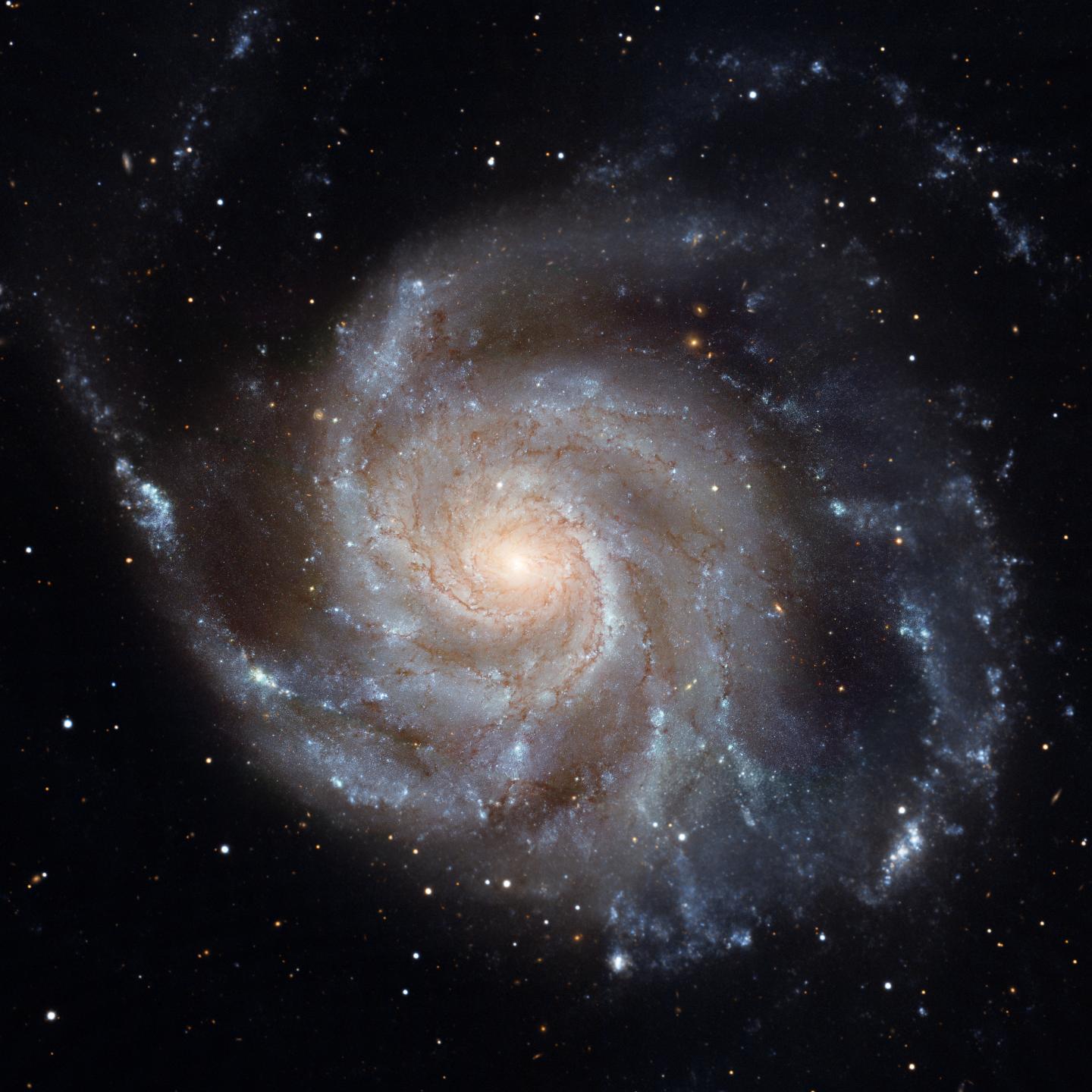
Credit: NASA, ESA, CXC, SSC, and STScI

Hundreds of thousands of volunteers have helped to overturn almost a century of galaxy classification, in a new study using data from the longstanding Galaxy Zoo project. The new investigation, published in the journal Monthly Notices of the Royal Astronomical Society, uses classifications of over 6000 galaxies to reveal that “well known” correlations between different features are not found in this large and complete sample.

Almost 100 years ago, in 1927, astronomer Edwin Hubble wrote about the spiral galaxies he was observing at the time, and developed a model to classify galaxies by type and shape. Known as the “Hubble Tuning Fork” due to its shape, this model takes account of two main features: the size of the central region (known as the ‘bulge’), and how tightly wound any spiral arms are.

Hubble’s model soon became the authoritative method of classifying spiral galaxies, and is still used widely in astronomy textbooks to this day. His key observation was that galaxies with larger bulges tended to have more tightly wound spiral arms, lending vital support to the ‘density wave’ model of spiral arm formation.

Now though, in contradiction to Hubble’s model, the new work finds no significant correlation between the sizes of the galaxy bulges and how tightly wound the spirals are. This suggests that most spirals are not static density waves after all.

Galaxy Zoo Project Scientist and first author of the new work, Professor Karen Masters from Haverford College in the USA explains: “This non-detection was a big surprise, because this correlation is discussed in basically all astronomy textbooks – it forms the basis of the spiral sequence described by Hubble.”

Hubble was limited by the technology of the time, and could only observe the brightest nearby galaxies. The new work is based on a sample 15 times larger from the Galaxy Zoo project, where members of the public assess images of galaxies taken by telescopes around the world, identifying key features to help scientists to follow up and analyse in more detail.

“We always thought that the bulge size and winding of the spiral arms were connected”, says Masters. “The new results suggest otherwise, and that has a big impact on our understanding of how galaxies develop their structure.”

There are several proposed mechanisms for how spiral arms form in galaxies. One of the most popular is the density wave model – the idea that the arms are not fixed structures, but caused by ripples in the density of material in the disc of the galaxy. Stars move in and out of these ripples as they pass around the galaxy.

New models however suggest that some arms at least could be real structures, not just ripples. These may consist of collections of stars that are bound by each other’s gravity, and physically rotate together. This dynamic explanation for spiral arm formation is supported by state-of-the art computer models of spiral galaxies.

“It’s clear that there is still lots of work to do to understand these objects, and it’s great to have new eyes involved in the process”, adds Brooke Simmons, Deputy Project Scientist for the Galaxy Zoo project.

“These results demonstrate that, over 170 years after spiral structure was first observed in external galaxies, we still don’t fully understand what causes these beautiful features.”

###

Media Contact
Morgan Hollis
[email protected]

Original Source

https://ras.ac.uk/news-and-press/research-highlights/citizen-scientists-re-tune-hubbles-galaxy-classification

Related Journal Article

http://dx.doi.org/10.1093/mnras/stz1153

Tags: AstronomyAstrophysicsSpace/Planetary Science
Share13Tweet8Share2ShareShareShare2

Related Posts

Miniature Sensor Uses Light to Detect Touch — Chemistry

Miniature Sensor Uses Light to Detect Touch

May 8, 2026
Iron Minerals Determine Whether Dissolved Organic Matter Fuels Microbes or Becomes Long-Term Carbon Storage — Chemistry

Iron Minerals Determine Whether Dissolved Organic Matter Fuels Microbes or Becomes Long-Term Carbon Storage

May 8, 2026

Kate Evans Appointed Associate Lab Director for Biological and Environmental Systems Science at ORNL

May 8, 2026

Advancing Multiscale Modeling and Overcoming Operational Challenges in Autothermal COâ‚‚-to-Methanol Reactors

May 8, 2026
Please login to join discussion

POPULAR NEWS

  • Research Indicates Potential Connection Between Prenatal Medication Exposure and Elevated Autism Risk

    840 shares
    Share 336 Tweet 210
  • New Study Reveals Plants Can Detect the Sound of Rain

    727 shares
    Share 290 Tweet 181
  • Scientists Investigate Possible Connection Between COVID-19 and Increased Lung Cancer Risk

    68 shares
    Share 27 Tweet 17
  • Salmonella Haem Blocks Macrophages, Boosts Infection

    61 shares
    Share 24 Tweet 15

About

We bring you the latest biotechnology news from best research centers and universities around the world. Check our website.

Follow us

Recent News

Evaluating Digoxin Use in Patients with Symptomatic Rheumatic Heart Disease

Evaluating the Effectiveness and Safety of Digitalis Glycosides in Treating Heart Failure

Urdu Fall Risk Questionnaire Adapted for Elderly

Subscribe to Blog via Email

Success! An email was just sent to confirm your subscription. Please find the email now and click 'Confirm' to start subscribing.

Join 82 other subscribers
  • Contact Us

Bioengineer.org © Copyright 2023 All Rights Reserved.

Welcome Back!

Login to your account below

Forgotten Password?

Retrieve your password

Please enter your username or email address to reset your password.

Log In
No Result
View All Result
  • Homepages
    • Home Page 1
    • Home Page 2
  • News
  • National
  • Business
  • Health
  • Lifestyle
  • Science

Bioengineer.org © Copyright 2023 All Rights Reserved.