Academic journal rules are penalising citizen scientists and indigenous knowledge, say US and Australian scientists.
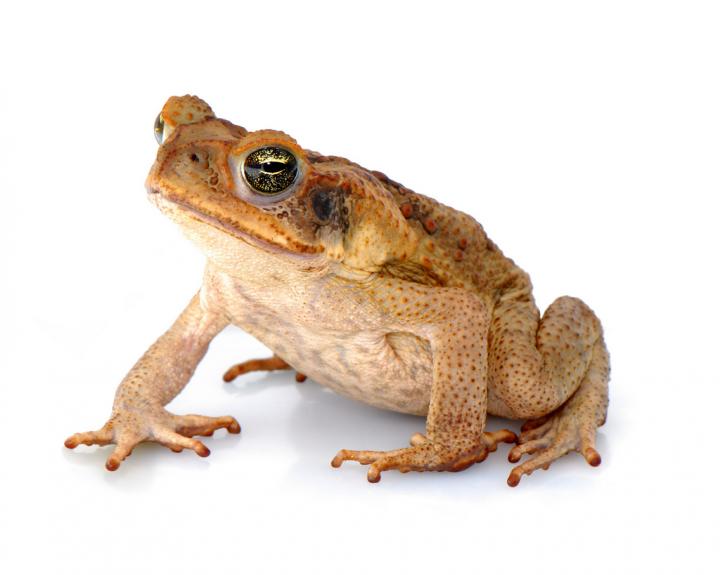
Credit: Wikimedia Commons
Citizen scientists should be included as authors on journal papers, researchers say.
In a paper published in the journal Trends in Ecology and Evolution, a team led by biologist Dr Georgia Ward-Fear from Macquarie University in Australia and Dr Greg Pauly from the Natural History Museum of Los Angeles argues that newfound respect for indigenous knowledge and changes in technology mean that non-professionals are taking greater roles in science work.
Regulations governing minimum qualifications for authorship in academic journals mean that such citizen scientists are usually excluded from credit for their work.
“Members of the general public have become pivotal contributors to research, resulting in thousands of scientific publications and measurable conservation impacts,” says Dr Ward-Fear. “The question is: how should we credit that input?”
Many of the most influential science journals in the world, including Nature, Science and PLOS ONE, adhere to guidelines set out by the International Committee of Medical Journal Editors. These state that researchers can only be listed as authors if they made “substantial contributions” to the design of the project, the interpretation of the data, and the critical revision of the final version.
“However, there are some projects in which citizen scientists – through online species identification apps, for instance – contribute most, even all of the data,” says Dr Pauly.
“Without that contribution the accredited scientists might not even be able to make a discovery – and yet they are not able to be listed as authors. This really undervalues their contributions and might make them reluctant to take part in similar research ever again.”
To solve the problem, Dr Ward-Fear and colleagues suggest an approach that will simultaneously recognise the contribution of non-professionals while safeguarding the integrity of the existing system.
Citizen scientists could be credited as “group co-authors” – being collectively credited, for instance, as users of the online interface deployed to gather data.
A slightly different example is drawn from research previously conducted by Dr Ward-Fear and her Macquarie University co-author, Professor Rick Shine.
It concerned conservation research on toxic cane toads (Rhinella marina) and their imperilled predators that was conducted in collaboration with the indigenous traditional owners of the region surveyed, and who were known collectively as the Balanggarra Rangers.
“The team unquestionably wanted group co-authorship, but adding ‘the Balanggarra Rangers’ to the author list was difficult,” says Dr Ward-Fear.
“We had to negotiate with editors and staff of two journals to make it happen, and even then in one instance the group was listed as ‘B.Rangers’, as if it was an individual person.”
Dr Ward-Fear adds that refusal to properly credit contributors who possess valuable traditional skills and knowledge could be seen as discriminatory.
Professor Shine agrees.
“With a little flexibility we can recognise the contribution of everyone who plays a major role in research while still deterring scientific fraud,” he says.
“We all have to accept that the nature of research is changing, with more citizen scientists taking part. It’s part of the evolving social dimension of science practice, and we should celebrate it rather than stifle it.”
###
Media Contact
Andrew Masterson
[email protected]
61-488-777-179
Related Journal Article
http://dx.