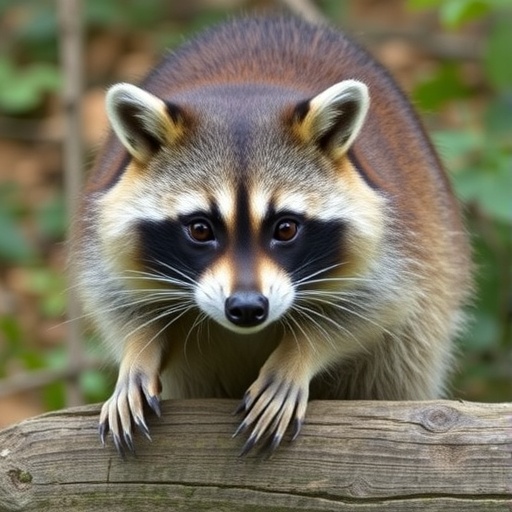
In a groundbreaking study illuminating the remarkable adaptability and evolution of North American raccoons, a team of researchers led by Apostolov, Bradley, and Dreher has tapped into the vast repository of citizen-generated images. By leveraging modern technology and involving the public in scientific inquiry, this innovative approach sheds light on the domestication signals prevalent in raccoon populations across various geographical landscapes. Their research promises to redefine our understanding of how human interaction and environmental changes shape wildlife adaptation.
The North American raccoon, scientifically known as Procyon lotor, is a species characterized by its omnivorous diet and remarkable dexterity, which allows it to thrive in diverse habitats, often in close proximity to urban areas. The study draws upon extensive data sourced from citizen science initiatives, where everyday individuals contribute photographs and observations of local wildlife. This collective effort generates an extensive visual database that is not only rich in data but also highlights the critical role humans play in wildlife research and dissemination.
The significance of this research lies in its capacity to track domestication signals—traits that may indicate a shift in behavior, morphology, or genetics due to prolonged interactions with humans. Raccoons are a prime candidate for such a study given their opportunistic feeding habits and adaptability to urban environments. By analyzing patterns across various populations, the researchers aim to identify how these interactions manifest in physical traits and behaviors that differ from their more isolated counterparts.
Citizen science-driven image repositories provide a unique and unprecedented opportunity to collect diverse data points from across the continent. Images submitted by engaged citizens capture a wide range of raccoon interactions, from playful antics to instances of human contact. This approach not only democratizes scientific inquiry but also empowers local communities to contribute to broader ecological understandings. The vast amount of data collected allows for a more comprehensive analysis than would typically be possible through traditional research methods alone.
In this study, Apostolov and colleagues utilized advanced image recognition technology to analyze the submitted photographs, identifying specific features and behaviors indicative of domestication. This data-driven insight reveals trends related to physical adaptations, such as variations in coloration or size, as well as behavioral changes that reflect increased tolerance or attraction to urban settings. The researchers deftly connect these observations to broader themes of behavioral ecology and evolutionary biology, offering fresh perspectives on how species endure and adapt to human-altered landscapes.
The project underscores the importance of interdisciplinary methods in modern scientific research. By integrating technology, citizen participation, and traditional ecological study, the team crafted a multifaceted examination of raccoon populations. This blend of approaches not only enhances the quality of data collected but also encourages public interest in scientific research and environmental conservation. As citizens engage more deeply with the science around them, they become advocates for their local ecosystems, fostering a generation that is more environmentally conscious.
Moreover, the insights gained through this research have implications beyond just the raccoon population. The findings contribute to broader discussions on wildlife management and urban ecology, where understanding the dynamics between humans and wildlife is increasingly pertinent. As urban areas expand and encroach upon natural habitats, species like the raccoon become faces of the ensuing ecological interplay. By examining these interactions, we glean lessons that are applicable to many species faced with similar challenges in a rapidly changing environment.
The ability to track domestication signals not only aids in understanding raccoon populations but also serves as a foundation for future research into other wildlife species. The methodologies refined through this study can be adapted and employed in assessing the impact of urbanization on various animals, presenting an avenue to further explore the complexities of human-animal interactions. This research thereby lays the groundwork for a transformative shift in how wildlife biology is practiced, encouraging a model that embraces a more participatory approach.
The researchers’ commitment to transparency and public engagement stands as a paradigm shift in the field of zoology. By openly sharing their findings and encouraging continued participation from citizen scientists, they uphold a standard of accessibility and collaboration. The establishment of accessible platforms for citizen contributions—whether through social media, dedicated apps, or community events—further drives the momentum of this citizen science revolution.
In conclusion, the study authored by Apostolov and his collaborators marks a significant step forward in the exploration of raccoon domestication signals via innovative citizen science methods. The integration of cutting-edge technology with public engagement encapsulates the essence of modern zoological research, paving the way for a future where wildlife studies can harness communal knowledge. The results not only illuminate the adaptability of Procyon lotor but also serve as a call to action for communities to participate in and prioritize the conservation of wildlife in the midst of urban expansion.
As we contemplate the future relationships between wildlife and urbanization, the importance of continual research embedded within community participation cannot be overstated. The lessons learned from raccoon populations can significantly influence how we approach wildlife conservation efforts, ensuring that as we develop and expand, our understanding of the natural world evolves alongside us.
Subject of Research:
Domestication signals across North American raccoon populations
Article Title:
Tracking domestication signals across populations of North American raccoons (Procyon lotor) via citizen science-driven image repositories
Article References:
Apostolov, A., Bradley, A., Dreher, S. et al. Tracking domestication signals across populations of North American raccoons (Procyon lotor) via citizen science-driven image repositories.
Front Zool 22, 28 (2025). https://doi.org/10.1186/s12983-025-00583-1
Image Credits: AI Generated
DOI: https://doi.org/10.1186/s12983-025-00583-1
Keywords: Citizen science, raccoons, Procyon lotor, domestication, urban ecology, wildlife adaptation, human-animal interactions.
Tags: citizen science raccoon researchcitizen-generated wildlife dataenvironmental changes on raccoonshuman-wildlife interaction effectsmodern technology in ecologyNorth American wildlife adaptationphotography in scientific researchProcyon lotor behavior studypublic involvement in scientific inquiryraccoon domestication patternsUrban wildlife adaptationwildlife population dynamics