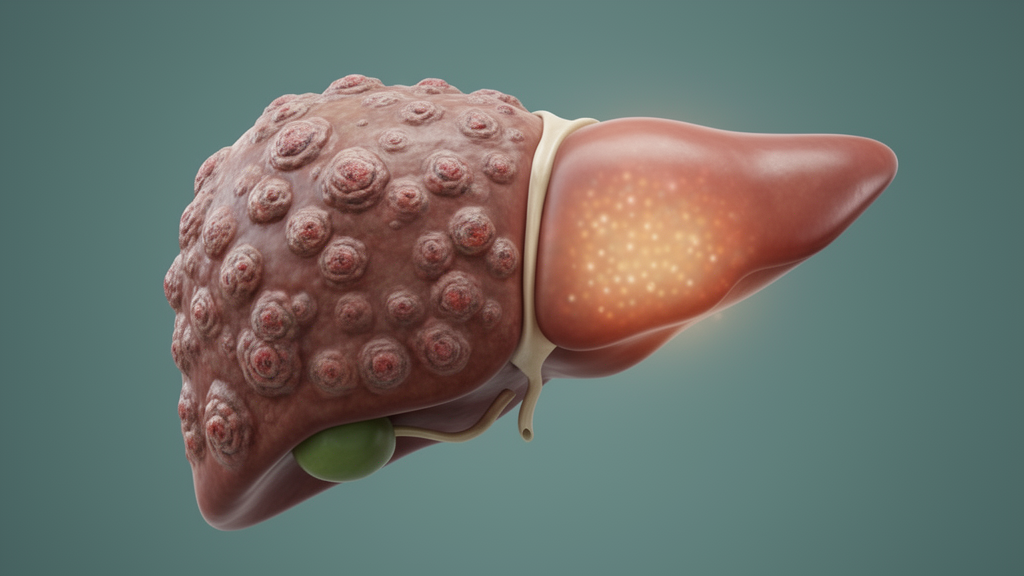
For much of modern medical history, cirrhosis has carried a grim reputation. Once the liver reached the stage of scarring in which complications such as fluid accumulation in the abdomen, bleeding from enlarged veins, or confusion caused by toxin buildup appeared, clinicians often regarded the damage as effectively irreversible. Decompensation, in this traditional view, marked a one-way transition toward progressive liver failure. A new review from researchers in China argues that this framing no longer reflects clinical reality, and that the field needs a more precise vocabulary to describe what actually happens to patients whose underlying liver disease is successfully treated.
The review, led by Professor Hong You and Dr. Bingqiong Wang of the Liver Research Center at Beijing Friendship Hospital, Capital Medical University, examines evidence on recompensation across the major causes of cirrhosis. Published in the journal Portal Hypertension & Cirrhosis, the work synthesizes data on how often recompensation occurs, what criteria should define it, which factors predict it, what is known about its biological basis, and how patients who recover should be monitored over the long term. The authors’ central proposal is that recompensation should be recognized as a distinct, treatment-related disease state rather than treated as a vague synonym for improvement.
The shift in thinking rests on a growing body of evidence that effective treatment of the underlying cause of cirrhosis can allow some patients to regain liver function and resolve the complications that defined their decompensation. In viral hepatitis, potent antiviral therapy can suppress replication and reduce inflammation; in alcohol-related liver disease, sustained abstinence can remove the ongoing injurious stimulus; in autoimmune and cholestatic conditions, targeted immunosuppression or other therapies can alter disease activity. When the driver of scarring is controlled, the liver’s residual regenerative capacity can, in a subset of patients, translate into measurable clinical recovery.
Yet recovery, the authors emphasize, is neither automatic nor uniform. Under the Baveno VII consensus, an international framework widely used in hepatology, recompensation is defined by three requirements: control of the underlying cause of cirrhosis, sustained resolution of decompensation events without the need for supportive treatment such as diuretics or non-selective beta-blockers, and stable improvement in liver function. Meeting these criteria is demanding, and the new review makes clear that many patients who improve do not fully satisfy them, while others who do may later lose that status.
How often does recompensation actually occur? A meta-analysis of 27 studies encompassing 9,063 patients found a pooled prevalence of approximately 35 percent, though the figure varied dramatically by etiology. Around 50 percent of patients with hepatitis B virus-related cirrhosis achieved recompensation, compared with only about 15 percent of those with primary biliary cholangitis. In one hepatitis B study, 56.2 percent of 283 treatment-naive patients receiving the antiviral drug entecavir met Baveno VII criteria after 120 weeks of therapy. Among patients with alcohol-related cirrhosis, a multicenter study reported that 31.1 percent achieved recompensation. These numbers suggest that recompensation is far from rare, but also far from universal.
The likelihood of recovery depends on more than simply eliminating the cause. Better baseline liver function, fewer previous decompensation events, and a lower burden of portal hypertension, the elevated pressure in the venous system that drains the gut through the liver, were generally associated with a greater chance of recompensation. The meta-analysis illustrated this gradient starkly: cohorts with a mean Model for End-Stage Liver Disease score below 15 had a pooled recompensation rate of 48 percent, whereas cohorts with scores of 15 or higher achieved only 19 percent. In other words, the reserve remaining in the liver at the moment treatment begins shapes how much recovery is possible.
Intriguingly, clinical improvement appears to be mirrored by measurable biological change. In a small group of 19 patients with alcohol-related cirrhosis who had paired hemodynamic measurements, the median hepatic venous pressure gradient, a direct readout of portal pressure, fell from 19 to 9 mmHg after sustained recovery. That decline represents a substantial hemodynamic improvement and suggests that fibrosis regression and reductions in vascular resistance within the scarred liver can accompany the resolution of clinical complications. However, the same body of data carries a cautionary note: 59 percent of 29 evaluated patients retained clinically significant portal hypertension despite their overall improvement, meaning that the vascular complications of cirrhosis can persist even when the surface picture looks favorable.
Perhaps the most consequential argument in the review is that recompensation can be unstable. In a hepatitis B cohort, 86.8 percent of patients who achieved recompensation by Week 120 maintained it during extended follow-up, but 13.2 percent developed hepatocellular carcinoma, experienced further decompensation, or died. Another study identified unstable recompensation in 24.3 percent of patients. The prognostic separation between recovery states is striking: five-year rates of hepatocellular carcinoma or all-cause mortality were 10.1 percent for stable recompensation, 14.7 percent for unstable recompensation, and 27.3 percent for persistent decompensation. Recovery clearly improves outcomes compared with continued decompensation, but it does not restore the risk profile of a never-decompensated liver.
Recompensation reflects meaningful improvement after effective treatment, but it should not automatically be interpreted as complete reversal of cirrhosis, Professor You cautions. Recognizing it as a distinct treatment-related state, she argues, may help clinicians describe recovery more consistently and identify the patients who remain at risk even after their complications resolve. Dr. Wang reinforces the point from the patient-care perspective: people who improve after cirrhosis treatment may still carry residual risks from portal hypertension, limited hepatic reserve, and liver cancer, so continued surveillance remains important even when clinical signs of decompensation have disappeared. The message for survivors of decompensation is one of cautious optimism rather than discharge from care.
To organize these observations, the authors propose a four-state framework describing where a patient with cirrhosis may sit after the underlying cause has been brought under control: compensated cirrhosis, stable recompensation, unstable recompensation, or persistent decompensation. Such a taxonomy could standardize how clinical trials enroll and stratify patients, how guidelines frame follow-up intervals, and how physicians communicate prognosis. The authors are careful to note that the framework requires prospective validation, particularly in causes of cirrhosis other than hepatitis B, where the evidence base is strongest. Future research, they write, should establish objective markers that distinguish stable from unstable recovery, validate expanded criteria, clarify the mechanisms of fibrosis regression and portal-pressure reduction, and determine whether different recovery trajectories demand different monitoring strategies. If validated, the concept of recompensation as a formal disease state could reshape both research design and everyday hepatology practice for millions of patients living with treated cirrhosis.
Subject of Research: Recompensation as a treatment-related disease state in cirrhosis after control of the underlying cause
Article Title: Recompensation may represent a new treatment-related state in cirrhosis
Article References: Recompensation may represent a new treatment-related state in cirrhosis. (n.d.). Original publication
Image Credits: AI Generated
DOI: Not provided
Keywords: cirrhosis, recompensation, liver disease, portal hypertension, decompensation, hepatitis B, hepatocellular carcinoma, fibrosis regression, Baveno VII, liver function, alcohol-related cirrhosis, disease state framework
News Source: Nathaniel Bowman. (October 15, 2026). Cirrhosis May Not Be a Point of No Return: Researchers Define Recompensation as a New Disease State. Scienmag.