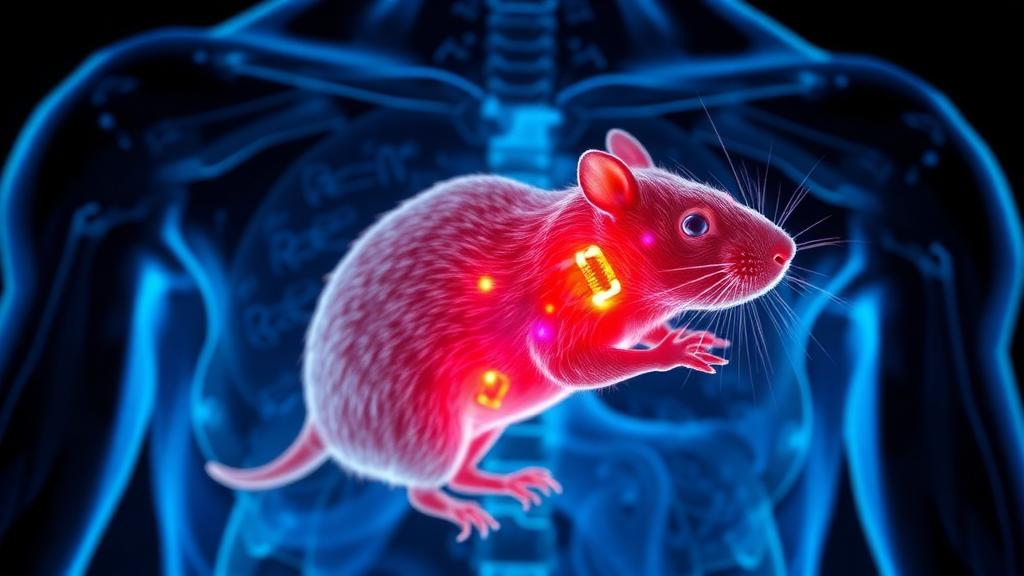
Chronic heavy drinking is one of the most underappreciated drivers of premature cardiovascular aging, quietly eroding the heart’s pumping reserve long before overt heart failure appears. Now a team of researchers at the National Institute on Alcohol Abuse and Alcoholism, working with collaborators in Hungary and the United States, reports that a cholesterol-lowering drug already sitting on pharmacy shelves may blunt much of that damage. In a study published in GeroScience, weekly injections of the PCSK9 inhibitor alirocumab protected rats exposed to a six-week alcohol diet from a cascade of cardiac and hepatic injuries, from weakened contractile function to fatty liver disease, without changing how much alcohol the animals actually consumed.
The target of the intervention, proprotein convertase subtilisin/kexin type 9, or PCSK9, is best known as the molecular villain of cholesterol metabolism. By tagging LDL receptors on liver cells for destruction, PCSK9 keeps circulating LDL cholesterol high, which is why blocking it has become a powerful strategy for patients who cannot reach their cholesterol goals with statins alone. But the new study adds to a growing body of evidence that PCSK9 is more than a cholesterol regulator. Circulating levels of the protein rise with age and track with cardiovascular dysfunction, and previous work from the same group showed that inhibiting PCSK9 improves cardiac performance in aging rats, protects against alcohol-induced liver injury, and even dampens neuroinflammation in the alcohol-exposed brain.
To test whether PCSK9 sits at the crossroads of alcohol’s systemic organ damage, the researchers fed male Sprague-Dawley rats a liquid diet in which 35 percent of calories came from ethanol, while a pair-fed control group received an identical diet with the alcohol calories replaced. Half of the animals in each group received weekly subcutaneous injections of alirocumab at 50 milligrams per kilogram. After six weeks, the team measured blood alcohol and cholesterol levels, then assessed cardiac function using two complementary techniques: transthoracic echocardiography to capture the beating heart in real time, and invasive pressure-volume analysis, the gold standard for quantifying the intrinsic contractile machinery of the left ventricle independent of loading conditions.
The echocardiographic results were unambiguous. Alcohol-fed rats showed significant declines in stroke volume, cardiac output, ejection fraction, and fractional area change, together with impaired diastolic filling measured by the mitral E/A ratio and reduced right ventricular function reflected in tricuspid annular plane systolic excursion and systolic myocardial velocity. Alirocumab treatment shifted these parameters back toward control values, and critically, it did so without altering heart rate, indicating that the protection reflected genuine improvements in ventricular performance rather than a compensatory chronotropic effect. Blood alcohol concentrations were equivalent between vehicle- and drug-treated ethanol-fed animals, ruling out reduced alcohol exposure as an explanation for the benefit.
The pressure-volume data went further, addressing the central question of whether alcohol had weakened the heart muscle itself or merely changed the conditions under which it worked. Chronic ethanol exposure reduced the slope of the end-systolic pressure-volume relationship, preload recruitable stroke work, and the dP/dtmax-end-diastolic volume relationship, three load-independent indices that are largely immune to changes in preload, afterload, or heart rate. All three fell with alcohol and all three were preserved by alirocumab, providing strong evidence that PCSK9 inhibition protected the heart’s intrinsic contractile reserve. The drug also improved the abnormal relaxation indices TauWeiss and dP/dtmin, and it corrected the ventricular-arterial uncoupling that alcohol induced, restoring the delicate match between the heart’s contractile force and the arterial load it must pump against, a hallmark deficit of cardiovascular aging.
Beneath the functional improvements, the researchers found a molecular signature of injury that alirocumab largely erased. Alcohol-exposed hearts and vessels accumulated malondialdehyde, a marker of lipid peroxidation produced when reactive oxygen species attack membrane fats. Myocardial gene expression analysis revealed induction of NOX4, a source of reactive oxygen species; LOX1, the receptor for oxidized LDL; iNOS, the inducible nitric oxide synthase whose uncoupling generates further radicals; the inflammatory cytokine TNF-alpha; and ANP, a classical marker of cardiac stress. Profibrotic genes encoding collagen 1a1, collagen 3a1, and fibronectin were upregulated alongside visible collagen deposition on Sirius red staining. Alirocumab attenuated every one of these changes, suggesting the drug blunts a feed-forward program in which lipid peroxidation, oxidized lipid signaling, oxidative stress, and inflammation reinforce one another.
Perhaps the most striking finding emerged from the liver. Six weeks of ethanol feeding produced classic alcoholic fatty liver, with elevated hepatic triglyceride content and abundant perilipin-2-coated lipid droplets on immunohistochemistry, together with mild but significant hepatic fibrosis. Alirocumab reduced both the steatosis and the early fibrotic remodeling. More provocatively, when the researchers correlated liver triglyceride content with the load-independent contractility indices across all animals, they found strong inverse relationships: the fattier the liver, the weaker the heart’s intrinsic contractile reserve as measured by the ESPVR slope and preload recruitable stroke work. The correlation does not prove that fat-laden livers poison the heart, but it suggests that hepatic lipid dysregulation and myocardial impairment evolve in parallel during chronic alcohol exposure, raising the possibility of liver-heart crosstalk that PCSK9 inhibition can interrupt at multiple points.
The mechanistic picture the authors sketch begins with ethanol metabolism itself. Oxidation of alcohol by alcohol dehydrogenase and CYP2E1 generates acetaldehyde and then acetate, a process that promotes electron leakage from mitochondria and superoxide formation. NADPH oxidases and uncoupled iNOS add to the reactive oxygen burden, and superoxide reacts with nitric oxide to form peroxynitrite, a potent nitrating species. Together this oxidative and nitrative assault damages mitochondrial, contractile, and signaling proteins, drives lipid peroxidation, and pushes cardiomyocytes and endothelial cells toward dysfunction and the early extracellular matrix remodeling seen here. The authors are careful to note that the six-week model captures early profibrotic remodeling, not the fully developed dilated cardiomyopathy of advanced alcoholic heart disease, and that the observed correlations between improved function and reduced oxidative markers do not by themselves establish direct causality.
What makes the study resonate beyond the laboratory is the translational timing. PCSK9 inhibitors are approved, widely used, and well tolerated, which distinguishes them from most experimental geroprotective candidates. The benefits observed here were most pronounced in the alcohol-exposed animals even though alirocumab lowered cholesterol in both groups, hinting at lipid-independent, context-dependent protective actions that become relevant under oxidative and inflammatory stress. Important questions remain: the study used only young adult male rats, did not directly measure PCSK9 or LDL receptor signaling in the tissues, did not assess mitochondrial respiration or cellular senescence markers, and cannot separate cholesterol-dependent from cholesterol-independent mechanisms. Still, the convergence of preserved contractile reserve, suppressed oxidative-inflammatory signaling, limited fibrosis, and reduced fatty liver in a single drug-treated group marks PCSK9 as a compelling candidate target for alcohol-related premature cardiovascular aging, particularly in patients whose heavy drinking coincides with dyslipidemia and elevated cardiovascular risk.
Subject of Research: PCSK9 inhibition as a therapeutic strategy against alcohol-induced cardiovascular and hepatic injury
Article Title: PCSK9 inhibition attenuates alcohol-induced cardiovascular dysfunction and links hepatic lipid accumulation to impaired myocardial contractile reserve
Article References: Matyas, C., Trojnar, E., Mukhopadhyay, P., Zhao, S., Yokus, B., Paes-Leme, B., Getiye, Y., Lohoff, F. W., Haskó, G., & Pacher, P. (2026). PCSK9 inhibition attenuates alcohol-induced cardiovascular dysfunction and links hepatic lipid accumulation to impaired myocardial contractile reserve. GeroScience. https://doi.org/10.1007/s11357-026-02486-3
Image Credits: AI Generated
DOI: 10.1007/s11357-026-02486-3
Keywords: PCSK9, alirocumab, alcohol, cardiovascular dysfunction, myocardial contractile reserve, hepatic steatosis, oxidative stress, lipid peroxidation, fibrosis, pressure-volume analysis, cardiovascular aging, GeroScience
News Source: Ophelia Keating. (October 7, 2026). Cholesterol Drug Alirocumab Shields the Heart From Alcohol Damage in Rat Study. Scienmag.